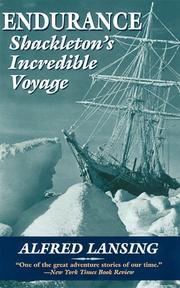
Endurance
Shackleton's men survive after the ice crushes their ship Endurance in Antarctica.
Shackleton's survival; decision-making when the plan is already lost
Summary
Lansing reconstructs Ernest Shackleton's 1914 to 1916 Imperial Trans-Antarctic Expedition, in which the ship Endurance was trapped in pack ice in the Weddell Sea, drifted for ten months, was crushed and sank, and the twenty-eight men survived for a further year on ice floes and on Elephant Island before rescue. Nobody died. Lansing interviewed surviving expedition members and used their diaries, which is why the account carries detail no later reconstruction could match.
The leadership material is why the book is read outside the adventure category. Shackleton abandoned the expedition's original objective immediately once the ship was lost and redefined the goal as bringing everyone home. He managed morale deliberately, assigning tents to separate potential troublemakers and keeping the men he considered problematic close to himself. He maintained routines including regular meals, sleeping schedules and organised recreation while the situation deteriorated. He enforced equality of rations and physical labour regardless of rank, including having officers scrub floors.
The operational decisions include the sledging attempts across the ice, the retreat to the boats, the passage to Elephant Island, and the eight hundred mile open boat journey to South Georgia in a twenty-two foot lifeboat, followed by the first crossing of the island's interior.
Lansing wrote in 1959 and the book is narrative history without analysis. The leadership lessons must be extracted by the reader, and the situation differs from business in ways that limit transfer, particularly that the men could not leave. The account of Shackleton changing the objective the moment the original became impossible is the part with the widest application.
Key takeaways 8
- Shackleton abandoned the expedition's objective immediately when it became impossible and redefined success as everyone surviving.
- Maintaining routine, including regular meals, work assignments and recreation, held the group together during periods when no progress was possible.
- Potential sources of dissent were kept close to the leader and separated from each other deliberately rather than isolated or punished.
- Equality of rations, labour and treatment regardless of rank removed the grievance that would otherwise have split the group.
- The leader made decisions visibly and quickly, and the men's confidence depended on seeing decisions made rather than on the decisions being right.
- Physical and mental deterioration was managed by giving people work with an immediate purpose even when the work was not strictly necessary.
- The eight hundred mile boat journey was a calculated bet on a single navigational chance, undertaken because waiting offered a worse expected outcome.
- Every man survived, which is the fact against which all of the leadership claims should be tested.
Who should read it
Leaders who want a documented case of holding a group together through a prolonged period where the original objective is gone and no progress is visible.
Who recommended it 11 · 5 direct
Similar books 6
Chosen by shared topics, the entries that hold them, and the people who recommended both.
Theodore Roosevelt's journey down one of the most dangerous rivers on earth.
Recommended by: Patrick O'Shaughnessy, Ryan Holiday and 1 other
Rare, unforeseen, high-impact events drive history, explained only after the fact.
“The Black Swan U The best-known bird around today is The Black Swan, the second book from Nassim Nicolas Taleb.” — Howard Marks
Source: The Complete Collection, page 530
Recommended by: David Perell, Howard Marks, Marc Andreessen and 20 others
Franklin's life as printer, scientist, diplomat and founder.
“…books I've recommended, highlighted to death, or forced on friends.” — Andrew Wilkinson
Source: Andrew Wilkinson's Bookshelf, neverenough.com
Recommended by: Alfred Lin, Andrew Wilkinson, Brad Feld and 11 others

Why people mistake luck for skill, above all in markets.
“Fooled By Randomness was unquestionably the best non-fiction book I read in 2005.” — Brad Feld
Source: Book Review: Fooled By Randomness — Feld Thoughts
Recommended by: Barton Biggs, Brad Feld, Derek Sivers and 15 others

The first American astronauts, their courage and their inner lives.
Recommended by: Jim Collins, Patrick Collison and 4 others
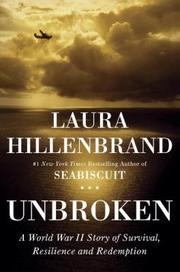
Louis Zamperini, a bombardier, survives a bomber's crash into the Pacific.
Recommended by: Andrew Wilkinson, Jim Collins and 1 other