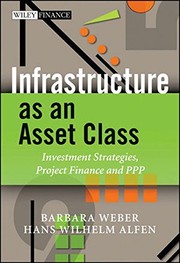
Infrastructure as an Asset Class
Infrastructure's risk, return and role in a portfolio, from an allocator's view.
The allocator's view: risk, return and portfolio role of infrastructure.
Summary
The reference has not verified this book in detail; the summary states only what the title, author and subject establish.
Barbara Weber and Mirjam Staub-Bisang wrote this as a practitioner guide for institutional investors considering infrastructure allocations, at a point when pension funds and insurers were entering the sector in volume. It covers what infrastructure investment involves, how the deals are structured, and how the returns behave.
The book treats infrastructure as spanning transport, energy, water, social facilities and communications, and distinguishes between greenfield projects, which carry construction and demand risk, and brownfield operating assets, which do not. It sets out the investment routes: listed infrastructure equities, unlisted funds, direct investment and co-investment, and public-private partnership structures. It covers project finance mechanics, including the ring-fenced special purpose vehicle, the debt structures and the contractual allocation of risk among sponsor, contractor, lender and public authority. Later material addresses sustainability and renewable energy assets.
The reference has not verified the book chapter by chapter, and this entry reflects its established scope rather than a close reading of its arguments. Readers should also note that it was written before the compression of infrastructure yields that followed the post-crisis rate environment, and before the regulatory and political interventions in European utilities and toll roads that later tested the asset class's supposed stability. Rajeev Sawant's Infrastructure Investing challenges the core claim that these assets deliver stable inflation-linked cash flows, and the two are worth reading together.
Key takeaways 6
- Infrastructure returns depend on whether the asset carries construction risk, demand risk, or neither, and these are different investments.
- Regulated assets earn returns set by a regulator, so the investment is a bet on regulatory behaviour rather than on the underlying service.
- Project finance allocates each risk to the party contractually best placed to bear it, and the structure fails when that allocation is wrong.
- Listed infrastructure equities correlate with equity markets and therefore do not deliver the diversification the asset class is bought for.
- Long-dated concession agreements expose investors to political renegotiation that no contract fully prevents.
- Institutional demand for infrastructure comes from liability matching, since the cash flows are long and often index-linked.
Who should read it
Institutional investors and advisers building a first infrastructure allocation who need the structural vocabulary and risk taxonomy of the sector.
Similar books 6
Chosen by shared topics, the entries that hold them, and the people who recommended both.
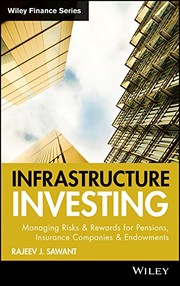
Why most claims for infrastructure as an asset class fail under scrutiny.

Lending against a project's own cash flows, with limited recourse to its sponsors.

How project finance deals are structured, with the theory and worked cases.

How private firms finance, build and run public infrastructure under long contracts.

What 16,000 projects show about why big ones overrun, and how to plan them.
“Bent Flyvbjerg and Dan Gardner, How Big Things Get Done: The Surprising Factors That Determine the Fate of Every Project, from Home Renovations to Space Exploration and Everything In Between (New York: Crown Currency, 2023)” — Michael Mauboussin
Source: Pattern Recognition: Opportunities and Limits, page 14
Recommended by: Michael Mauboussin

Data showing big infrastructure projects run over cost and under demand by design.