Kenya: A History Since Independence
Kenya since 1963: a stable state held back by colonial legacies and poverty.
Exhaustive and unusually attentive to who owned what, and when.
Summary
Hornsby writes a history of Kenya since independence in 1963. For five decades Kenya has survived as a functioning nation-state, with regular elections, its borders intact and no war or military rule. Yet its independence has been limited by its failure to move beyond its colonial past: governments have not provided adequate living conditions for most citizens, and politics has been full of controversy, most recently the violence after the 2007 election.
The decisions of the early years and the acts of leaders since, from Jomo Kenyatta, Tom Mboya and Oginga Odinga to Daniel arap Moi, Mwai Kibaki and Raila Odinga, changed the country's path in unpredictable ways. The conflicts persist: over land, ethnicity, including the long Kikuyu-Luo rivalry, money, power, national autonomy and the distribution of resources. Hornsby argues that the elite's constant struggle for access to state resources has damaged the economy, that the political use of ethnicity still threatens stability, and that Kenya's politics have been a struggle to deliver security, impartiality, efficiency and growth, undermined by the legacies of the past.
Key takeaways 4
- Kenya has held regular elections without war or military rule since 1963.
- Most Kenyans have not gained adequate living conditions from independence.
- Land, ethnicity and access to state resources drive Kenya's political conflict.
- The elite's competition for state resources has damaged the economy.
Who should read it
Investors in East Africa who want an exhaustive political history of Kenya, attentive to who held land and power.
Similar books 6
Chosen by shared topics, the entries that hold them, and the people who recommended both.
Kenya since independence, and how ethnic coalitions allocate its economic rents.
Africa's 400 companies with over a billion dollars in revenue, and the market ahead.
How Kenya's tech startups and M-Pesa grew, with interviews with their founders.
A whistleblower exposes Kenya's procurement scandals after a hailed election.
Recommended by: Patrick Collison
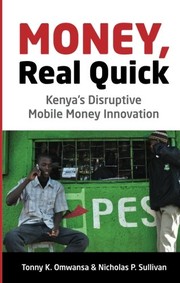
How Safaricom built M-PESA, the mobile money service, in Kenya.
Essays on Kenya's political economy under Moi, and the handover of settler capital.