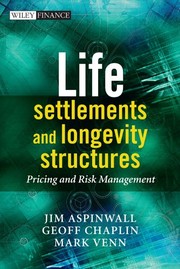
Life Settlements and Longevity Structures
How investors buy life insurance policies and price longevity risk.
The one book specifically on buying life policies as an investment.
Summary
The reference has not verified this book in detail; the summary states only what the title, author and subject establish.
Geoff Chaplin, Jim Aspinwall and Mark Venn wrote this on the market in which life insurance policies are bought from their original owners by investors, who then pay the premiums and collect the death benefit. The related longevity market transfers the risk that a population lives longer or shorter than expected.
The technical content concerns mortality modelling, the valuation of a policy given the insured's health and the premium schedule, the construction of portfolios large enough for the law of large numbers to operate, and the structures through which these cash flows have been securitised. The longevity material covers the instruments through which pension funds transfer longevity risk to insurers and capital markets, including longevity swaps and buy-in and buy-out transactions.
The reference has not verified this book in detail, and this entry reflects its subject matter rather than a close reading. Readers should be aware that the life settlement market experienced substantial investor losses after 2008, largely because life expectancy estimates supplied by medical underwriters proved systematically too short, and that the regulatory treatment of the market has changed in several jurisdictions since publication.
Key takeaways 6
- A life settlement transfers a policy from an owner who values it below its economic worth to an investor who pays premiums and collects the benefit.
- Valuation depends entirely on the life expectancy estimate, and errors in that estimate compound because the investor keeps paying premiums.
- Portfolios must be large and diversified across individuals for mortality risk to behave statistically rather than idiosyncratically.
- Longevity risk is the mirror of mortality risk, and pension funds and life insurers hold naturally offsetting exposures.
- Longevity swaps let a pension scheme exchange uncertain future payments for fixed ones without transferring the underlying assets.
- Returns in these markets are uncorrelated with financial markets but highly sensitive to systematic revisions in medical underwriting.
Who should read it
Institutional investors and pension advisers examining mortality and longevity risk transfer, with the caveat that this entry is not verified in detail.
Similar books 6
Chosen by shared topics, the entries that hold them, and the people who recommended both.

How insurance and reinsurance risk is transferred to capital markets.
How cat bonds and other insurance-linked securities work and are priced.
Risk and pricing analysis of property-catastrophe insurance-linked securities.
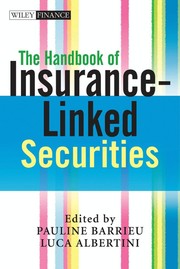
Chapters on cat bonds and other insurance-linked securities: structure and triggers.
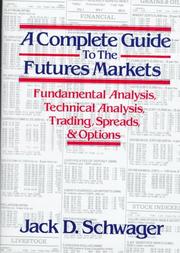
A reference on futures: mechanics, analysis, trading systems and portfolios.

How financial innovation made markets more crisis-prone, from a risk manager.
“The New York Times of August 18 described A Demon of Our Own Design, by Richard Bookstaber (see “Investment Miscellany,” November 2000) as pointing out that “the proliferation of complex financial products like derivatives, combined with use of leverage to bolster returns, will inevitably mean that there will be a regular stream of market contagions like the one we’re having now – one of which, someday, could be calamitous.” 6” — Howard Marks
Source: Now It’s All Bad?, page 6
Recommended by: Howard Marks, Jeremy Grantham and 1 other