Updates

  1. Fund letters lists 118 more letters, each with its own page: 44 weekly commentaries by Jeremy Siegel from 2026, 31 issues of Van Tharp's newsletter from 2018, 23 Pabrai Investment Funds letters from 2021 to Q3 2026, 13 Efficient Frontier essays by William Bernstein, Oakmark's three 3Q 2026 commentaries, two Lindsell Train reports, a John Hussman comment and Third Point's Q3 2026 letter.
  2. 2,027 more books carry a one-line description in the Books table and on their pages; 7,067 of 7,715 have one, every tier 1, 2 and 3 book among them.
  3. Fund letters lists 187 more letters from 19 firms, among them Permanent Equity, Social Capital, Lux Capital, Square Peg, Bestinver, Cobas, Sequoia Fund, Marketfield and EquityCompass; each shows on its investor's page and has a page of its own.
  4. 2,928 more books carry a one-line description in the Books table and on their pages, so every tier 1, 2 and 3 book has one; 5,040 in all.
  5. Every publication on Newsletters has its own page: its writing, its writers, its staff and who recommends it. Investor pages have a Management tab; a company's Experts tab now leaves out its own people, who list under Management. Tabs on a phone move sideways only.
  6. Every fund letter and research paper has its own page: the thesis, the PDF, the companies and books it names, and for 176 letters and 24 papers so far a summary, key insights and quotes with their page.
  7. 99 books that no page listed now sit under their topics in Books, among them Caste, American Prometheus and Pale Blue Dot.
  8. Newsletters lists every newspaper, magazine, investment newsletter, journal and blog the reference holds, 442 in all, with the people who write there. The search box keeps your last 20 searches. You can create an account.
  9. 283 books that fund managers recommend in their letters are on the shelf, each with the letter's own words and page; investor pages have a Recommends tab.
  10. Person, company, investor and show pages link their own accounts on X, Threads, Instagram, LinkedIn, YouTube and Substack: 275 people, 552 companies and organisations, 88 investors and 478 shows.
  11. 716 more book recommendations name their source: the person's own reading list, letter, blog post, speech or interview, or an article that reports it. 232 of them quote the person's own words about the book, on the book card and on the book's page.
  12. Every US-listed company has a page with its SEC filings. Company pages list their experts and their management, past and present. Fund managers sit under Investors. Each show has a page of its episodes, and an episode page names its guests and hosts. Biographies lists groups, then people. Breadcrumbs show where a page sits.
  13. Media lists every podcast episode, video, interview and talk, over 10,000, by person, company, publisher and event; each filter searches its own choices. Books opens on its table, then Browse, then Authors and Recommenders. A filter's count no longer covers its arrow.
  14. A book that no company, country or subject page lists shows its topics under Where it sits in the reference. On a phone, a page's tabs scroll sideways only. Descriptions read the same on every page. See them in the Experts tab lists every expert the page names.
  15. Every podcast episode, video and interview has its own page with a video or audio player and a link to the source. Investor pages show each company's sector and market cap; firms such as Berkshire Hathaway have one page that holds their letters and their company tabs. Letters tabs filter by company and search the theses. Companies filter by Public, Private and Defunct and link each company's website.
  16. Every tab, view and search has its own address, such as /books/table/asset or /letters/companies, so Back works and a link opens the same place. Page addresses no longer end in .html. Fund letters, Investors, Companies and Papers load about a fifth of the data they did.
  17. Fund letters has a Companies tab: every company the letters name, with its market cap, sector, country, and how many letters and investors name it. Investor pages link each investor's website. Lists in table cells end with “… and N more” at every width.
  18. 1,120 more book summaries; descriptions for 373 papers; pages for 137 more companies, each with the fund letters that discuss it; 215 official photographs; search has its own page.
  19. 411 more books have a summary; person pages list 930 more of the books they wrote; 147 people show their official photograph.
  20. Every investor has a page with its letters and the companies they discuss; company pages list the investors whose letters name them.
  21. A Companies section at the top of the rail lists every company the books, experts and fund letters name.
  22. Person pages list letters, writing, profiles and links as sortable tables with filters, and show each person's companies as links; Fund letters show each letter's description in its own column.
  23. Experts show a checked job title and a short description of each person; 30 more people have photographs.
  24. Every company, fund, university and publication the experts work for has a page listing the people there.
  25. Fund letters show each letter's thesis and filter by it; 225 person pages list the essays, columns and newsletter issues the person wrote.
  26. Person pages list every essay and newsletter issue a person wrote, and their own books as a table in List view.
  27. Recommends shows the five largest kinds of book and the rest under More; browse pictures load sooner.
  28. Podcasts and talks link the original episode, filter by Audio and video or Press, and list each publisher once.
  29. Pages are wider, Recommends has List and Grid, and a filter clicked again turns off.
  30. Book cards sit in a ruled grid with Open Library and Goodreads links and each book's one-line note.
  31. Funds is now Investors; each investor's styles are buttons that filter the table.
  32. Podcasts and talks on a person's page filter by year and publisher and show as a list or a grid of pictures.
  33. Quotes show only people's own words: 472 summaries written by list sites are gone.
  34. Country pages open from Browse again, and every link on the shelf lands on a page.
  35. Subject and person pages show their sections as tabs, and each book appears once on a person's page.
  36. Book cards show the quote, who said it and the source; grids show five cards to a row.
  37. On a phone, a menu holds the sections, search, Updates, Feedback and dark mode.
  38. Feedback takes a screenshot of the page with no browser prompt, opens a screenshot full size when you click it, and clears itself once sent.
  39. Book cards are centred, search names the topic each book sits in, and any text cut short shows whole on hover.
  40. Search groups its results by kind: people, companies, geographies, subjects, topics, books, funds, fund letters and papers.
  41. The Books table lists who recommended each book by name, and the browser tab names the section you are in.
  42. Feedback can take a screenshot of the page, or one you paste or choose, and opens in the corner beside Updates.
  43. Each rail button reopens its section where you left it, and Browse, Table and People show on every book and subject page.
  44. Filters grey out choices that hold nothing instead of hiding them, and Books › People filters by authors or recommenders.
  45. Feedback takes a subject line and up to three screenshots.
  46. Biographies are grouped by the person they are about: 41 new pages, from Abraham Lincoln to Lee Kuan Yew.
  47. Sport splits into 23 sports, and Religion into one topic per faith.
  48. Book lists show as cards: the cover, one recommendation quote and every recommender by name.
  49. Seventeen subjects that had two or three pages under different names now have one page each.
  50. Every page lists its Experts as authors and recommenders, with a link to them on the Experts tab.
  51. Economics, Financial history, Financial panics and Accounting are subjects of their own, with one page per financial crisis.
  52. Book, person and subject pages open inside the app, so the tabs stay in view.
  53. 996 more book covers, and photographs or logos for 227 more people and companies.
  54. Books › Browse shows every subject as cards, and the rail holds Fund letters, Papers, Experts, Books and Funds.
  55. Every topic over 150 books splits into narrower topics, each with a page of its own.

Send feedback

What is it?
Screenshots, up to 3 (optional)
or paste one with Ctrl+V

We use your email only to reply to you.

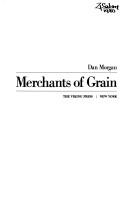
Merchants of Grain

Merchants of Grain

The family-owned firms, from Cargill to Bunge, that controlled the world grain trade.

Dan Morgan
1979
T2 406 pages · about 6h 46m to read Open Librarygoodreads

Cargill, Continental and the private grain oligopoly.

Summary

Morgan, a Washington Post journalist, wrote in 1979 the first substantial account of the private companies that dominated the international grain trade, principally Cargill, Continental Grain, Louis Dreyfus, Bunge and Andre. These firms were family-owned, disclosed almost nothing, and handled a large share of the world's traded grain.

The business material covers how the trade works: the firms buy from producers, transport and store, blend grades to meet contract specifications, and sell to importing countries, with margins coming from information about supply and demand conditions ahead of the market, from logistical capability, and from arbitrage between locations and delivery dates.

The central episode is the 1972 Soviet grain purchase, in which the Soviet Union, facing a harvest failure, bought enormous quantities of American wheat through several trading houses simultaneously and at subsidised prices, before the American government understood the scale of what was happening. Prices rose sharply afterwards and the episode became known as the great grain robbery. Morgan documents how the information asymmetry worked and how the trading houses profited.

He also covers the relationship between these private firms and American agricultural and foreign policy, including the use of food aid as an instrument. The reference has verified the book's subject and its principal episode rather than every detail. The book is from 1979 and the industry has changed, with consolidation, the growth of Asian and Chinese state buyers, and greater transparency in some markets. It remains the foundational account of an industry that handles essential commodities with almost no public visibility.

Key takeaways 8

  1. A small number of private family-owned companies handled a large share of the world's traded grain while disclosing almost nothing.
  2. Margins came from information about supply and demand ahead of the market, from logistical capability and from arbitrage between locations and dates.
  3. The Soviet Union bought enormous quantities of American wheat in 1972 through several trading houses simultaneously, before the government understood the scale.
  4. Information asymmetry between private traders and governments allowed the trading houses to profit from a transaction that raised prices for everyone.
  5. Blending grades to meet contract specifications is a source of margin invisible to anyone outside the physical trade.
  6. Private firms operated as instruments of national agricultural and foreign policy without being accountable through any political process.
  7. Food supply was used as a policy instrument, which made the trading houses participants in foreign policy rather than only in commerce.
  8. The industry has consolidated and changed substantially since 1979, including the growth of state buyers and greater market transparency.

Who should read it

Investors and operators in agriculture and commodities who want the foundational account of how the physical grain trade operates.

Who recommended it 1 · 1 direct

Similar books 6

Chosen by shared topics, the entries that hold them, and the people who recommended both.
Jim Rogers · 2004

Why years of low prices and Chinese demand set up a long commodity bull market.

Recommended by: Mohnish Pabrai
Javier Blas, Jack Farchy · 2021

The history of the commodity traders Vitol, Glencore, Trafigura and Cargill.
Daniel Ammann · 2009

Marc Rich, who created the modern oil trading business.

Recommended by: Mohnish Pabrai
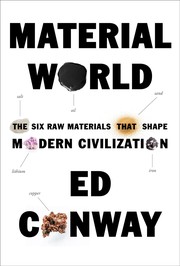
Ed Conway · 2023

Six materials the world runs on, sand, salt, iron, copper, oil and lithium, traced.
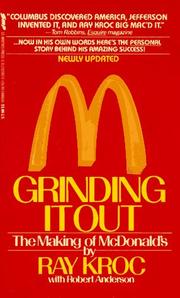
Ray Kroc, Robert Anderson · 1977

A milkshake-machine salesman finds the McDonald brothers and builds the franchise.

Recommended by: Mohnish Pabrai
Garrett Hardin · 1993

Population and consumption face physical limits that economics ignores.

“In Living Within Limits, Hardin focuses on the neglected problem of overpopulation, making a forceful case for dramatically changing the way we live in and manage our world. Our world itself, he writes, is in the dilemma of the lifeboat: it can only hold a certain number of people before it sinks-not everyone can be saved.” — Shane Parrish

Source: What Books Would You Recommend Someone Read to Improve their General Knowledge of the World?

Recommended by: Charlie Munger, Mohnish Pabrai and 1 other

Where it sits in the reference 5

Assets
Industries
Secular themes
Industries
Economics

Topics 2

Company HistoriesEconomics