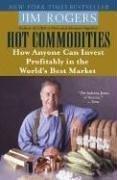
Hot Commodities
Why years of low prices and Chinese demand set up a long commodity bull market.
The retail case for a commodity supercycle, from a practitioner.
Summary
Rogers makes the case that commodities were entering a long bull market, arguing from the history of commodity price cycles and from a supply argument: two decades of low prices had stopped investment in new mines, wells and farmland, while Chinese industrialisation was adding demand faster than supply could respond. He argues commodity bull markets have historically lasted fifteen to twenty years, and that the one starting around 1999 had a long way to run.
The practical content covers how commodity markets work for someone who has only traded securities: futures contracts, contango and backwardation, roll yield, the difference between the major indices, and why he built his own index with different weightings. He gives chapters on individual commodities including oil, gold, lead, sugar and coffee, each with a supply-and-demand argument. He also argues that commodities are negatively correlated with financial assets and less volatile than most equity investors assume.
Rogers was substantially right about the direction from 2004 to 2008 and wrong about the duration. The commodity supercycle he described peaked in 2008, recovered, and then broke down after 2011 as shale supply, Chinese investment slowdown and new mine capacity arrived. The specific price calls have not aged well and the book's confidence about the impossibility of large supply responses was refuted directly by shale. What remains useful is the supply-cycle framework, which is the same logic Marathon applies in Capital Returns, and the plain explanation of futures market mechanics. Read it as a period document and a primer, not as a forecast.
Key takeaways 7
- Commodity bull markets are driven primarily by prior underinvestment in supply, and the lag between price signal and new production is measured in years or decades.
- Historic commodity cycles have run roughly fifteen to twenty years in each direction, which sets the base rate for how long a trend can persist.
- Commodity returns have historically shown low or negative correlation with equities and bonds, which makes them a portfolio diversifier rather than only a directional bet.
- Investors gain commodity exposure more reliably through futures indices than through the shares of producers, because equity returns are contaminated by company-specific and market risk.
- Roll yield, determined by whether a futures curve is in contango or backwardation, contributes a large share of long-run index return.
- Chinese industrialisation represented a demand shift large enough to absorb existing global supply of several industrial commodities.
- Government price controls and subsidies suppress the supply response and therefore lengthen and worsen shortages.
Who should read it
Investors wanting a plain introduction to commodity futures mechanics and the supply-cycle argument, read with the knowledge that its central forecast expired in 2011.
About Jim Rogers
Co-founder, Quantum Fund 1973-1980; creator of the Rogers International Commodity Index
Long public commodities record plus Investment Biker and Hot Commodities, which outlasted their news cycles.
Who recommended it 2 · 2 direct
“Very specific book about understanding the commodity markets.”
Similar books 6
Chosen by shared topics, the entries that hold them, and the people who recommended both.
The family-owned firms, from Cargill to Bunge, that controlled the world grain trade.
Recommended by: Mohnish Pabrai
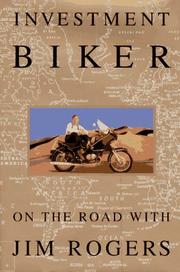
An investor's view of the world from a 52-country motorcycle journey.
“Some of the other good reads this summer included Investment Biker and Adventure Capitalist (both by Jim Rogers).” — Mohnish Pabrai
Source: Pabrai Investment Funds letter to partners (101103), page 6
Recommended by: Mohnish Pabrai
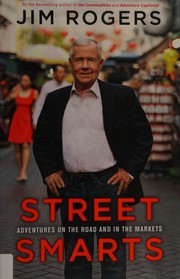
An investor's lessons from a lifetime in markets and travels around the world.
Recommended by: Mohnish Pabrai
Six materials the world runs on, sand, salt, iron, copper, oil and lithium, traced.
The history of the commodity traders Vitol, Glencore, Trafigura and Cargill.
Why China would lead this century's economy, and a guide to investing there.
“Very specific book about investing in China's stock market.” — Derek Sivers
Source: Derek Sivers book notes (primary, rated list) · Rating: 1/10
Recommended by: Derek Sivers, Mohnish Pabrai