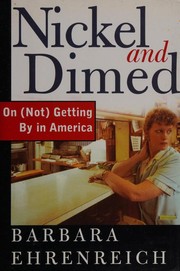
Nickel and Dimed: On (Not) Getting By in America
A writer works low-wage jobs to test whether any job means a better life.
Summary
Barbara Ehrenreich went undercover in low-wage jobs to test the promise of the 1996 welfare reform that any job means a better life. Between spring 1998 and summer 2000 she moved from Florida to Maine to Minnesota, took the cheapest lodging she could find, and worked as a waitress, hotel maid, house cleaner, nursing-home aide and Wal-Mart salesperson, asking how anyone survives on $6 to $7 an hour.
She found that even the lowest-ranked jobs demand exhausting mental and physical effort, and that one job is not enough: a worker needs at least two to live indoors. Her account shows low-wage America of big-box stores and fast food, its anxiety, persistence and unexpected generosity, and the many strategies people use to get by. The book grew from her January 1999 article in Harper's Magazine and was published by Metropolitan Books in 2001. The Guardian ranked it 13th among the 100 best books of the 21st century in 2019. A companion, Bait and Switch (2005), records her search for a white-collar job.
Key takeaways 4
- Ehrenreich tested welfare reform's claim that any job leads to a better life.
- Wages of $6 to $7 an hour did not cover rent and food in any of her three cities.
- Low-wage work demands heavy physical and mental effort.
- Many low-wage workers need two jobs to keep a roof over their heads.
Who should read it
Readers who want a first-hand account of working-poor life in the United States.
Who recommended it 1 · 1 direct
Similar books 6
Chosen by shared topics, the entries that hold them, and the people who recommended both.
How new technologies are erasing millions of jobs, and what to do about it.
Recommended by: Nat Eliason
The long-run dynamics of wealth and inequality, and why capital concentrates.
Recommended by: Bill Gates, Mohnish Pabrai, Peter Thiel and 1 other
The new global super-rich and the widening gap between them and everyone else.
Recommended by: Mohnish Pabrai
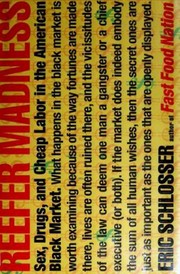
America's black market, seen through sex, drugs and cheap labour.
Recommended by: Jim Collins, Mohnish Pabrai
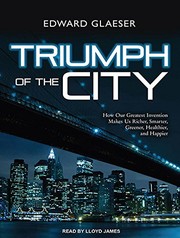
How dense cities make people more productive, inventive and green.
“on the central role cities play in our world and why it's so important for us to build them” — Marc Andreessen
Source: @pmarca, companion thread to 'It's Time to Build'
Recommended by: Marc Andreessen, Mohnish Pabrai and 2 others
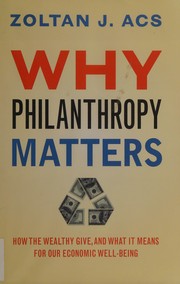
How the wealthy give, and philanthropy's part in America's economic health.
Recommended by: Mohnish Pabrai