Updates

  1. Person pages list letters, writing, profiles and links as sortable tables with filters, and show each person's companies as links; Fund letters show each letter's description in its own column.
  2. Experts show a checked job title and a short description of each person; 30 more people have photographs.
  3. Every company, fund, university and publication the experts work for has a page listing the people there.
  4. Fund letters show each letter's thesis and filter by it; 225 person pages list the essays, columns and newsletter issues the person wrote.
  5. Person pages list every essay and newsletter issue a person wrote, and their own books as a table in List view.
  6. Recommends shows the five largest kinds of book and the rest under More; browse pictures load sooner.
  7. Podcasts and talks link the original episode, filter by Audio and video or Press, and list each publisher once.
  8. Pages are wider, Recommends has List and Grid, and a filter clicked again turns off.
  9. Book cards sit in a ruled grid with Open Library and Goodreads links and each book's one-line note.
  10. Funds is now Investors; each investor's styles are buttons that filter the table.
  11. Podcasts and talks on a person's page filter by year and publisher and show as a list or a grid of pictures.
  12. Quotes show only people's own words: 472 summaries written by list sites are gone.
  13. Country pages open from Browse again, and every link on the shelf lands on a page.
  14. Subject and person pages show their sections as tabs, and each book appears once on a person's page.
  15. Book cards show the quote, who said it and the source; grids show five cards to a row.
  16. On a phone, a menu holds the sections, search, Updates, Feedback and dark mode.
  17. Feedback takes a screenshot of the page with no browser prompt, opens a screenshot full size when you click it, and clears itself once sent.
  18. Book cards are centred, search names the topic each book sits in, and any text cut short shows whole on hover.
  19. Search groups its results by kind: people, companies, geographies, subjects, topics, books, funds, fund letters and papers.
  20. The Books table lists who recommended each book by name, and the browser tab names the section you are in.
  21. Feedback can take a screenshot of the page, or one you paste or choose, and opens in the corner beside Updates.
  22. Each rail button reopens its section where you left it, and Browse, Table and People show on every book and subject page.
  23. Filters grey out choices that hold nothing instead of hiding them, and Books › People filters by authors or recommenders.
  24. Feedback takes a subject line and up to three screenshots.
  25. Biographies are grouped by the person they are about: 41 new pages, from Abraham Lincoln to Lee Kuan Yew.
  26. Sport splits into 23 sports, and Religion into one topic per faith.
  27. Book lists show as cards: the cover, one recommendation quote and every recommender by name.
  28. Seventeen subjects that had two or three pages under different names now have one page each.
  29. Every page lists its Experts as authors and recommenders, with a link to them on the Experts tab.
  30. Economics, Financial history, Financial panics and Accounting are subjects of their own, with one page per financial crisis.
  31. Book, person and subject pages open inside the app, so the tabs stay in view.
  32. 996 more book covers, and photographs or logos for 227 more people and companies.
  33. Books › Browse shows every subject as cards, and the rail holds Fund letters, Papers, Experts, Books and Funds.
  34. Every topic over 150 books splits into narrower topics, each with a page of its own.

Send feedback

What is it?
Screenshots, up to 3 (optional)
or paste one with Ctrl+V

We use your email only to reply to you.

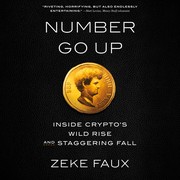
Number Go Up: Inside Crypto's Wild Rise and

Number Go Up: Inside Crypto's Wild Rise and Staggering Fall

Zeke Faux
2023
T2 320 pages · about 5h 20m to read Open Librarygoodreads

Wider crypto reporting with FTX at its center.

Summary

Faux, a Bloomberg investigative reporter, spent two years reporting on cryptocurrency during the 2021 boom and 2022 collapse, initially trying to answer one question: whether Tether, the stablecoin backing most crypto trading, actually held the dollars it claimed.

The reporting takes him through the whole sector. He covers Tether's opaque reserves and its executives' refusal to demonstrate them, the NFT market and its wash trading, Sam Bankman-Fried and FTX before and after the collapse, Do Kwon and the Terra-Luna failure, El Salvador's bitcoin adoption, and a Cambodian compound where trafficked workers were forced to run pig butchering romance scams that converted victims' savings into crypto.

His conclusion is that he found almost no legitimate use for the technology beyond speculation and crime, and that the industry's stated purposes did not correspond to what anyone was actually doing with it. He reports that the scam compounds were the largest genuine use case he encountered.

The reporting is first-hand and Faux is funny about his own position as a sceptic embedded among believers. He is explicit that he could not prove Tether was insolvent and did not, which is a mark of honesty rather than a weakness.

The book is journalism and it argues a position rather than assessing the technology's potential neutrally. Readers who think blockchain has legitimate applications will find those unexamined. As reporting on what the 2021 to 2022 cycle actually consisted of, it is the best single account.

Key takeaways 7

  1. Tether, which backs most cryptocurrency trading, has never demonstrated that it holds the reserves it claims, and its executives declined every opportunity to do so.
  2. The 2021 boom was sustained by leverage and by a stablecoin whose backing nobody had verified, which made the whole market dependent on one unaudited entity.
  3. NFT trading volumes were substantially wash trading, in which the same parties traded with themselves to create the appearance of a market.
  4. Terra's algorithmic stablecoin failed for the reason its critics stated in advance, that the mechanism depended on continuous new demand for the paired token.
  5. Pig butchering scams run from trafficking compounds in Southeast Asia were the largest genuine use case Faux encountered for cryptocurrency transfers.
  6. El Salvador's bitcoin adoption was largely unused by its population, who continued to transact in dollars.
  7. The industry's stated purposes did not correspond to what participants were actually doing with the technology, which was speculating and moving criminal proceeds.

Who should read it

Investors who want first-hand reporting on what the 2021 to 2022 crypto cycle actually consisted of, from a sceptical position.

Similar books 6

Chosen by shared topics, the entries that hold them, and the people who recommended both.
Ben McKenzie, Jacob Silverman · 2023

Includes the authors' own interview with Bankman-Fried.
Michael Lewis · 2023

Sam Bankman-Fried's rise through Jane Street, Alameda and FTX to its collapse.

Recommended by: Andrew Wilkinson

Laura Shin · 2022

The Ethereum world and token economics FTX was built to trade.
David Gerard · 2017

The sceptic's brief against crypto claims.
Where it sits in the reference 3

Companies
Biographies
Assets

Topics

Finance and MarketsTechnology and ComputingCrypto and financial technology