Updates

  1. Person pages list letters, writing, profiles and links as sortable tables with filters, and show each person's companies as links; Fund letters show each letter's description in its own column.
  2. Experts show a checked job title and a short description of each person; 30 more people have photographs.
  3. Every company, fund, university and publication the experts work for has a page listing the people there.
  4. Fund letters show each letter's thesis and filter by it; 225 person pages list the essays, columns and newsletter issues the person wrote.
  5. Person pages list every essay and newsletter issue a person wrote, and their own books as a table in List view.
  6. Recommends shows the five largest kinds of book and the rest under More; browse pictures load sooner.
  7. Podcasts and talks link the original episode, filter by Audio and video or Press, and list each publisher once.
  8. Pages are wider, Recommends has List and Grid, and a filter clicked again turns off.
  9. Book cards sit in a ruled grid with Open Library and Goodreads links and each book's one-line note.
  10. Funds is now Investors; each investor's styles are buttons that filter the table.
  11. Podcasts and talks on a person's page filter by year and publisher and show as a list or a grid of pictures.
  12. Quotes show only people's own words: 472 summaries written by list sites are gone.
  13. Country pages open from Browse again, and every link on the shelf lands on a page.
  14. Subject and person pages show their sections as tabs, and each book appears once on a person's page.
  15. Book cards show the quote, who said it and the source; grids show five cards to a row.
  16. On a phone, a menu holds the sections, search, Updates, Feedback and dark mode.
  17. Feedback takes a screenshot of the page with no browser prompt, opens a screenshot full size when you click it, and clears itself once sent.
  18. Book cards are centred, search names the topic each book sits in, and any text cut short shows whole on hover.
  19. Search groups its results by kind: people, companies, geographies, subjects, topics, books, funds, fund letters and papers.
  20. The Books table lists who recommended each book by name, and the browser tab names the section you are in.
  21. Feedback can take a screenshot of the page, or one you paste or choose, and opens in the corner beside Updates.
  22. Each rail button reopens its section where you left it, and Browse, Table and People show on every book and subject page.
  23. Filters grey out choices that hold nothing instead of hiding them, and Books › People filters by authors or recommenders.
  24. Feedback takes a subject line and up to three screenshots.
  25. Biographies are grouped by the person they are about: 41 new pages, from Abraham Lincoln to Lee Kuan Yew.
  26. Sport splits into 23 sports, and Religion into one topic per faith.
  27. Book lists show as cards: the cover, one recommendation quote and every recommender by name.
  28. Seventeen subjects that had two or three pages under different names now have one page each.
  29. Every page lists its Experts as authors and recommenders, with a link to them on the Experts tab.
  30. Economics, Financial history, Financial panics and Accounting are subjects of their own, with one page per financial crisis.
  31. Book, person and subject pages open inside the app, so the tabs stay in view.
  32. 996 more book covers, and photographs or logos for 227 more people and companies.
  33. Books › Browse shows every subject as cards, and the rail holds Fund letters, Papers, Experts, Books and Funds.
  34. Every topic over 150 books splits into narrower topics, each with a page of its own.

Send feedback

What is it?
Screenshots, up to 3 (optional)
or paste one with Ctrl+V

We use your email only to reply to you.

SBF: How the FTX Bankruptcy Unwound Crypto's

SBF: How the FTX Bankruptcy Unwound Crypto's Very Bad Good Guy

Brady Dale
2023
T3 Open Librarygoodreads

Crypto-trade reporter's mechanics-first account.

Summary

Dale, a cryptocurrency reporter at Axios, wrote an early account of Sam Bankman-Fried, FTX and Alameda Research, published within a year of the November 2022 collapse.

The reporting covers the sequence. Alameda Research began as a trading firm exploiting the price difference between Bitcoin in Japan and in the United States. FTX was founded as a derivatives exchange offering high leverage and novel products. The FTT token, issued by FTX itself, was used as collateral and counted as an asset, which meant that a large share of the group's apparent equity consisted of a token it had created and whose price it influenced. Alameda held customer funds transferred from FTX. When CoinDesk published Alameda's balance sheet showing the FTT concentration and Binance announced it would sell its FTT holdings, the token fell, the collateral evaporated, and customer withdrawals could not be met.

Dale also covers the effective altruism connection, the political donations, the celebrity endorsements and the media treatment that had presented Bankman-Fried as the responsible figure in the industry, and the bankruptcy process under John Ray.

The book was written before and during the criminal trial, so it does not have the trial record, and Michael Lewis's Going Infinite and subsequent accounts cover later material. Dale writes from inside the cryptocurrency press, which gives him context on the industry and also means he is describing a world he covers professionally. The account of the token collateral mechanism is the technically important part and it is accurate.

Key takeaways 7

  1. FTX counted a token it had itself created and whose price it influenced as collateral backing its own balance sheet.
  2. Customer deposits at the exchange were transferred to the affiliated trading firm, which is the specific act at the centre of the fraud.
  3. The collapse was triggered by publication of a balance sheet showing the token concentration, followed by a large holder announcing a sale.
  4. A token issued by the entity holding it as collateral provides no protection, because its price falls exactly when the collateral is needed.
  5. Effective altruism affiliation and political donations functioned as reputational cover that deterred scrutiny.
  6. Institutional investors performed diligence that did not include verifying the segregation of customer assets.
  7. The exchange had no functioning corporate governance, board oversight or accounting function despite its scale.

Who should read it

Investors and allocators who want an early account of the FTX collapse and the specific mechanism by which self-issued token collateral produced fictitious equity.

Similar books 6

Chosen by shared topics, the entries that hold them, and the people who recommended both.
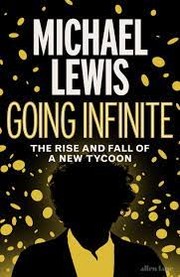
Michael Lewis · 2023

Sam Bankman-Fried's rise through Jane Street, Alameda and FTX to its collapse.

Recommended by: Andrew Wilkinson
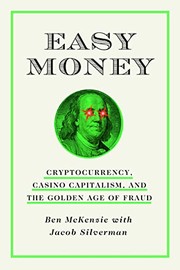
Ben McKenzie, Jacob Silverman · 2023

Includes the authors' own interview with Bankman-Fried.
Zeke Faux · 2023

Two years inside the 2021 crypto boom and 2022 bust, starting from Tether.
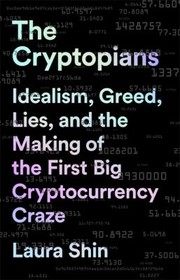
Laura Shin · 2022

The Ethereum world and token economics FTX was built to trade.
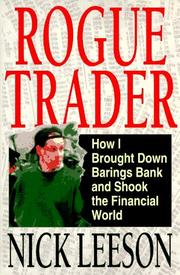
Nick Leeson, Edward Whitley · 1996

How one trader's hidden losses in Singapore brought down Barings Bank.

Where it sits in the reference 4

Companies
Biographies
Assets
Financial history

Topics

Biography and MemoirCompany HistoriesFinance and Markets