Orthodoxy
How a search for a philosophy of his own led him to Christian theology.
Summary
The reference has not verified this book in detail; the summary states only what the title, author and subject establish.
Chesterton wrote Orthodoxy in answer to critics who said his earlier collection Heretics had merely attacked current philosophies without offering one of his own. He recounts his intellectual journey from pagan to agnostic to positivist philosopher, during which he tried to build a philosophy of his own some ten minutes in advance of the truth. When he compared that philosophy with Christian theology he found he was the man who, with the utmost daring, discovered what had been discovered before.
The book is therefore a work of Christian apologetics written as autobiography of ideas. Chesterton argues that Christianity answers the everyday needs of humanity universally, rather than being an arbitrary system handed down from above. The sources consulted describe its purpose and argument but not its individual chapters, so this account is limited to its frame and central claim. It was published in 1908.
Key takeaways 4
- A critic who attacks other philosophies owes the reader a statement of his own.
- Trying to stay ahead of the truth can lead a thinker back to ideas that were already established.
- Chesterton found that the theology he had rejected met the needs his modern philosophies had failed to meet.
- A belief can be defended by showing how it fits everyday experience, not only by appeal to authority.
Who should read it
Readers who want a classic statement of why a sceptical modern writer came to accept traditional Christianity.
Similar books 6
Chosen by shared topics, the entries that hold them, and the people who recommended both.
A Christian plan for success and life in middle age.
Recommended by: Mohnish Pabrai
A Christian guide to moving from success to significance in midlife.
Recommended by: Mohnish Pabrai, Alfred Lin
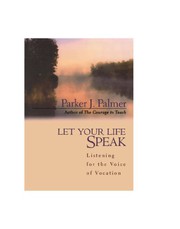
Listening to one's inner teacher to find a vocation and a sense of purpose.
“Let Your Life Speak was really good.” — Brad Feld
Source: Book: Let Your Life Speak — Feld Thoughts
Recommended by: Brad Feld, Jerry Colonna and 2 others
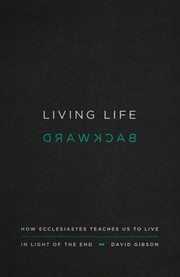
Reflections on death and how to live, drawn from the Bible's poetical books.
Recommended by: Brent Beshore, Chris Powers
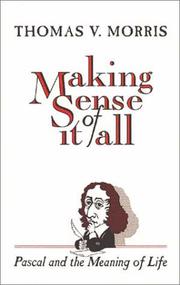
A philosopher on life, death, faith and religion, for sceptics and believers.
Recommended by: Mohnish Pabrai