Other People's Money
The Stuyvesant Town purchase and the largest real estate loss on record.
The Stuyvesant Town deal and the largest real estate loss on record.
Summary
Bagli, a New York Times real estate reporter, reconstructs the 2006 purchase of Stuyvesant Town and Peter Cooper Village in Manhattan by Tishman Speyer and BlackRock for 5.4 billion dollars, the largest residential real estate transaction in American history, and its collapse into default within four years.
The transaction's economics are the substance. The complex contained more than eleven thousand apartments, most of them rent-regulated at rents far below market. The purchase price could only be justified if a large majority of those units were converted to market rents quickly, which required either that tenants leave voluntarily or that they be removed on the grounds that the apartment was not their primary residence. The buyers' model assumed a conversion rate that no operator had ever achieved, and the debt was structured with interest reserves that would exhaust within a few years if the conversions did not occur.
The conversions did not occur. Tenants organised and litigated, a court ruled that the previous owner had improperly deregulated units while receiving tax benefits, which required rents to be rolled back and refunds paid, and the property defaulted.
Bagli covers the investors, including pension funds that lost their entire commitments, and the tenants, and he is good on both. The book is a case study in underwriting that depended on an assumption nobody tested and on a regulatory position that was not secure. It applies directly to any acquisition whose returns depend on changing something the seller could not change.
Key takeaways 7
- The purchase price could only be justified by converting rent-regulated apartments to market rates at a pace no operator had ever achieved.
- Underwriting that depends on changing something the previous owner could not change requires evidence about why the new owner can, and there was none.
- The debt was structured with interest reserves that would exhaust within a few years if the conversion assumption failed, which removed any margin for delay.
- A court ruling that the previous owner had improperly deregulated units while receiving tax benefits required rent rollbacks and refunds that destroyed the model.
- Regulatory positions that appear settled can be reversed by litigation, and an acquisition whose value depends on one carries that as an unhedged risk.
- Tenants in a large residential property are an organised counterparty with legal resources, which distinguishes residential from commercial underwriting.
- Pension funds that invested lost their entire commitments, which shows the transaction's risk was not understood by the institutions funding it.
Who should read it
Real estate investors and anyone underwriting a transaction whose returns depend on changing conditions the seller could not change.
Who recommended it 1 · 1 direct
Similar books 6
Chosen by shared topics, the entries that hold them, and the people who recommended both.
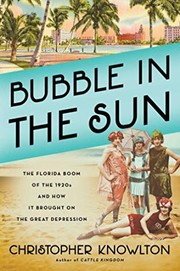
The Florida land boom of the 1920s and how its collapse fed the Depression.
“The telling of America's first modern bubble: the Florida real estate boom of the 1920s.” — Morgan Housel
Source: A Few Good Books · Collaborative Fund
Recommended by: Morgan Housel
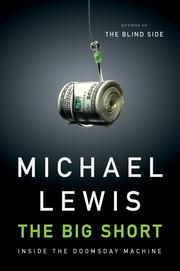
The few investors who saw subprime mortgage bonds would fail, and bet against them.
“Lewis, Michael, The Big Short: Inside the Doomsday Machine (New York: W.W. Norton & Company, 2010)” — Michael Mauboussin
Source: Blaming the Rat: Incentives, Motivation, and How They Interact, page 15
Recommended by: Jim Collins, Michael Mauboussin and 7 others
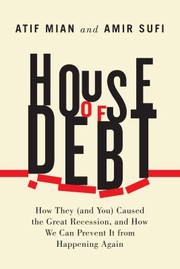
County data showing household debt, not the banks, caused the Great Recession.
A beginner's survey of the ways an individual can invest in real estate.
Recommended by: Nat Eliason
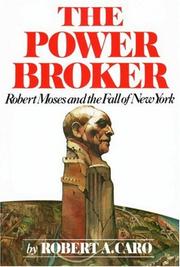
How an unelected official amassed power and used it to rebuild New York.
“The Power Broker remains one of the best books ever written about New York.” — The Rational Walk
Source: The Digest #216 - The Rational Walk
Recommended by: Balaji S. Srinivasan, Jim Collins and 8 others
The 2008 crisis, the policy response and the aftermath, for general readers.
Where it sits in the reference 3
Topics 2
As an Amazon Associate I earn from qualifying purchases.