Updates

  1. Person pages list letters, writing, profiles and links as sortable tables with filters, and show each person's companies as links; Fund letters show each letter's description in its own column.
  2. Experts show a checked job title and a short description of each person; 30 more people have photographs.
  3. Every company, fund, university and publication the experts work for has a page listing the people there.
  4. Fund letters show each letter's thesis and filter by it; 225 person pages list the essays, columns and newsletter issues the person wrote.
  5. Person pages list every essay and newsletter issue a person wrote, and their own books as a table in List view.
  6. Recommends shows the five largest kinds of book and the rest under More; browse pictures load sooner.
  7. Podcasts and talks link the original episode, filter by Audio and video or Press, and list each publisher once.
  8. Pages are wider, Recommends has List and Grid, and a filter clicked again turns off.
  9. Book cards sit in a ruled grid with Open Library and Goodreads links and each book's one-line note.
  10. Funds is now Investors; each investor's styles are buttons that filter the table.
  11. Podcasts and talks on a person's page filter by year and publisher and show as a list or a grid of pictures.
  12. Quotes show only people's own words: 472 summaries written by list sites are gone.
  13. Country pages open from Browse again, and every link on the shelf lands on a page.
  14. Subject and person pages show their sections as tabs, and each book appears once on a person's page.
  15. Book cards show the quote, who said it and the source; grids show five cards to a row.
  16. On a phone, a menu holds the sections, search, Updates, Feedback and dark mode.
  17. Feedback takes a screenshot of the page with no browser prompt, opens a screenshot full size when you click it, and clears itself once sent.
  18. Book cards are centred, search names the topic each book sits in, and any text cut short shows whole on hover.
  19. Search groups its results by kind: people, companies, geographies, subjects, topics, books, funds, fund letters and papers.
  20. The Books table lists who recommended each book by name, and the browser tab names the section you are in.
  21. Feedback can take a screenshot of the page, or one you paste or choose, and opens in the corner beside Updates.
  22. Each rail button reopens its section where you left it, and Browse, Table and People show on every book and subject page.
  23. Filters grey out choices that hold nothing instead of hiding them, and Books › People filters by authors or recommenders.
  24. Feedback takes a subject line and up to three screenshots.
  25. Biographies are grouped by the person they are about: 41 new pages, from Abraham Lincoln to Lee Kuan Yew.
  26. Sport splits into 23 sports, and Religion into one topic per faith.
  27. Book lists show as cards: the cover, one recommendation quote and every recommender by name.
  28. Seventeen subjects that had two or three pages under different names now have one page each.
  29. Every page lists its Experts as authors and recommenders, with a link to them on the Experts tab.
  30. Economics, Financial history, Financial panics and Accounting are subjects of their own, with one page per financial crisis.
  31. Book, person and subject pages open inside the app, so the tabs stay in view.
  32. 996 more book covers, and photographs or logos for 227 more people and companies.
  33. Books › Browse shows every subject as cards, and the rail holds Fund letters, Papers, Experts, Books and Funds.
  34. Every topic over 150 books splits into narrower topics, each with a page of its own.

Send feedback

What is it?
Screenshots, up to 3 (optional)
or paste one with Ctrl+V

We use your email only to reply to you.

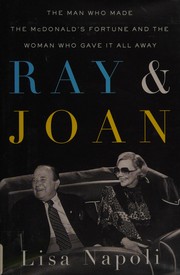
Ray & Joan

Ray & Joan

Lisa Napoli
2016
T3 353 pages · about 5h 53m to read Open Librarygoodreads

The Krocs, the fortune, and the philanthropy it funded.

Summary

Lisa Napoli tells the story of Ray Kroc and Joan Kroc together, treating the McDonald's business history and the philanthropic disposal of the resulting fortune as one narrative. Joan Kroc gave away roughly two billion dollars, including a bequest of over one and a half billion to the Salvation Army, the largest single gift the organisation had received.

The business material covers Kroc's career as a milkshake machine salesman, his discovery of the McDonald brothers' San Bernardino operation in 1954, the franchising arrangement he negotiated and its inadequate economics for him, and the intervention of Harry Sonneborn, who worked out that the money was in real estate: McDonald's would lease sites and sublease them to franchisees at a markup, which produced both income and control. Napoli covers the buyout of the McDonald brothers in 1961 and the subsequent dispute over the handshake royalty agreement.

The Joan Kroc material covers her marriage to Ray, her funding of causes he opposed including nuclear disarmament and Democratic politics, her ownership of the San Diego Padres, and the structure of her final bequests including the Kroc Institute at Notre Dame and the network of Salvation Army community centres. The book is popular biography rather than business analysis. Readers wanting McDonald's operating history should go to John Love's McDonald's: Behind the Arches. The real estate insight is well told here and is the part a business reader will want.

Key takeaways 7

  1. McDonald's became profitable for Kroc through real estate, leasing sites and subleasing them to franchisees at a markup, not through franchise royalties.
  2. Controlling the property gave the franchisor leverage over franchisee behaviour that a royalty agreement alone could not provide.
  3. Kroc's original franchise terms were too generous to franchisees to support a corporate business, which nearly ended the company.
  4. Standardisation across outlets was enforced through operational inspection and through the threat of lease termination.
  5. The McDonald brothers designed the operating system and sold it for a fixed sum, which transferred the entire value of the concept.
  6. Napoli argues that Joan Kroc's philanthropy deliberately funded causes her husband had opposed, which shaped where the fortune went.
  7. Large unrestricted bequests can transform a recipient organisation's capacity and also strain its ability to absorb them.

Who should read it

Founders and investors in franchised businesses who want the origin of the property-based franchise model, alongside a study of how a fortune was given away.

Similar books 6

Chosen by shared topics, the entries that hold them, and the people who recommended both.
Ray Kroc, Robert Anderson · 1977

A milkshake-machine salesman finds the McDonald brothers and builds the franchise.

Recommended by: Mohnish Pabrai
Max Boas, Steve Chain · 1976

Early unauthorised account of the franchise and real-estate machine.

John F. Love · 1986

McDonald's to the mid-1980s, from the brothers' stand to Kroc's franchise system.

Recommended by: Mohnish Pabrai
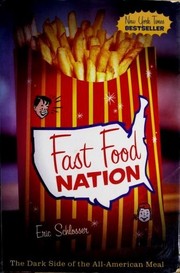
Eric Schlosser · 2001

How fast food reshaped farming, meatpacking, food science and low-wage work.

Debra Lee Baldwin · 1999

Glen Bell's rise from poverty to build Taco Bell and sell it for $130 million.

Recommended by: Mohnish Pabrai
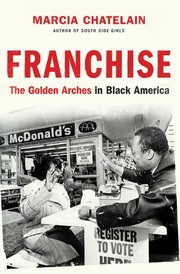
Marcia Chatelain · 2020

How McDonald's and fast-food franchising became bound up with Black America.

Where it sits in the reference 2

Companies
Biographies

Topics

Biography and MemoirCompany HistoriesFounders and EntrepreneursFood and restaurant founders