Updates

  1. Person pages list letters, writing, profiles and links as sortable tables with filters, and show each person's companies as links; Fund letters show each letter's description in its own column.
  2. Experts show a checked job title and a short description of each person; 30 more people have photographs.
  3. Every company, fund, university and publication the experts work for has a page listing the people there.
  4. Fund letters show each letter's thesis and filter by it; 225 person pages list the essays, columns and newsletter issues the person wrote.
  5. Person pages list every essay and newsletter issue a person wrote, and their own books as a table in List view.
  6. Recommends shows the five largest kinds of book and the rest under More; browse pictures load sooner.
  7. Podcasts and talks link the original episode, filter by Audio and video or Press, and list each publisher once.
  8. Pages are wider, Recommends has List and Grid, and a filter clicked again turns off.
  9. Book cards sit in a ruled grid with Open Library and Goodreads links and each book's one-line note.
  10. Funds is now Investors; each investor's styles are buttons that filter the table.
  11. Podcasts and talks on a person's page filter by year and publisher and show as a list or a grid of pictures.
  12. Quotes show only people's own words: 472 summaries written by list sites are gone.
  13. Country pages open from Browse again, and every link on the shelf lands on a page.
  14. Subject and person pages show their sections as tabs, and each book appears once on a person's page.
  15. Book cards show the quote, who said it and the source; grids show five cards to a row.
  16. On a phone, a menu holds the sections, search, Updates, Feedback and dark mode.
  17. Feedback takes a screenshot of the page with no browser prompt, opens a screenshot full size when you click it, and clears itself once sent.
  18. Book cards are centred, search names the topic each book sits in, and any text cut short shows whole on hover.
  19. Search groups its results by kind: people, companies, geographies, subjects, topics, books, funds, fund letters and papers.
  20. The Books table lists who recommended each book by name, and the browser tab names the section you are in.
  21. Feedback can take a screenshot of the page, or one you paste or choose, and opens in the corner beside Updates.
  22. Each rail button reopens its section where you left it, and Browse, Table and People show on every book and subject page.
  23. Filters grey out choices that hold nothing instead of hiding them, and Books › People filters by authors or recommenders.
  24. Feedback takes a subject line and up to three screenshots.
  25. Biographies are grouped by the person they are about: 41 new pages, from Abraham Lincoln to Lee Kuan Yew.
  26. Sport splits into 23 sports, and Religion into one topic per faith.
  27. Book lists show as cards: the cover, one recommendation quote and every recommender by name.
  28. Seventeen subjects that had two or three pages under different names now have one page each.
  29. Every page lists its Experts as authors and recommenders, with a link to them on the Experts tab.
  30. Economics, Financial history, Financial panics and Accounting are subjects of their own, with one page per financial crisis.
  31. Book, person and subject pages open inside the app, so the tabs stay in view.
  32. 996 more book covers, and photographs or logos for 227 more people and companies.
  33. Books › Browse shows every subject as cards, and the rail holds Fund letters, Papers, Experts, Books and Funds.
  34. Every topic over 150 books splits into narrower topics, each with a page of its own.

Send feedback

What is it?
Screenshots, up to 3 (optional)
or paste one with Ctrl+V

We use your email only to reply to you.

Big Mac: The Unauthorized Story of McDonald'

Big Mac: The Unauthorized Story of McDonald's

Max Boas, Steve Chain
1976
T4 185 pages · about 3h 5m to read Open Librarygoodreads

Early unauthorised account of the franchise and real-estate machine.

Summary

The reference has not verified this book in detail; the summary states only what the title, author and subject establish.

Boas and Chain wrote a critical account of McDonald's in 1976, when the company was expanding rapidly and before it became the subject of extensive business literature.

The reference has not verified the book's detailed contents. What the title and period establish is that this is an early unauthorised treatment, written from a position critical of the company, covering the Kroc period during which McDonald's grew from a regional franchise operation into a national chain.

The territory such an account covers includes the origins with the McDonald brothers' San Bernardino restaurant and Ray Kroc's acquisition of the franchising rights and later of the company itself; the operating system, meaning the standardisation of product, process and equipment that made consistency possible across thousands of outlets; the franchise model and the relationship between the company and its operators, including the real estate arrangement under which McDonald's owns or leases the sites and sublets them to franchisees, which is the actual source of the company's economics; the supply chain relationships with dedicated suppliers; the labour model based on low-skill, high-turnover employment at minimum wage; the marketing directed at children; and the nutritional characteristics of the food.

A critical account from 1976 would emphasise the labour practices, the effect on independent restaurants, the marketing to children and the food itself. Schlosser's Fast Food Nation covered similar ground twenty-five years later with more research.

Readers should verify the book's specific claims, which are from a period when the company was less documented than it later became.

Key takeaways 7

  1. McDonald's economics rest on real estate, since the company controls the sites and sublets them to franchisees.
  2. Standardisation of product, process and equipment is what made consistent output possible across thousands of independent operators.
  3. Ray Kroc acquired the franchising rights from the McDonald brothers and later bought the company and the name from them.
  4. The labour model depends on low-skill work that requires minimal training, which permits high turnover without operational damage.
  5. Dedicated supplier relationships gave the company control over inputs that arm's length purchasing would not have provided.
  6. Marketing directed at children was a deliberate strategy that drew criticism from the company's early expansion onward.
  7. The account is from 1976 and its specific claims should be verified against later documented sources.

Who should read it

Readers interested in early critical coverage of McDonald's, who should use later researched accounts for the substance.

Similar books 6

Chosen by shared topics, the entries that hold them, and the people who recommended both.
Ray Kroc, Robert Anderson · 1977

A milkshake-machine salesman finds the McDonald brothers and builds the franchise.

Recommended by: Mohnish Pabrai

John F. Love · 1986

McDonald's to the mid-1980s, from the brothers' stand to Kroc's franchise system.

Recommended by: Mohnish Pabrai
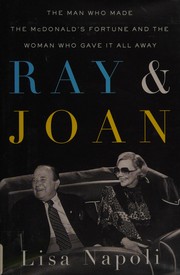
Lisa Napoli · 2016

The Krocs, the fortune, and the philanthropy it funded.

Eric Schlosser · 2001

How fast food reshaped farming, meatpacking, food science and low-wage work.

Marcia Chatelain · 2020

How McDonald's and fast-food franchising became bound up with Black America.
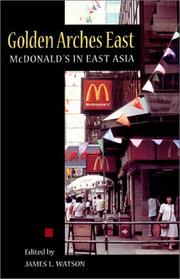
James L. Watson · 1997

Edited fieldwork on how the format was localised across Asia.

Where it sits in the reference 2

Companies
Biographies

Topics

Company Histories