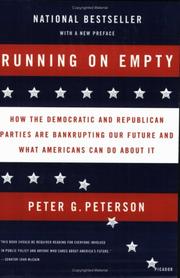
Running On Empty: How The Democratic and Republican Parties Are Bankrupting Our Future and What Americans Can Do About It
How both American parties are bankrupting the country's future.
Summary
Peter Peterson argues that both American parties are bankrupting the country's future. When George W. Bush took office in 2001, the ten-year budget was projected to show a surplus of $5.6 trillion. After three large tax cuts, the bursting of the stock-market bubble and the economic effects of 11 September, the surplus disappeared and the deficit was expected to grow to $5 trillion over the next decade.
America, once the greatest creditor nation, had become the largest debtor. With a $500 billion trade deficit and a weak savings rate, the country depended on $2 billion of foreign capital every working day, and if foreign confidence waned the result could be a hard landing. Peterson looks behind the politicians' tricks, traces the deterioration of the nation's finances, and sets out practical steps to secure the economic future of the next generation. Tom Brokaw called the book a wake-up call; a later edition adds a new preface.
Key takeaways 4
- A projected $5.6 trillion surplus in 2001 turned into large deficits within a few years.
- America moved from the world's largest creditor to its largest debtor.
- Dependence on $2 billion a day of foreign capital risks a hard landing.
- Peterson blames both parties and proposes concrete fiscal reforms.
Who should read it
Readers concerned with American fiscal policy, deficits and entitlement spending.
Who recommended it 2 · 2 direct
“In 2004, the Los Angeles Times asked me to write a review of Pete Peterson’s excellent book on the looming fiscal crisis, “Running on Empty.”
Similar books 6
Chosen by shared topics, the entries that hold them, and the people who recommended both.
Why government matters to a strong economy after the financial crisis.
Recommended by: Mohnish Pabrai
A short case for renewing the social contract against go-it-alone economics.
Recommended by: Mohnish Pabrai
What US parties, politics and citizen activism must change to secure the future.
Recommended by: Meg Whitman
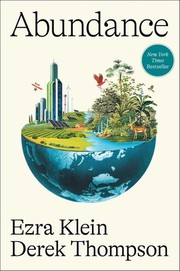
Why America lost the ability to build housing, energy and infrastructure.
Recommended by: Andrew Wilkinson, Bill Gates
A value investor applies his analysis to public policy on equality and growth.
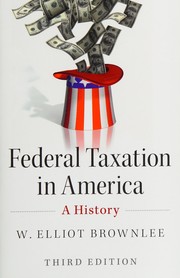
A history of federal taxation in the United States.
Recommended by: Paul Graham