Updates

  1. Person pages list letters, writing, profiles and links as sortable tables with filters, and show each person's companies as links; Fund letters show each letter's description in its own column.
  2. Experts show a checked job title and a short description of each person; 30 more people have photographs.
  3. Every company, fund, university and publication the experts work for has a page listing the people there.
  4. Fund letters show each letter's thesis and filter by it; 225 person pages list the essays, columns and newsletter issues the person wrote.
  5. Person pages list every essay and newsletter issue a person wrote, and their own books as a table in List view.
  6. Recommends shows the five largest kinds of book and the rest under More; browse pictures load sooner.
  7. Podcasts and talks link the original episode, filter by Audio and video or Press, and list each publisher once.
  8. Pages are wider, Recommends has List and Grid, and a filter clicked again turns off.
  9. Book cards sit in a ruled grid with Open Library and Goodreads links and each book's one-line note.
  10. Funds is now Investors; each investor's styles are buttons that filter the table.
  11. Podcasts and talks on a person's page filter by year and publisher and show as a list or a grid of pictures.
  12. Quotes show only people's own words: 472 summaries written by list sites are gone.
  13. Country pages open from Browse again, and every link on the shelf lands on a page.
  14. Subject and person pages show their sections as tabs, and each book appears once on a person's page.
  15. Book cards show the quote, who said it and the source; grids show five cards to a row.
  16. On a phone, a menu holds the sections, search, Updates, Feedback and dark mode.
  17. Feedback takes a screenshot of the page with no browser prompt, opens a screenshot full size when you click it, and clears itself once sent.
  18. Book cards are centred, search names the topic each book sits in, and any text cut short shows whole on hover.
  19. Search groups its results by kind: people, companies, geographies, subjects, topics, books, funds, fund letters and papers.
  20. The Books table lists who recommended each book by name, and the browser tab names the section you are in.
  21. Feedback can take a screenshot of the page, or one you paste or choose, and opens in the corner beside Updates.
  22. Each rail button reopens its section where you left it, and Browse, Table and People show on every book and subject page.
  23. Filters grey out choices that hold nothing instead of hiding them, and Books › People filters by authors or recommenders.
  24. Feedback takes a subject line and up to three screenshots.
  25. Biographies are grouped by the person they are about: 41 new pages, from Abraham Lincoln to Lee Kuan Yew.
  26. Sport splits into 23 sports, and Religion into one topic per faith.
  27. Book lists show as cards: the cover, one recommendation quote and every recommender by name.
  28. Seventeen subjects that had two or three pages under different names now have one page each.
  29. Every page lists its Experts as authors and recommenders, with a link to them on the Experts tab.
  30. Economics, Financial history, Financial panics and Accounting are subjects of their own, with one page per financial crisis.
  31. Book, person and subject pages open inside the app, so the tabs stay in view.
  32. 996 more book covers, and photographs or logos for 227 more people and companies.
  33. Books › Browse shows every subject as cards, and the rail holds Fund letters, Papers, Experts, Books and Funds.
  34. Every topic over 150 books splits into narrower topics, each with a page of its own.

Send feedback

What is it?
Screenshots, up to 3 (optional)
or paste one with Ctrl+V

We use your email only to reply to you.

Secrecy World

Secrecy World

Jake Bernstein
2017
T2 352 pages · about 5h 52m to read Open Librarygoodreads

How the offshore shell-company industry is actually built and sold.

Summary

Jake Bernstein was part of the International Consortium of Investigative Journalists team that worked on the Panama Papers, the leak of internal files from the Panamanian law firm Mossack Fonseca. This book is his account of what the documents showed and of how the offshore system operates.

The firm's business was incorporating anonymous companies in jurisdictions including the British Virgin Islands, Panama, Seychelles and Niue, and supplying nominee directors and shareholders so that the true owners did not appear on any record. Bernstein describes the intermediary structure: banks, lawyers and accountants around the world sold Mossack Fonseca companies to their own clients, and the firm frequently did not know who the ultimate owners were. He works through specific cases from the documents, including politicians and their relatives, sanctioned individuals, and the Icelandic prime minister whose resignation followed the disclosures.

His wider argument is that offshore secrecy is not a marginal activity conducted by a few disreputable jurisdictions but a service industry supplied by mainstream professionals in major financial centres, and that the United States itself is among the easier places to form an anonymous company. He also covers the real estate and art markets as destinations for the money. The book is journalism and works case by case rather than analytically. It predates the American Corporate Transparency Act and the expansion of beneficial ownership registers, which have changed parts of the picture.

Key takeaways 7

  1. Anonymous company formation is supplied by mainstream lawyers, accountants and banks rather than by a marginal offshore industry.
  2. Nominee directors and shareholders exist specifically to keep beneficial owners off any record that a regulator or journalist could reach.
  3. Mossack Fonseca frequently did not know who owned the companies it formed, because intermediaries stood between it and the client.
  4. The United States is among the easiest jurisdictions in which to form a company without disclosing its owner.
  5. Real estate and art purchases are the standard destinations for funds that need to leave the offshore structure.
  6. Bernstein argues that offshore secrecy persists because the professionals who supply it are also the constituency that would have to be regulated.
  7. Journalistic collaboration across borders was necessary because no single jurisdiction's authorities could act on the whole dataset.

Who should read it

Compliance professionals and investors assessing counterparty ownership who want a documented account of how anonymous structures are created and sold.

Similar books 6

Chosen by shared topics, the entries that hold them, and the people who recommended both.

Brooke Harrington · 2016

A sociologist trains as a wealth manager to show how fortunes are shielded offshore.

Ronen Palan, Richard Murphy, Christian Chavagneux · 2010

The academic account of what havens do and how they compete.

Nicholas Shaxson · 2011

How offshore finance works, with Britain and the City of London at its centre.

Oliver Bullough · 2022

How Britain built its overseas territories into a deliberate service industry.
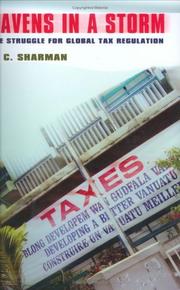
J. C. Sharman · 2006

How small jurisdictions fought off the OECD's harmful tax competition drive.

Oliver Bullough · 2018

How the offshore world lets officials who steal money hide it and spend it abroad.

Where it sits in the reference 1

Geographies

Topics

Politics and GovernmentFinance and MarketsGlobalisation, development and offshore money