Updates

  1. Person pages list letters, writing, profiles and links as sortable tables with filters, and show each person's companies as links; Fund letters show each letter's description in its own column.
  2. Experts show a checked job title and a short description of each person; 30 more people have photographs.
  3. Every company, fund, university and publication the experts work for has a page listing the people there.
  4. Fund letters show each letter's thesis and filter by it; 225 person pages list the essays, columns and newsletter issues the person wrote.
  5. Person pages list every essay and newsletter issue a person wrote, and their own books as a table in List view.
  6. Recommends shows the five largest kinds of book and the rest under More; browse pictures load sooner.
  7. Podcasts and talks link the original episode, filter by Audio and video or Press, and list each publisher once.
  8. Pages are wider, Recommends has List and Grid, and a filter clicked again turns off.
  9. Book cards sit in a ruled grid with Open Library and Goodreads links and each book's one-line note.
  10. Funds is now Investors; each investor's styles are buttons that filter the table.
  11. Podcasts and talks on a person's page filter by year and publisher and show as a list or a grid of pictures.
  12. Quotes show only people's own words: 472 summaries written by list sites are gone.
  13. Country pages open from Browse again, and every link on the shelf lands on a page.
  14. Subject and person pages show their sections as tabs, and each book appears once on a person's page.
  15. Book cards show the quote, who said it and the source; grids show five cards to a row.
  16. On a phone, a menu holds the sections, search, Updates, Feedback and dark mode.
  17. Feedback takes a screenshot of the page with no browser prompt, opens a screenshot full size when you click it, and clears itself once sent.
  18. Book cards are centred, search names the topic each book sits in, and any text cut short shows whole on hover.
  19. Search groups its results by kind: people, companies, geographies, subjects, topics, books, funds, fund letters and papers.
  20. The Books table lists who recommended each book by name, and the browser tab names the section you are in.
  21. Feedback can take a screenshot of the page, or one you paste or choose, and opens in the corner beside Updates.
  22. Each rail button reopens its section where you left it, and Browse, Table and People show on every book and subject page.
  23. Filters grey out choices that hold nothing instead of hiding them, and Books › People filters by authors or recommenders.
  24. Feedback takes a subject line and up to three screenshots.
  25. Biographies are grouped by the person they are about: 41 new pages, from Abraham Lincoln to Lee Kuan Yew.
  26. Sport splits into 23 sports, and Religion into one topic per faith.
  27. Book lists show as cards: the cover, one recommendation quote and every recommender by name.
  28. Seventeen subjects that had two or three pages under different names now have one page each.
  29. Every page lists its Experts as authors and recommenders, with a link to them on the Experts tab.
  30. Economics, Financial history, Financial panics and Accounting are subjects of their own, with one page per financial crisis.
  31. Book, person and subject pages open inside the app, so the tabs stay in view.
  32. 996 more book covers, and photographs or logos for 227 more people and companies.
  33. Books › Browse shows every subject as cards, and the rail holds Fund letters, Papers, Experts, Books and Funds.
  34. Every topic over 150 books splits into narrower topics, each with a page of its own.

Send feedback

What is it?
Screenshots, up to 3 (optional)
or paste one with Ctrl+V

We use your email only to reply to you.

Short Selling

Short Selling

Edited academic collection on the mechanics and evidence.

Summary

The reference has not verified this book in detail; the summary states only what the title, author and subject establish.

Fabozzi edited a collection of contributions on short selling, covering the mechanics, the strategies, the market structure and the academic evidence. The reference has not verified the individual chapters.

The subject matter divides into three areas. The mechanics cover stock borrowing and lending, the rebate rate paid on cash collateral and how it becomes negative for hard-to-borrow securities, recall risk when the lender demands the shares back, margin requirements, and the regulatory framework including the uptick rule and later Regulation SHO.

The strategy material covers short selling as part of long-short and market-neutral portfolios, as a hedge, and as a standalone directional strategy. The distinctive risk characteristics matter: the loss on a short position is unbounded while the gain is capped at the position value, position size grows as the trade moves against the seller, and short interest itself can produce squeezes when many participants must cover simultaneously.

The academic material covers the evidence on whether short selling improves price efficiency, the relationship between short interest and subsequent returns, the effects of short-selling restrictions on price discovery, and the debate over whether constraints on short selling permit overvaluation to persist, which follows from Miller's argument that when pessimists cannot express their view prices reflect only the optimists.

The book predates several important developments, including the 2008 short-selling bans, the growth of securities lending as an institutional revenue source, the retail-driven squeezes of 2021 and the current market structure. Readers should verify regulatory detail against current rules.

Key takeaways 7

  1. The loss on a short position is unbounded while the gain is capped, which inverts the risk profile of a long position.
  2. A losing short position grows as a share of the portfolio, so it demands attention exactly when the seller is least confident.
  3. Stock borrowing costs rise and rebate rates go negative for securities that many participants want to short.
  4. Recall risk means a lender can demand shares back, forcing the seller to cover at the worst moment.
  5. When pessimists cannot express their view through short sales, prices reflect only optimists' beliefs and overvaluation persists.
  6. Short interest concentrated in a security with limited float creates the conditions for a squeeze.
  7. Restrictions on short selling reduce price discovery, which the evidence from short-selling bans supports.

Who should read it

Investors and risk managers who need the mechanics, risks and evidence on short selling in one reference, checked against current regulation.

About Frank J. Fabozzi

Finance professor and longtime editor of the Journal of Portfolio Management, who writes and edits the standard fixed-income handbooks.

The handbooks define how bond, mortgage and preferred-stock markets are measured: cash-flow mechanics, duration and convexity, credit structures, and the pricing conventions desks actually use. Practitioners and CFA candidates work through these volumes to value and hedge the instruments the equity literature skips.

Similar books 6

Chosen by shared topics, the entries that hold them, and the people who recommended both.

Frank J. Fabozzi · 1989

The standard text on bonds: instruments, valuation, risk and portfolio strategy.
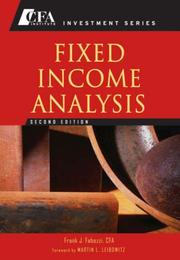
Frank J. Fabozzi, Barbara S. Petitt, Jerald E. Pinto, Wendy L. Pirie · 2007

The CFA Institute's fixed-income text: bond valuation, risk and analysis.

John Brynjolfsson, Frank J. Fabozzi · 1999

Essays on inflation-indexed bonds, written as the US TIPS market opened.

Frank J. Fabozzi · 2010

A handbook chapter on nonconvertible preferred stock as a fixed-income security.

Richard C. Sauer · 2010

A former SEC lawyer on naked shorting and the fights around it.

Recommended by: Mohnish Pabrai
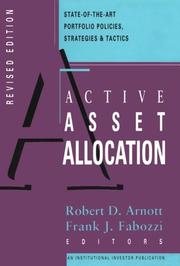
Robert D. Arnott, Frank J. Fabozzi · 1992

Portfolio insurance, optimisation, surplus management and tactical asset allocation.

Where it sits in the reference 2

Academics
Investment styles

Topics

InvestingFinance and Markets