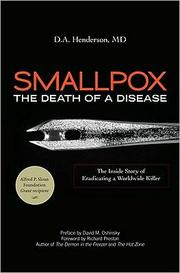
Smallpox
The head of the WHO campaign that eradicated smallpox tells how it was done.
Summary
D.A. Henderson tells how he led the World Health Organization's campaign to eradicate smallpox, which he directed from 1967. Smallpox had killed, scarred or blinded hundreds of millions of people over more than 3,000 years and was still killing two million or more a year. The last natural case occurred on 26 October 1976, just over ten years into the campaign, making smallpox the only disease deliberately eliminated.
Henderson explains that the work involved more than mass vaccination. His staff dealt with civil wars, floods, impassable roads, refugees, bureaucratic and cultural obstacles, too few local health workers and small budgets; the United States and the Soviet Union cooperated during the cold war, and staff came from more than 70 countries. He covers the dispute over destroying the virus stocks held in two laboratories, the discovery that the Soviet Union had produced smallpox in quantity as a biological weapon, and the expansion of the vaccination methods to polio, measles, whooping cough, diphtheria and tetanus.
Key takeaways 5
- Smallpox was eradicated in just over ten years by a coordinated international campaign.
- Eradication required logistics through war, floods and poor roads, not vaccination alone.
- The United States and the Soviet Union cooperated on the campaign during the cold war.
- The Soviet Union's secret production of smallpox as a weapon kept the disease a threat after eradication.
- Methods built for smallpox became the base for childhood immunisation against six diseases.
Who should read it
Readers in public health, development and operations who want a first-hand account of how a global eradication campaign was run.
Who recommended it 1
Similar books 6
Chosen by shared topics, the entries that hold them, and the people who recommended both.
How polio and ideas of dirt shaped American public health.
Recommended by: Bill Gates

A history of campaigns to eradicate diseases such as malaria.
Recommended by: Bill Gates
The history of tuberculosis and why it still kills the poor.
Recommended by: Bill Gates
The American fear of polio and the race for a cure, from the March of Dimes to Salk.
Recommended by: Bill Gates
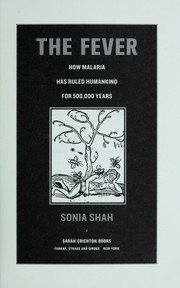
The centuries-long fight to treat and prevent malaria, which still infects millions.
Recommended by: Bill Gates
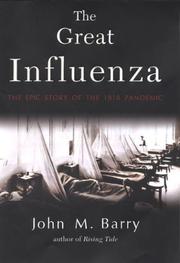
The 1918 flu: how it spread from a Kansas army camp and killed up to 100 million.
Recommended by: Bill Gates, Balaji S. Srinivasan