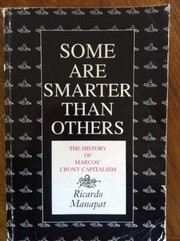
Some Are Smarter Than Others
How Ferdinand Marcos and his allies used state power to enrich his circle.
Hard-to-find catalogue of Marcos-era crony deals; the source everyone else cites.
Summary
Ricardo Manapat documents how Ferdinand Marcos and his allies intervened in the Philippine economy from 1965 to 1986, using state power to bring wealth and power to themselves while the rest of the country fell into underdevelopment and poverty. The first chapter sets out the scale of the wealth of Marcos and his cronies and contrasts the family's spending with national poverty, arguing that the wealth and the poverty caused each other.
The second chapter argues that the regime was not an aberration but the most developed form of two traditions of the Philippine elite, ostentation and corruption, and defines cronyism as the use of state power for private interests. Later chapters catalogue the relatives and cronies who controlled every major economic activity, as Marcos nominees or on their own account, drawing on the national treasury, private banks, international loans and American and Japanese aid, and receiving tax exemptions, government contracts, monopolies and captive markets by presidential decree. Published in 1991, it became the source later writers on the Marcos economy cite.
Key takeaways 4
- Under Marcos, crony capitalism meant using state power for private gain through decrees, contracts and monopolies.
- Foreign loans and aid passed through the same networks that enriched the ruling family.
- Relatives and cronies acted as nominees, so ownership was hidden behind other names.
- Manapat treats the regime as an extreme form of existing elite habits, not a break from them.
Who should read it
Investors in emerging markets and students of political economy who want a detailed catalogue of how a kleptocratic regime captured an economy.
Similar books 6
Chosen by shared topics, the entries that hold them, and the people who recommended both.
The family dynasties that have run the Philippines' politics and conglomerates.
Why the Philippine state stays weak while strong families hold power.
How Ferdinand and Imelda Marcos built crony monopolies and hid their wealth abroad.
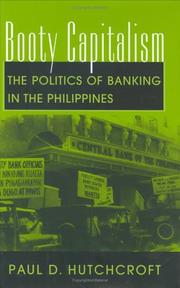
How oligarch families captured the Philippine banks and held back the economy.
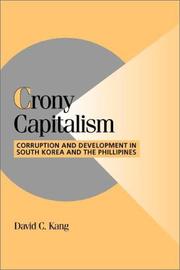
Why similar corruption in South Korea and the Philippines led to different results.
How the Philippine elite blocked reform through liberalisation and debt after Marcos.