Updates

  1. Person pages list letters, writing, profiles and links as sortable tables with filters, and show each person's companies as links; Fund letters show each letter's description in its own column.
  2. Experts show a checked job title and a short description of each person; 30 more people have photographs.
  3. Every company, fund, university and publication the experts work for has a page listing the people there.
  4. Fund letters show each letter's thesis and filter by it; 225 person pages list the essays, columns and newsletter issues the person wrote.
  5. Person pages list every essay and newsletter issue a person wrote, and their own books as a table in List view.
  6. Recommends shows the five largest kinds of book and the rest under More; browse pictures load sooner.
  7. Podcasts and talks link the original episode, filter by Audio and video or Press, and list each publisher once.
  8. Pages are wider, Recommends has List and Grid, and a filter clicked again turns off.
  9. Book cards sit in a ruled grid with Open Library and Goodreads links and each book's one-line note.
  10. Funds is now Investors; each investor's styles are buttons that filter the table.
  11. Podcasts and talks on a person's page filter by year and publisher and show as a list or a grid of pictures.
  12. Quotes show only people's own words: 472 summaries written by list sites are gone.
  13. Country pages open from Browse again, and every link on the shelf lands on a page.
  14. Subject and person pages show their sections as tabs, and each book appears once on a person's page.
  15. Book cards show the quote, who said it and the source; grids show five cards to a row.
  16. On a phone, a menu holds the sections, search, Updates, Feedback and dark mode.
  17. Feedback takes a screenshot of the page with no browser prompt, opens a screenshot full size when you click it, and clears itself once sent.
  18. Book cards are centred, search names the topic each book sits in, and any text cut short shows whole on hover.
  19. Search groups its results by kind: people, companies, geographies, subjects, topics, books, funds, fund letters and papers.
  20. The Books table lists who recommended each book by name, and the browser tab names the section you are in.
  21. Feedback can take a screenshot of the page, or one you paste or choose, and opens in the corner beside Updates.
  22. Each rail button reopens its section where you left it, and Browse, Table and People show on every book and subject page.
  23. Filters grey out choices that hold nothing instead of hiding them, and Books › People filters by authors or recommenders.
  24. Feedback takes a subject line and up to three screenshots.
  25. Biographies are grouped by the person they are about: 41 new pages, from Abraham Lincoln to Lee Kuan Yew.
  26. Sport splits into 23 sports, and Religion into one topic per faith.
  27. Book lists show as cards: the cover, one recommendation quote and every recommender by name.
  28. Seventeen subjects that had two or three pages under different names now have one page each.
  29. Every page lists its Experts as authors and recommenders, with a link to them on the Experts tab.
  30. Economics, Financial history, Financial panics and Accounting are subjects of their own, with one page per financial crisis.
  31. Book, person and subject pages open inside the app, so the tabs stay in view.
  32. 996 more book covers, and photographs or logos for 227 more people and companies.
  33. Books › Browse shows every subject as cards, and the rail holds Fund letters, Papers, Experts, Books and Funds.
  34. Every topic over 150 books splits into narrower topics, each with a page of its own.

Send feedback

What is it?
Screenshots, up to 3 (optional)
or paste one with Ctrl+V

We use your email only to reply to you.

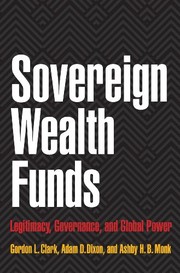
Sovereign Wealth Funds: Legitimacy, Governan

Sovereign Wealth Funds: Legitimacy, Governance, and Global Power

Gordon L. Clark, Adam D. Dixon, Ashby H. B. Monk
2013
T3 240 pages · about 4h to read Open Librarygoodreads

The reference on SWF governance; Norges Bank Investment Management is the central case.

Summary

Clark, Dixon and Monk, economic geographers, examine sovereign wealth funds as institutions rather than as pools of capital. Their question is what these funds are for, whose interests they serve, and why their growth provoked political resistance in the countries where they invest.

The analytical framework separates the funds by origin and purpose. Commodity funds, principally in the Gulf and Norway, exist to convert a depleting resource into a permanent financial asset and to insulate the domestic economy from revenue volatility. Non-commodity funds, principally in Asia, arose from accumulated trade surpluses and foreign exchange reserves that exceeded any precautionary requirement. The two types face different investment horizons, different domestic political pressures and different governance problems.

The governance analysis is the book's contribution. The authors compare Norway's fund, which operates with published mandates, disclosed holdings, an ethical exclusion framework and parliamentary accountability, against funds whose governance is opaque and whose relationship to the ruling family or party is not documented. They argue the legitimacy problem is genuine on both sides: recipient countries have reasonable concerns about state-controlled investors pursuing non-commercial objectives, and the funds have reasonable complaints about discriminatory treatment relative to other state-linked investors including public pension funds.

The book is academic and written for a scholarly audience. Its data is from around 2012 and the sector has grown and changed substantially since, particularly with the Gulf funds' shift toward direct and venture investment. The governance framework remains the useful part.

Key takeaways 7

  1. Commodity-funded sovereign wealth funds exist to convert a depleting resource into a permanent financial asset, which gives them a genuinely long investment horizon.
  2. Surplus-funded Asian funds arose from foreign exchange reserves exceeding precautionary needs, which gives them different objectives and different domestic accountability.
  3. The legitimacy problem is real on both sides, since recipient countries fear non-commercial objectives and funds face discriminatory treatment relative to comparable public pension investors.
  4. Norway's fund demonstrates that transparency, published mandates and parliamentary accountability are compatible with a fund's commercial performance.
  5. A fund's governance arrangements determine whether it can invest for the long term or is drawn into domestic fiscal use.
  6. Domestic political pressure to spend fund assets is the most consistent threat to any sovereign fund's stated purpose.
  7. State ownership of an investor is not by itself evidence of political intent, and existing regulatory responses have not distinguished the cases well.

Who should read it

Investors and policy readers dealing with sovereign investors who want the governance and legitimacy framework rather than fund league tables.

Similar books 6

Chosen by shared topics, the entries that hold them, and the people who recommended both.
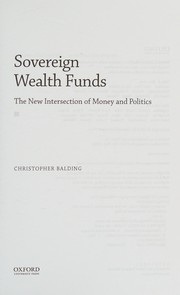
Christopher Balding · 2012

How these funds actually invest and what governs them; NBIM as benchmark.
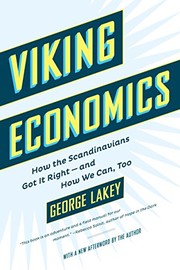
George Lakey · 2016

Popular and partisan, but the clearest short account of the Nordic bargain.
Macartan Humphreys, Jeffrey D. Sachs, Joseph E. Stiglitz · 2007

Norway is the counterexample the whole volume is arranged around.
Michael L. Ross · 2012

Why oil-rich countries have less democracy, less stability and more civil war.

Christopher M. Davidson · 2009

How Abu Dhabi's oil wealth built the emirate and gave rise to its sovereign funds.

Christopher Davidson · 2013

The political-risk case that the Gulf monarchies will not last.

Where it sits in the reference 4

Geographies
Geographies
Geographies
Portfolio & risk

Topics

Finance and MarketsPolitics and GovernmentGlobalisation, development and offshore money