Updates

  1. Person pages list letters, writing, profiles and links as sortable tables with filters, and show each person's companies as links; Fund letters show each letter's description in its own column.
  2. Experts show a checked job title and a short description of each person; 30 more people have photographs.
  3. Every company, fund, university and publication the experts work for has a page listing the people there.
  4. Fund letters show each letter's thesis and filter by it; 225 person pages list the essays, columns and newsletter issues the person wrote.
  5. Person pages list every essay and newsletter issue a person wrote, and their own books as a table in List view.
  6. Recommends shows the five largest kinds of book and the rest under More; browse pictures load sooner.
  7. Podcasts and talks link the original episode, filter by Audio and video or Press, and list each publisher once.
  8. Pages are wider, Recommends has List and Grid, and a filter clicked again turns off.
  9. Book cards sit in a ruled grid with Open Library and Goodreads links and each book's one-line note.
  10. Funds is now Investors; each investor's styles are buttons that filter the table.
  11. Podcasts and talks on a person's page filter by year and publisher and show as a list or a grid of pictures.
  12. Quotes show only people's own words: 472 summaries written by list sites are gone.
  13. Country pages open from Browse again, and every link on the shelf lands on a page.
  14. Subject and person pages show their sections as tabs, and each book appears once on a person's page.
  15. Book cards show the quote, who said it and the source; grids show five cards to a row.
  16. On a phone, a menu holds the sections, search, Updates, Feedback and dark mode.
  17. Feedback takes a screenshot of the page with no browser prompt, opens a screenshot full size when you click it, and clears itself once sent.
  18. Book cards are centred, search names the topic each book sits in, and any text cut short shows whole on hover.
  19. Search groups its results by kind: people, companies, geographies, subjects, topics, books, funds, fund letters and papers.
  20. The Books table lists who recommended each book by name, and the browser tab names the section you are in.
  21. Feedback can take a screenshot of the page, or one you paste or choose, and opens in the corner beside Updates.
  22. Each rail button reopens its section where you left it, and Browse, Table and People show on every book and subject page.
  23. Filters grey out choices that hold nothing instead of hiding them, and Books › People filters by authors or recommenders.
  24. Feedback takes a subject line and up to three screenshots.
  25. Biographies are grouped by the person they are about: 41 new pages, from Abraham Lincoln to Lee Kuan Yew.
  26. Sport splits into 23 sports, and Religion into one topic per faith.
  27. Book lists show as cards: the cover, one recommendation quote and every recommender by name.
  28. Seventeen subjects that had two or three pages under different names now have one page each.
  29. Every page lists its Experts as authors and recommenders, with a link to them on the Experts tab.
  30. Economics, Financial history, Financial panics and Accounting are subjects of their own, with one page per financial crisis.
  31. Book, person and subject pages open inside the app, so the tabs stay in view.
  32. 996 more book covers, and photographs or logos for 227 more people and companies.
  33. Books › Browse shows every subject as cards, and the rail holds Fund letters, Papers, Experts, Books and Funds.
  34. Every topic over 150 books splits into narrower topics, each with a page of its own.

Send feedback

What is it?
Screenshots, up to 3 (optional)
or paste one with Ctrl+V

We use your email only to reply to you.

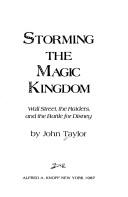
Storming the Magic Kingdom

Storming the Magic Kingdom

John Taylor
1987
T3 261 pages · about 4h 21m to read Open Librarygoodreads

The 1984 greenmail raid that brought in Eisner and Wells.

Summary

Taylor wrote a detailed account of the 1984 takeover battle for Walt Disney Productions, which was one of the defining corporate control fights of the period.

The company was vulnerable. Its film studio was producing failures, its share price stood well below the value of its constituent assets, particularly the theme parks and the film library, and the founding family's stake had been diluted. Saul Steinberg accumulated a position and threatened a bid. Disney's management, led by Ron Miller and Card Walker, responded with defensive acquisitions including the Arvida real estate business and an attempted purchase of Gibson Greetings, both intended to make the company less attractive and more indebted. Steinberg was eventually bought off with a greenmail payment that gave him a large profit at the other shareholders' expense, which triggered shareholder litigation.

The Bass brothers then accumulated a position, and Irwin Jacobs pursued the company as well. Roy E Disney, the founder's nephew, who had resigned from the board, worked with Stanley Gold to force management change. The outcome was the installation of Michael Eisner and Frank Wells, who ran the company for the next decade.

Taylor's account, based on interviews with most participants, is a close description of how such a fight actually proceeds: the accumulation, the defensive tactics, the role of investment banks on both sides, the litigation and the board's decision-making under pressure.

The book is journalism from 1987 and does not analyse the takeover era's economics. The greenmail and defensive tactics it describes are now largely regulated or contractually addressed, so its value is as a case study of governance under attack and of how a controlled company with undervalued assets becomes a target.

Key takeaways 7

  1. Disney became a target because its market value stood well below the value of its parks and film library.
  2. Management responded to the threat with acquisitions designed to reduce the company's attractiveness rather than to improve it.
  3. Greenmail paid a single shareholder a premium unavailable to the others, which prompted litigation and later regulation.
  4. A dissident family shareholder working with an outside adviser was the mechanism that eventually produced management change.
  5. Investment banks advised both sides and profited regardless of the outcome, which shaped the advice given.
  6. Boards under takeover pressure make decisions on compressed timetables with information supplied by advisers with their own interests.
  7. An undervalued company with separable assets and weak management will attract bidders regardless of its brand or history.

Who should read it

Directors, founders and investors who want a detailed case study of a hostile control fight and the defensive tactics boards actually used.

Similar books 6

Chosen by shared topics, the entries that hold them, and the people who recommended both.

James B. Stewart · 2005

Michael Eisner's twenty years running Disney, from turnaround to shareholder revolt.

Recommended by: Kara Swisher

Dade Hayes, Dawn Chmielewski · 2022

The streaming wars Netflix started, from the studios' side.
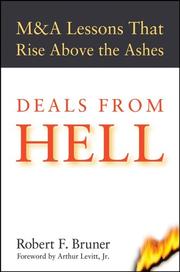
Robert F. Bruner · 2005

Why mergers fail; the break risk an arbitrageur underwrites.
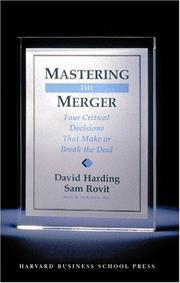
David Harding, Sam Rovit · 2004

Bain's evidence that frequent small deals beat occasional large ones.
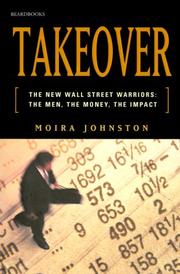
Moira Johnston · 1986

Contemporary reporting on the raiders, including his Phillips Petroleum fight.
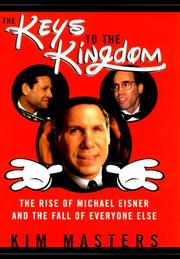
Kim Masters · 2000

Michael Eisner's revival of Disney, Katzenberg's exit and the failed succession.

Where it sits in the reference 3

Companies
Biographies
Business themes

Topics

Company HistoriesFinance and Markets