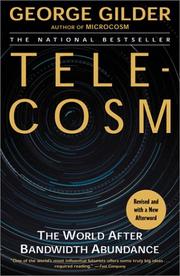
Telecosm
The argument that communications bandwidth would replace computing as the driver.
Bandwidth-abundance thesis; useful as a period document of the bubble.
Summary
George Gilder argues that the computer age is over and that, after thirty years, it has given way to the telecosm, a world defined by new communications technology. Chips and software will keep contributing, he says, but wealth and change now come from communication power, or bandwidth, whose explosion and abundance he calls the most important social and economic fact of the time. He predicts that computers will empty out, their functions migrating to the network.
The book mixes science, business history, social analysis and forecasting. The publisher cites Gilder's earlier predictions about fibre and wireless optics, the decline of the telephone regime and the spread of handheld computers, and claims his favoured companies beat the Nasdaq's 1999 gain by more than double. Published in 2000 at the height of the telecoms boom, it is now useful as a period document of the bubble.
Key takeaways 4
- Gilder held that abundant bandwidth, not faster chips, would drive the next era of technology.
- He predicted that computing would move from personal machines into the network.
- Fibre optics and wireless communications were his main sources of future growth.
- The book records the reasoning behind the telecoms investment boom just before it collapsed.
Who should read it
Investors and historians of technology who want the bandwidth-abundance argument as it was made at the peak of the bubble.
Who recommended it 1 · 1 direct
“George Gilder, Telecosm: How Infinite Bandwidth Will Revolutionize our World (New York: Free Press, 2000), p”
Similar books 6
Chosen by shared topics, the entries that hold them, and the people who recommended both.
The telecom bubble of the late 1990s and its collapse, with WorldCom at its centre.
Recommended by: Matt Mullenweg
Every US information industry moved from an open era to control by one firm.
Recommended by: David Perell, Patrick Collison, Andrew Chen
How Lucent went from industry leader to junk credit rating in two years.
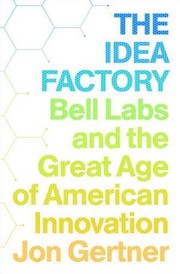
How Bell Labs turned research into the transistor, the laser and information theory.
Recommended by: Mohnish Pabrai, Patrick Collison and 3 others
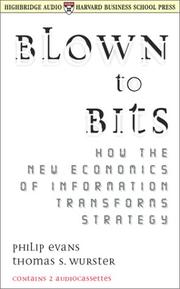
How the new economics of information ends the trade-off between richness and reach.
“Evans, Philip, and Thomas S. Wurster, Blown to Bits: How the New Economics of Information Transforms Strategy (Boston: Harvard Business School Press, 1999)” — Michael Mauboussin
Source: Measuring the Moat: Assessing the Magnitude and Sustainability of Value Creation, page 48
Recommended by: Michael Mauboussin, Mohnish Pabrai
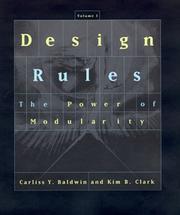
A theory of modularity in design, applied to the history of the computer industry.
“Carliss Y. Baldwin and Kim B. Clark, Design Rules: The Power of Modularity (Cambridge, MA: MIT Press, 2000)” — Michael Mauboussin
Source: Cultivating Your Judgment Skills: A Framework for Improving the Quality of Decisions, page 12
Recommended by: Michael Mauboussin