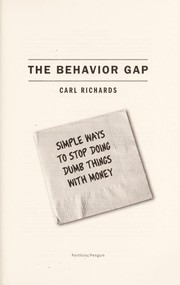
The Behavior Gap
Sketches of the gap between what people know to do with money and what they do.
Carl Richards, a financial planner, uses simple sketches to map the distance between what people know they should do with money and what they actually do. His treatment of financial decisions as emotional events first and numerical events second is practically useful in a way that academic behavioral finance rarely is.
Similar books 6
Chosen by shared topics, the entries that hold them, and the people who recommended both.
The foundational papers of behavioural finance, collected.
A second collection of behavioural finance papers, more theoretical than the first.
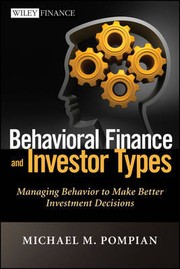
How investors fall into behavioural types, and how each should invest.
How financial advisers can spot clients' biases and adjust their portfolios.
Behavioural finance for practitioners: mental shortcuts, framing and market errors.
Data showing that low-expectation stocks beat popular ones over the long run.
“all these people really were helpful in forming and getting me involved in investing” — Joel Greenblatt
Source: Masters in Business transcript: Joel Greenblatt (2018)
Recommended by: Joel Greenblatt, Michael Mauboussin and 2 others