Updates

  1. Person pages list letters, writing, profiles and links as sortable tables with filters, and show each person's companies as links; Fund letters show each letter's description in its own column.
  2. Experts show a checked job title and a short description of each person; 30 more people have photographs.
  3. Every company, fund, university and publication the experts work for has a page listing the people there.
  4. Fund letters show each letter's thesis and filter by it; 225 person pages list the essays, columns and newsletter issues the person wrote.
  5. Person pages list every essay and newsletter issue a person wrote, and their own books as a table in List view.
  6. Recommends shows the five largest kinds of book and the rest under More; browse pictures load sooner.
  7. Podcasts and talks link the original episode, filter by Audio and video or Press, and list each publisher once.
  8. Pages are wider, Recommends has List and Grid, and a filter clicked again turns off.
  9. Book cards sit in a ruled grid with Open Library and Goodreads links and each book's one-line note.
  10. Funds is now Investors; each investor's styles are buttons that filter the table.
  11. Podcasts and talks on a person's page filter by year and publisher and show as a list or a grid of pictures.
  12. Quotes show only people's own words: 472 summaries written by list sites are gone.
  13. Country pages open from Browse again, and every link on the shelf lands on a page.
  14. Subject and person pages show their sections as tabs, and each book appears once on a person's page.
  15. Book cards show the quote, who said it and the source; grids show five cards to a row.
  16. On a phone, a menu holds the sections, search, Updates, Feedback and dark mode.
  17. Feedback takes a screenshot of the page with no browser prompt, opens a screenshot full size when you click it, and clears itself once sent.
  18. Book cards are centred, search names the topic each book sits in, and any text cut short shows whole on hover.
  19. Search groups its results by kind: people, companies, geographies, subjects, topics, books, funds, fund letters and papers.
  20. The Books table lists who recommended each book by name, and the browser tab names the section you are in.
  21. Feedback can take a screenshot of the page, or one you paste or choose, and opens in the corner beside Updates.
  22. Each rail button reopens its section where you left it, and Browse, Table and People show on every book and subject page.
  23. Filters grey out choices that hold nothing instead of hiding them, and Books › People filters by authors or recommenders.
  24. Feedback takes a subject line and up to three screenshots.
  25. Biographies are grouped by the person they are about: 41 new pages, from Abraham Lincoln to Lee Kuan Yew.
  26. Sport splits into 23 sports, and Religion into one topic per faith.
  27. Book lists show as cards: the cover, one recommendation quote and every recommender by name.
  28. Seventeen subjects that had two or three pages under different names now have one page each.
  29. Every page lists its Experts as authors and recommenders, with a link to them on the Experts tab.
  30. Economics, Financial history, Financial panics and Accounting are subjects of their own, with one page per financial crisis.
  31. Book, person and subject pages open inside the app, so the tabs stay in view.
  32. 996 more book covers, and photographs or logos for 227 more people and companies.
  33. Books › Browse shows every subject as cards, and the rail holds Fund letters, Papers, Experts, Books and Funds.
  34. Every topic over 150 books splits into narrower topics, each with a page of its own.

Send feedback

What is it?
Screenshots, up to 3 (optional)
or paste one with Ctrl+V

We use your email only to reply to you.

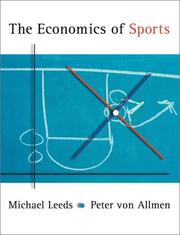
The Economics of Sports

The Economics of Sports

Michael A. Leeds, Peter von Allmen
2001
T4 455 pages · about 7h 35m to read Open Librarygoodreads

The standard textbook on league structure, revenue sharing and valuation.

Summary

Michael Leeds and Peter von Allmen wrote the standard undergraduate textbook applying economic analysis to professional and college sports. It uses sports as a setting in which economic principles are visible and data is unusually good.

The content covers the industrial organisation of leagues, which are cartels of nominally competing firms that must cooperate to produce their product; the peculiar economics of competitive balance and whether it affects demand; revenue sharing, salary caps and luxury taxes as instruments and their theoretical effects; the labour economics of player markets, including the reserve clause, free agency and the empirical evidence on whether player mobility affected competitive balance, which tests the Coase theorem directly; discrimination in hiring and pay and the evidence on it; the public finance of stadium subsidies, where the economic literature is close to unanimous that the claimed local benefits do not exist; and the economics of college athletics and amateurism.

The book is a teaching text with worked examples and problems, and its virtue is that the applications make the theory concrete. Editions matter for the institutional details, since league structures, broadcasting arrangements and the college athletics compensation rules have changed substantially. The stadium subsidy material is the section with the most direct application outside sports.

Key takeaways 7

  1. Sports leagues are cartels of firms that must cooperate to produce a product no member can supply alone.
  2. The economic literature finds consistently that publicly funded stadiums do not generate the local economic benefits used to justify them.
  3. Free agency transferred rents from owners to players without materially changing competitive balance, which supports the Coase theorem's prediction.
  4. Revenue sharing changes the distribution of income between clubs without necessarily improving competitive balance.
  5. Salary caps function as monopsony instruments that transfer surplus from players to owners.
  6. Competitive balance affects demand less than the sports industry claims, since large-market team success also draws audiences.
  7. Sports data allows economic hypotheses about labour markets and discrimination to be tested with unusual precision.

Who should read it

Students and analysts wanting economic principles applied where the data is good, and anyone assessing stadium subsidy or league governance arguments.

Similar books 6

Chosen by shared topics, the entries that hold them, and the people who recommended both.
Neil deMause, Joanna Cagan · 1998

How team owners extract public money for stadiums by threatening to move.
Charles C. Euchner · 1993

How sports franchises press cities for new stadiums by threatening to move.
Thomas Sowell · 1999

Thomas Sowell's deliberately introductory survey of how prices, incentives, and tradeoffs work across housing, labor, international trade, and discrimination. Dense with empirical examples. Its main contribution to this list is showing the gap between policy intentions and policy consequences.
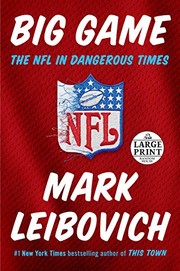

Mark Leibovich · 2018

The NFL in an era of success, dangerous injuries and scandal.

Tyler Cowen · 2007

Economics for daily life: motivating people, choosing food, giving to charity.

Recommended by: Graham Duncan
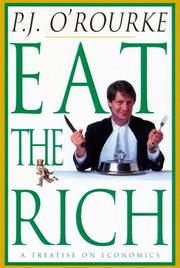
P.J. O'Rourke · 1998

Recommended by: Eric Weinstein

Where it sits in the reference 2

Assets
Economics

Topics

EconomicsSportSport in general