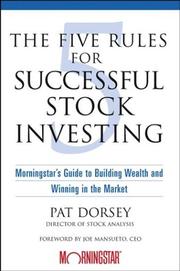
The Five Rules for Successful Stock Investing
Morningstar's method: find companies with economic moats and pay a fair price.
Summary
Dorsey, then head of equity research at Morningstar, wrote a practical guide to analysing companies for individual investors. The five rules are: do your homework, find companies with economic moats, have a margin of safety, hold for the long term, and know when to sell.
The substantive content is the moat framework, which Morningstar built into its ratings and which Dorsey developed further in a later book. He identifies the sources of durable competitive advantage as intangible assets including brands, patents and regulatory licences; switching costs; the network effect; and cost advantages from process, location, scale or unique assets. He is explicit that good products, market share, operational efficiency and good management are not moats, because none of them prevents a competitor from doing the same thing.
The book also covers financial statement analysis for non-specialists, the specific ratios that indicate moat strength including return on invested capital and free cash flow conversion, valuation using several methods, and accounting warning signs.
The second half provides sector-by-sector analysis covering health care, consumer services, business services, banks, asset management, software, hardware, media, telecoms, consumer goods, industrials, energy and utilities, with the specific metrics and risks for each. That sector material is unusual in a book at this level and is genuinely useful.
The book is from 2004 and the sector chapters are dated, particularly on technology and media. The moat framework is the durable contribution and is stated more clearly here than in most sources.
Key takeaways 7
- A durable competitive advantage comes from intangible assets, switching costs, network effects or a structural cost advantage, and from nothing else.
- Good products, high market share, operational efficiency and capable management are not competitive advantages, because competitors can replicate all of them.
- Sustained high returns on invested capital are the financial evidence that a moat exists, since competition would otherwise have eliminated the returns.
- Switching costs are the most underrated moat source because they are invisible in financial statements and only appear when a competitor tries to displace the incumbent.
- An investor should determine what would have to be true for a business to lose its advantage before buying it.
- Selling should be triggered by a change in the business or by a valuation that requires an outcome you no longer expect, not by price movement.
- Each industry has its own diagnostic metrics and characteristic risks, and applying general ratios across sectors produces misleading comparisons.
Who should read it
Individual investors learning company analysis who want the moat framework and sector-specific diagnostics in one accessible volume.
About Pat Dorsey
Founder and Chief Investment Officer, Dorsey Asset Management; formerly Director of Equity Research and Director of Equity Strategy at Morningstar
He built Morningstar's economic-moat framework and wrote the two books that made moat analysis usable by ordinary investors.
Similar books 6
Chosen by shared topics, the entries that hold them, and the people who recommended both.
Graham and Dodd's valuation updated for companies with few tangible assets.
Recommended by: Mohnish Pabrai
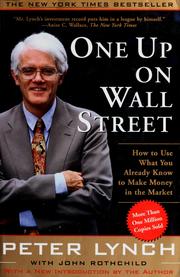
How individual investors can use what they know to find stocks before professionals.
“In November 1992, after juggling with all sorts of investing approaches, I read “One Up on Wall Street” by Peter Lynch.” — Francois Rochon
Source: Giverny Capital Annual Letter to Partners 2011, page 6
Recommended by: David Rolfe, Francisco Garcia Parames and 10 others
A systematic value strategy, built and backtested piece by piece.
How to read financial statements sceptically and value bonds and stocks.
“I am reminded once again of the quote that sits in the front of Ben Graham’s Security Analysis, from Horace’s Ars Poetica: “Many shall be restored that now are fallen and many shall fall that now are in honor.” — Bill Miller
Source: 2007 Q3 Market Commentary
Recommended by: Bill Miller, Christopher Bloomstran and 18 others
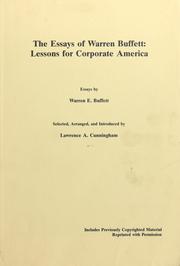
Berkshire's shareholder letters arranged by topic: governance, valuation, mergers.
“The resource is as valuable as Larry Cunningham's The Essays of Warren Buffett, which similarly organizes by subject matter” — Christopher Bloomstran
Source: Semper Augustus 2024 Letter to Clients, 'Books and Tunes for Walking', p. 96
Recommended by: Christopher Bloomstran, Francois Rochon and 11 others
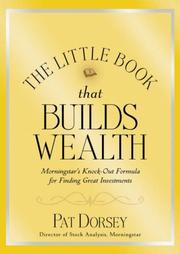
How to spot a durable economic moat from public information, and what isn't one.
Recommended by: Mohnish Pabrai
Where it sits in the reference 4
Topics 1
As an Amazon Associate I earn from qualifying purchases.