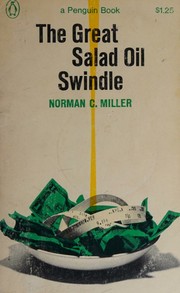
The Great Salad Oil Swindle
The warehouse fraud of missing salad oil that nearly broke American Express.
Pulitzer-winning account of the warehousing fraud that nearly broke Amex.
Summary
Miller, a Wall Street Journal reporter, covers the 1963 collapse of Anthony De Angelis's Allied Crude Vegetable Oil Refining Corporation, which had borrowed against warehouse receipts for soybean oil that did not exist.
The mechanism was simple and worked for years. American Express Field Warehousing, a subsidiary of American Express, issued receipts certifying the quantity of oil in tanks at Allied's Bayonne facility. Banks and commodity brokers lent against those receipts. The inspectors were paid by Allied, the tanks were connected by pipes so oil could be moved between them during inspection, most tanks contained water with a layer of oil floating on top, and some tanks had no oil at all. Since oil floats on water, dipping a tank showed oil at the top regardless of what was beneath. At the peak the receipts covered more soybean oil than existed in the entire United States, a fact that was checkable against Department of Agriculture statistics and that nobody checked.
The collapse bankrupted two brokerage houses, threatened the New York Stock Exchange, and exposed American Express to claims that drove its shares down sharply, which is the transaction Warren Buffett is known for, buying a large position on the judgement that the card and traveller's cheque businesses were unaffected.
The book is contemporaneous reporting and the detail is reliable. Its lesson for investors is direct: collateral that has been certified by an inspector paid by the borrower has not been verified, and an aggregate cross-check against public data would have exposed the fraud at any point.
Key takeaways 7
- Warehouse receipts certified by inspectors paid by the borrower are not verification, since the inspector's income depends on the relationship rather than the accuracy.
- The outstanding receipts covered more soybean oil than existed in the entire United States, which was checkable against public Department of Agriculture data.
- Oil floating on water shows oil at the top of a tank regardless of what is beneath, and the physical inspection method was defeated by a property of the commodity.
- Multiple lenders each relied on the same certification and none conducted independent verification, which concentrated a single point of failure across the system.
- An aggregate cross-check of a borrower's claimed holdings against total market supply is the cheapest available fraud test and is almost never performed.
- The fraud's collapse destroyed brokerage firms that had extended credit against the receipts, which shows collateral quality is a counterparty risk rather than a documentation matter.
- American Express's share price fell on a liability that did not affect its operating businesses, which created the opportunity Buffett acted on.
Who should read it
Investors and credit analysts who want a concrete case in how collateral verification fails and how a market-wide cross-check would have caught it.
Who recommended it 1 · 1 direct
Similar books 6
Chosen by shared topics, the entries that hold them, and the people who recommended both.
Enron's collapse told scene by scene from depositions, emails and interviews.
“We have to grow EBITDA. That’s all that matters.” See Kurt Eichenwald, Conspiracy of Fools: A True Story (New York: Broadway Books, 2005), 278” — Michael Mauboussin
Source: What Does an EV/EBITDA Multiple Mean?, page 18
Recommended by: Michael Mauboussin, Mohnish Pabrai
How Ivar Kreuger built a 1920s match monopoly, and the forgeries found at his death.
Recommended by: Mohnish Pabrai
How Enron used mark-to-market accounting and hidden deals until its 2001 bankruptcy.
“Two other books I’d recommend are The Smartest Guys in the Room by Bethany McLean and Peter Elkind, and In an Uncertain World by Bob Rubin.” — Warren Buffett
Source: Berkshire Hathaway Chairman’s Letter 2003, page 20
Recommended by: Andrew Wilkinson, Bill Gurley and 2 others
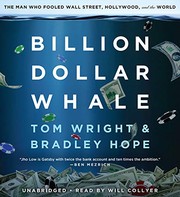
How Jho Low diverted billions from Malaysia's 1MDB fund into parties and politics.
Recommended by: Alexis Ohanian, Alfred Lin and 5 others
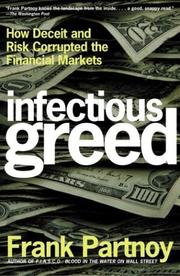
How finance used complexity to hide risk from the 1980s through Enron.
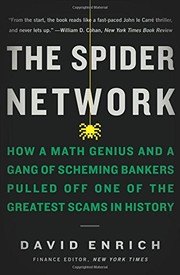
The LIBOR rigging scandal, told through the trader Tom Hayes.
“saga of global financial market manipulation, at mind-boggling scale and hiding in plain sight” — Marc Andreessen
Source: @pmarca, 'Thread: Books I've recently read and recommend'
Recommended by: Marc Andreessen