Updates

  1. Every US-listed company has a page with its SEC filings. Company pages list their experts and their management, past and present. Fund managers sit under Investors. Each show has a page of its episodes, and an episode page names its guests and hosts. Biographies lists groups, then people. Breadcrumbs show where a page sits.
  2. Media lists every podcast episode, video, interview and talk, over 10,000, by person, company, publisher and event; each filter searches its own choices. Books opens on its table, then Browse, then Authors and Recommenders. A filter's count no longer covers its arrow.
  3. A book that no company, country or subject page lists shows its topics under Where it sits in the reference. On a phone, a page's tabs scroll sideways only. Descriptions read the same on every page. See them in the Experts tab lists every expert the page names.
  4. Every podcast episode, video and interview has its own page with a video or audio player and a link to the source. Investor pages show each company's sector and market cap; firms such as Berkshire Hathaway have one page that holds their letters and their company tabs. Letters tabs filter by company and search the theses. Companies filter by Public, Private and Defunct and link each company's website.
  5. Every tab, view and search has its own address, such as /books/table/asset or /letters/companies, so Back works and a link opens the same place. Page addresses no longer end in .html. Fund letters, Investors, Companies and Papers load about a fifth of the data they did.
  6. Fund letters has a Companies tab: every company the letters name, with its market cap, sector, country, and how many letters and investors name it. Investor pages link each investor's website. Lists in table cells end with “… and N more” at every width.
  7. 1,120 more book summaries; descriptions for 373 papers; pages for 137 more companies, each with the fund letters that discuss it; 215 official photographs; search has its own page.
  8. 411 more books have a summary; person pages list 930 more of the books they wrote; 147 people show their official photograph.
  9. Every investor has a page with its letters and the companies they discuss; company pages list the investors whose letters name them.
  10. A Companies section at the top of the rail lists every company the books, experts and fund letters name.
  11. Person pages list letters, writing, profiles and links as sortable tables with filters, and show each person's companies as links; Fund letters show each letter's description in its own column.
  12. Experts show a checked job title and a short description of each person; 30 more people have photographs.
  13. Every company, fund, university and publication the experts work for has a page listing the people there.
  14. Fund letters show each letter's thesis and filter by it; 225 person pages list the essays, columns and newsletter issues the person wrote.
  15. Person pages list every essay and newsletter issue a person wrote, and their own books as a table in List view.
  16. Recommends shows the five largest kinds of book and the rest under More; browse pictures load sooner.
  17. Podcasts and talks link the original episode, filter by Audio and video or Press, and list each publisher once.
  18. Pages are wider, Recommends has List and Grid, and a filter clicked again turns off.
  19. Book cards sit in a ruled grid with Open Library and Goodreads links and each book's one-line note.
  20. Funds is now Investors; each investor's styles are buttons that filter the table.
  21. Podcasts and talks on a person's page filter by year and publisher and show as a list or a grid of pictures.
  22. Quotes show only people's own words: 472 summaries written by list sites are gone.
  23. Country pages open from Browse again, and every link on the shelf lands on a page.
  24. Subject and person pages show their sections as tabs, and each book appears once on a person's page.
  25. Book cards show the quote, who said it and the source; grids show five cards to a row.
  26. On a phone, a menu holds the sections, search, Updates, Feedback and dark mode.
  27. Feedback takes a screenshot of the page with no browser prompt, opens a screenshot full size when you click it, and clears itself once sent.
  28. Book cards are centred, search names the topic each book sits in, and any text cut short shows whole on hover.
  29. Search groups its results by kind: people, companies, geographies, subjects, topics, books, funds, fund letters and papers.
  30. The Books table lists who recommended each book by name, and the browser tab names the section you are in.
  31. Feedback can take a screenshot of the page, or one you paste or choose, and opens in the corner beside Updates.
  32. Each rail button reopens its section where you left it, and Browse, Table and People show on every book and subject page.
  33. Filters grey out choices that hold nothing instead of hiding them, and Books › People filters by authors or recommenders.
  34. Feedback takes a subject line and up to three screenshots.
  35. Biographies are grouped by the person they are about: 41 new pages, from Abraham Lincoln to Lee Kuan Yew.
  36. Sport splits into 23 sports, and Religion into one topic per faith.
  37. Book lists show as cards: the cover, one recommendation quote and every recommender by name.
  38. Seventeen subjects that had two or three pages under different names now have one page each.
  39. Every page lists its Experts as authors and recommenders, with a link to them on the Experts tab.
  40. Economics, Financial history, Financial panics and Accounting are subjects of their own, with one page per financial crisis.
  41. Book, person and subject pages open inside the app, so the tabs stay in view.
  42. 996 more book covers, and photographs or logos for 227 more people and companies.
  43. Books › Browse shows every subject as cards, and the rail holds Fund letters, Papers, Experts, Books and Funds.
  44. Every topic over 150 books splits into narrower topics, each with a page of its own.

Send feedback

What is it?
Screenshots, up to 3 (optional)
or paste one with Ctrl+V

We use your email only to reply to you.

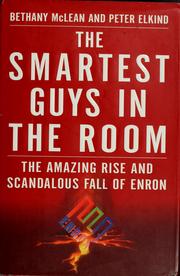
The Smartest Guys in the Room: The Amazing R

The Smartest Guys in the Room: The Amazing Rise and Scandalous Fall of Enron

How Enron used mark-to-market accounting and hidden deals until its 2001 bankruptcy.

Bethany McLean, Peter Elkind
2003
T1 464 pages · about 7h 44m to read Open Librarygoodreads

The canonical account, by the Fortune reporter who asked the first question.

Summary

McLean and Elkind, Fortune journalists, reconstruct Enron's rise and its 2001 bankruptcy. McLean wrote the March 2001 Fortune article asking how Enron made its money, which was the first serious public challenge to the company.

The accounting mechanisms are explained clearly. Mark to market accounting, which Enron obtained approval to use for its energy trading business, allowed the company to book the entire estimated future profit of a long-term contract at signing, which meant reported earnings reflected estimates made by the people compensated on them. The special purpose entities, particularly the LJM partnerships run by chief financial officer Andrew Fastow, moved debt off the balance sheet and were capitalised partly with Enron's own stock, which meant the structures failed exactly when the share price fell.

The cultural material covers the performance review committee that ranked and removed employees annually, the compensation structure that rewarded deal signing rather than deal performance, and the promotion of traders whose reported profits were estimates. The enabling institutions receive substantial attention: Arthur Andersen earned large consulting fees alongside its audit work, the banks structured the entities and sold the securities, the rating agencies maintained investment grade until days before bankruptcy, and equity analysts maintained buy recommendations throughout.

The book is journalism and the accounting explanation, while clear, is necessarily simplified. It concentrates on individuals rather than on the regulatory structure that permitted the arrangements. It remains the standard account and the best available explanation of how the specific mechanisms worked.

Key takeaways 8

  1. Mark to market accounting allowed Enron to book estimated future profits at contract signing, which meant reported earnings were forecasts made by the people paid on them.
  2. Special purpose entities moved debt off the balance sheet while being capitalised with Enron stock, which guaranteed they would fail when the share price fell.
  3. The chief financial officer ran partnerships that transacted with the company, which the board approved by waiving the conflict of interest policy.
  4. Compensation rewarded signing deals rather than the performance of those deals, which produced a pipeline of transactions nobody expected to work.
  5. Annual forced ranking and removal of employees produced a culture in which reporting a problem was more dangerous than concealing it.
  6. Auditors earning substantial consulting fees alongside audit fees could not function as an independent check.
  7. Rating agencies maintained investment grade ratings until days before bankruptcy, and analysts maintained buy recommendations throughout.
  8. A company whose business model cannot be explained by its own executives in plain terms is the observable warning sign that preceded everything else.

Who should read it

Investors and directors who want the clearest account of how off-balance-sheet structures and mark to market accounting were actually used to conceal losses.

About Bethany McLean

Investigative business journalist; Vanity Fair contributing editor, formerly Fortune

The Smartest Guys in the Room remains the definitive account of Enron and her Fortune reporting broke the story before the collapse.

Who recommended it 3 · 2 direct

Similar books 6

Chosen by shared topics, the entries that hold them, and the people who recommended both.
Kurt Eichenwald · 2005

Enron's collapse told scene by scene from depositions, emails and interviews.

Recommended by: Mohnish Pabrai

Norman C. Miller · 1966

Pulitzer-winning account of the warehousing fraud that nearly broke Amex.

Recommended by: Mohnish Pabrai
Frank Partnoy · 2009

How Ivar Kreuger built a 1920s match monopoly, and the forgeries found at his death.

Recommended by: Mohnish Pabrai
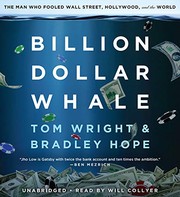
Tom Wright, Bradley Hope · 2018

How Jho Low diverted billions from Malaysia's 1MDB fund into parties and politics.

Frank Partnoy · 2003

How finance used complexity to hide risk from the 1980s through Enron.
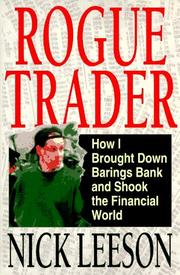
Nick Leeson, Edward Whitley · 1996

How one trader's hidden losses in Singapore brought down Barings Bank.

Where it sits in the reference 5

Journalists
Companies
Industries
Business themes
Financial history

Topics 2

Company HistoriesFinancial History