Updates

  1. Person pages list letters, writing, profiles and links as sortable tables with filters, and show each person's companies as links; Fund letters show each letter's description in its own column.
  2. Experts show a checked job title and a short description of each person; 30 more people have photographs.
  3. Every company, fund, university and publication the experts work for has a page listing the people there.
  4. Fund letters show each letter's thesis and filter by it; 225 person pages list the essays, columns and newsletter issues the person wrote.
  5. Person pages list every essay and newsletter issue a person wrote, and their own books as a table in List view.
  6. Recommends shows the five largest kinds of book and the rest under More; browse pictures load sooner.
  7. Podcasts and talks link the original episode, filter by Audio and video or Press, and list each publisher once.
  8. Pages are wider, Recommends has List and Grid, and a filter clicked again turns off.
  9. Book cards sit in a ruled grid with Open Library and Goodreads links and each book's one-line note.
  10. Funds is now Investors; each investor's styles are buttons that filter the table.
  11. Podcasts and talks on a person's page filter by year and publisher and show as a list or a grid of pictures.
  12. Quotes show only people's own words: 472 summaries written by list sites are gone.
  13. Country pages open from Browse again, and every link on the shelf lands on a page.
  14. Subject and person pages show their sections as tabs, and each book appears once on a person's page.
  15. Book cards show the quote, who said it and the source; grids show five cards to a row.
  16. On a phone, a menu holds the sections, search, Updates, Feedback and dark mode.
  17. Feedback takes a screenshot of the page with no browser prompt, opens a screenshot full size when you click it, and clears itself once sent.
  18. Book cards are centred, search names the topic each book sits in, and any text cut short shows whole on hover.
  19. Search groups its results by kind: people, companies, geographies, subjects, topics, books, funds, fund letters and papers.
  20. The Books table lists who recommended each book by name, and the browser tab names the section you are in.
  21. Feedback can take a screenshot of the page, or one you paste or choose, and opens in the corner beside Updates.
  22. Each rail button reopens its section where you left it, and Browse, Table and People show on every book and subject page.
  23. Filters grey out choices that hold nothing instead of hiding them, and Books › People filters by authors or recommenders.
  24. Feedback takes a subject line and up to three screenshots.
  25. Biographies are grouped by the person they are about: 41 new pages, from Abraham Lincoln to Lee Kuan Yew.
  26. Sport splits into 23 sports, and Religion into one topic per faith.
  27. Book lists show as cards: the cover, one recommendation quote and every recommender by name.
  28. Seventeen subjects that had two or three pages under different names now have one page each.
  29. Every page lists its Experts as authors and recommenders, with a link to them on the Experts tab.
  30. Economics, Financial history, Financial panics and Accounting are subjects of their own, with one page per financial crisis.
  31. Book, person and subject pages open inside the app, so the tabs stay in view.
  32. 996 more book covers, and photographs or logos for 227 more people and companies.
  33. Books › Browse shows every subject as cards, and the rail holds Fund letters, Papers, Experts, Books and Funds.
  34. Every topic over 150 books splits into narrower topics, each with a page of its own.

Send feedback

What is it?
Screenshots, up to 3 (optional)
or paste one with Ctrl+V

We use your email only to reply to you.

The Handbook of Inflation Hedging Investment

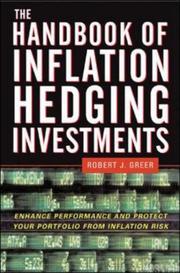
The Handbook of Inflation Hedging Investments

Robert J. Greer
2005
T3 302 pages · about 5h 2m to read Open Librarygoodreads

Linkers set beside commodities and real assets as competing inflation hedges.

Summary

Robert Greer edited this volume of contributions from practitioners on assets and strategies intended to protect portfolios against inflation. Greer's own work on commodity indices, including the original construction of a commodity total return index, sits behind the collection.

The chapters cover the candidate hedges individually. Inflation-linked government bonds, whose mechanics and pricing are covered along with the difference between breakeven rates and expected inflation. Commodities and commodity index investment, including the decomposition of returns into spot, roll and collateral components, which is Greer's own contribution and which explains why a commodity index return differs from commodity price appreciation. Real estate and its lease structures. Natural resource equities and their imperfect relationship to the underlying commodities. Timber and farmland. Infrastructure. Inflation derivatives including swaps and options.

The volume is a practitioner reference and its authors are generally advocating the asset classes they manage, which readers should weigh. It was published in 2005, before the commodity index inflows of the following years compressed roll returns, before the 2008 collapse, and before the inflation of 2021 and 2022 provided a real test. That test broadly supported commodities and inflation-linked bonds with short duration, and did not support real estate equities or natural resource equities, which is worth setting against the volume's claims.

Key takeaways 7

  1. Commodity index returns decompose into spot return, roll return and collateral return, and only the first tracks commodity prices.
  2. Roll return turns negative when futures curves are in contango, which can make an index lose money while prices rise.
  3. Inflation-linked bonds hedge inflation only over horizons matching their duration, and longer issues carry real rate risk that dominates.
  4. Natural resource equities correlate with equity markets more than with the commodities they produce, which weakens their hedging value.
  5. Real estate hedges inflation only where lease structures permit rents to reset, which varies enormously by property type and jurisdiction.
  6. Breakeven inflation rates contain risk and liquidity premia and are therefore biased estimates of expected inflation.
  7. Contributors are generally advocating asset classes they manage, which readers should weigh against the analysis.

Who should read it

Institutional investors assembling inflation protection who want a survey of the candidate assets and the mechanics of each.

Similar books 6

Chosen by shared topics, the entries that hold them, and the people who recommended both.

John Brynjolfsson, Frank J. Fabozzi · 1999

Essays on inflation-indexed bonds, written as the US TIPS market opened.
Mark Deacon, Andrew Derry, Dariush Mirfendereski · 2004

How inflation-linked government bonds are designed, priced and traded worldwide.
Brice Benaben · 2005

Guide for investors and ALM managers to linked bonds and swaps.

Brice Benaben · 2008

Successor survey to Benaben's earlier volume: pricing, hedging, market structure.
Jack D. Schwager · 1984

Second edition 2017 with Mark Etzkorn, titled A Complete Guide to the Futures Market.
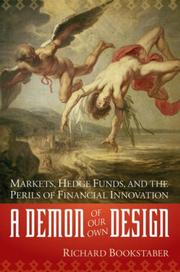
Richard M. Bookstaber · 2007

How financial innovation made markets more crisis-prone, from a risk manager.

Where it sits in the reference 1

Assets

Topics

InvestingFinance and Markets