Updates

  1. Person pages list letters, writing, profiles and links as sortable tables with filters, and show each person's companies as links; Fund letters show each letter's description in its own column.
  2. Experts show a checked job title and a short description of each person; 30 more people have photographs.
  3. Every company, fund, university and publication the experts work for has a page listing the people there.
  4. Fund letters show each letter's thesis and filter by it; 225 person pages list the essays, columns and newsletter issues the person wrote.
  5. Person pages list every essay and newsletter issue a person wrote, and their own books as a table in List view.
  6. Recommends shows the five largest kinds of book and the rest under More; browse pictures load sooner.
  7. Podcasts and talks link the original episode, filter by Audio and video or Press, and list each publisher once.
  8. Pages are wider, Recommends has List and Grid, and a filter clicked again turns off.
  9. Book cards sit in a ruled grid with Open Library and Goodreads links and each book's one-line note.
  10. Funds is now Investors; each investor's styles are buttons that filter the table.
  11. Podcasts and talks on a person's page filter by year and publisher and show as a list or a grid of pictures.
  12. Quotes show only people's own words: 472 summaries written by list sites are gone.
  13. Country pages open from Browse again, and every link on the shelf lands on a page.
  14. Subject and person pages show their sections as tabs, and each book appears once on a person's page.
  15. Book cards show the quote, who said it and the source; grids show five cards to a row.
  16. On a phone, a menu holds the sections, search, Updates, Feedback and dark mode.
  17. Feedback takes a screenshot of the page with no browser prompt, opens a screenshot full size when you click it, and clears itself once sent.
  18. Book cards are centred, search names the topic each book sits in, and any text cut short shows whole on hover.
  19. Search groups its results by kind: people, companies, geographies, subjects, topics, books, funds, fund letters and papers.
  20. The Books table lists who recommended each book by name, and the browser tab names the section you are in.
  21. Feedback can take a screenshot of the page, or one you paste or choose, and opens in the corner beside Updates.
  22. Each rail button reopens its section where you left it, and Browse, Table and People show on every book and subject page.
  23. Filters grey out choices that hold nothing instead of hiding them, and Books › People filters by authors or recommenders.
  24. Feedback takes a subject line and up to three screenshots.
  25. Biographies are grouped by the person they are about: 41 new pages, from Abraham Lincoln to Lee Kuan Yew.
  26. Sport splits into 23 sports, and Religion into one topic per faith.
  27. Book lists show as cards: the cover, one recommendation quote and every recommender by name.
  28. Seventeen subjects that had two or three pages under different names now have one page each.
  29. Every page lists its Experts as authors and recommenders, with a link to them on the Experts tab.
  30. Economics, Financial history, Financial panics and Accounting are subjects of their own, with one page per financial crisis.
  31. Book, person and subject pages open inside the app, so the tabs stay in view.
  32. 996 more book covers, and photographs or logos for 227 more people and companies.
  33. Books › Browse shows every subject as cards, and the rail holds Fund letters, Papers, Experts, Books and Funds.
  34. Every topic over 150 books splits into narrower topics, each with a page of its own.

Send feedback

What is it?
Screenshots, up to 3 (optional)
or paste one with Ctrl+V

We use your email only to reply to you.

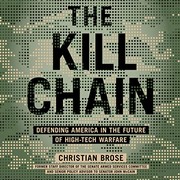
The Kill Chain

The Kill Chain

Christian Brose
2020
T2 161 pages · about 2h 41m to read Open Librarygoodreads

The defence procurement failure Palantir sells against.

Summary

Brose spent years as staff director of the Senate Armed Services Committee under John McCain, and he wrote this as an argument about how the United States buys and organises military power. His unit of analysis is the kill chain: the sequence of understanding a situation, deciding what to do, and taking action. He argues that American defense planning has fixated on platforms, meaning aircraft carriers, manned fighters and large bases, while China has built forces designed to break American kill chains through long-range missiles, sensors, jamming and cyber attack.

The consequence, he says, is that the US buys small numbers of extremely expensive systems that are precisely the targets an opponent has optimised against. He describes classified and unclassified wargames in which American forces lose quickly, and he traces the acquisition process, requirements writing, congressional politics and service culture that keep producing the same answers. His recommendation is a shift to large numbers of cheap, expendable, autonomous systems, to software and machine intelligence as the core capability, and to buying outcomes rather than platforms.

The evidence is insider testimony about Pentagon process plus open-source analysis of Chinese doctrine. There is little quantitative modelling.

Brose became an executive at Anduril Industries, which sells the kind of autonomous systems he advocates, and readers should weigh that. The book was also written before the Ukraine war, which supplied real evidence about cheap drones, attrition and the vulnerability of expensive platforms, largely supporting his direction while complicating his confidence that software alone decides outcomes.

Key takeaways 7

  1. Military advantage comes from closing the sense-decide-act loop faster than the opponent, not from owning better platforms.
  2. China has built its forces specifically to destroy the American kill chain rather than to match American platforms.
  3. The Pentagon's requirements and acquisition process guarantees small numbers of expensive systems regardless of strategic need.
  4. Large numbers of cheap expendable autonomous systems would survive a contested environment better than a few exquisite ones.
  5. American wargames have repeatedly shown US forces losing a Pacific conflict, and those results have not changed procurement.
  6. Congress protects programs for their jobs rather than their military value, which locks in obsolete capabilities.
  7. Software and machine intelligence, not airframes and hulls, are now the components that determine combat outcomes.

Who should read it

Investors and founders in defense technology who need the strategic argument that underwrites the sector, and anyone assessing how procurement politics constrains what gets bought.

Who recommended it 1

Similar books 6

Chosen by shared topics, the entries that hold them, and the people who recommended both.
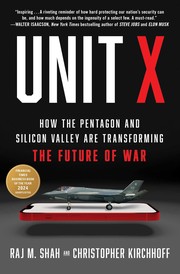
Raj M. Shah, Christopher Kirchhoff · 2024

Insiders on Pentagon-Valley contracting where Palantir won

Alexander C. Karp, Nicholas W. Zamiska · 2025

Insider manifesto by Palantir's CEO on tech and national power.
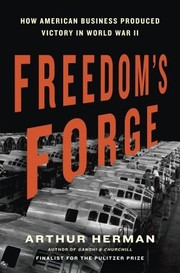
Arthur Herman · 2012

How Knudsen and Kaiser led America's industrial build-up for the Second World War.

“One of the best books I've read, it's a great story of industrial production and heroes.” — Christopher Bloomstran

Source: Semper Augustus 2020 Letter to Clients, 'To Read or Not to Read', p. 57

Recommended by: Christopher Bloomstran, Patrick Collison
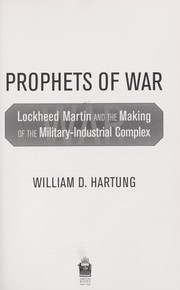
William D. Hartung · 2010

Lockheed Martin as a case study in the contractor-state relationship.
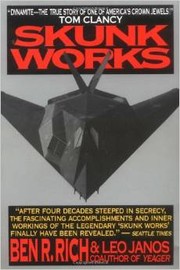
Ben R. Rich, Leo Janos, Ben R./Janos, Leo Rich · 1994

Inside Lockheed's secret projects unit, from the U-2 to the stealth fighter.

Recommended by: Patrick Collison, Sam Altman
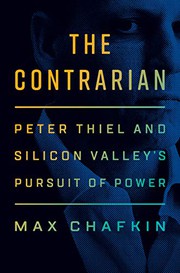
Max Chafkin · 2021

Peter Thiel biography with substantial Palantir founding material.

Recommended by: Andrew Wilkinson

Where it sits in the reference 2

Companies
Secular themes

Topics

War and StrategyTechnology and ComputingTechnology and society