Updates

  1. Person pages list letters, writing, profiles and links as sortable tables with filters, and show each person's companies as links; Fund letters show each letter's description in its own column.
  2. Experts show a checked job title and a short description of each person; 30 more people have photographs.
  3. Every company, fund, university and publication the experts work for has a page listing the people there.
  4. Fund letters show each letter's thesis and filter by it; 225 person pages list the essays, columns and newsletter issues the person wrote.
  5. Person pages list every essay and newsletter issue a person wrote, and their own books as a table in List view.
  6. Recommends shows the five largest kinds of book and the rest under More; browse pictures load sooner.
  7. Podcasts and talks link the original episode, filter by Audio and video or Press, and list each publisher once.
  8. Pages are wider, Recommends has List and Grid, and a filter clicked again turns off.
  9. Book cards sit in a ruled grid with Open Library and Goodreads links and each book's one-line note.
  10. Funds is now Investors; each investor's styles are buttons that filter the table.
  11. Podcasts and talks on a person's page filter by year and publisher and show as a list or a grid of pictures.
  12. Quotes show only people's own words: 472 summaries written by list sites are gone.
  13. Country pages open from Browse again, and every link on the shelf lands on a page.
  14. Subject and person pages show their sections as tabs, and each book appears once on a person's page.
  15. Book cards show the quote, who said it and the source; grids show five cards to a row.
  16. On a phone, a menu holds the sections, search, Updates, Feedback and dark mode.
  17. Feedback takes a screenshot of the page with no browser prompt, opens a screenshot full size when you click it, and clears itself once sent.
  18. Book cards are centred, search names the topic each book sits in, and any text cut short shows whole on hover.
  19. Search groups its results by kind: people, companies, geographies, subjects, topics, books, funds, fund letters and papers.
  20. The Books table lists who recommended each book by name, and the browser tab names the section you are in.
  21. Feedback can take a screenshot of the page, or one you paste or choose, and opens in the corner beside Updates.
  22. Each rail button reopens its section where you left it, and Browse, Table and People show on every book and subject page.
  23. Filters grey out choices that hold nothing instead of hiding them, and Books › People filters by authors or recommenders.
  24. Feedback takes a subject line and up to three screenshots.
  25. Biographies are grouped by the person they are about: 41 new pages, from Abraham Lincoln to Lee Kuan Yew.
  26. Sport splits into 23 sports, and Religion into one topic per faith.
  27. Book lists show as cards: the cover, one recommendation quote and every recommender by name.
  28. Seventeen subjects that had two or three pages under different names now have one page each.
  29. Every page lists its Experts as authors and recommenders, with a link to them on the Experts tab.
  30. Economics, Financial history, Financial panics and Accounting are subjects of their own, with one page per financial crisis.
  31. Book, person and subject pages open inside the app, so the tabs stay in view.
  32. 996 more book covers, and photographs or logos for 227 more people and companies.
  33. Books › Browse shows every subject as cards, and the rail holds Fund letters, Papers, Experts, Books and Funds.
  34. Every topic over 150 books splits into narrower topics, each with a page of its own.

Send feedback

What is it?
Screenshots, up to 3 (optional)
or paste one with Ctrl+V

We use your email only to reply to you.

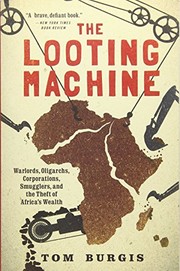
The Looting Machine

The Looting Machine

Tom Burgis
2015
T2 336 pages · about 5h 36m to read Open Librarygoodreads

How resource rents are extracted across Africa, with Nigeria at the centre.

Summary

Burgis, a Financial Times investigations reporter who covered Africa, examines how resource wealth is extracted from African countries in ways that leave the population poorer.

His analytical concept is the shadow state. Behind the formal government sits a network of officials, intermediaries and foreign companies that controls the resource revenue, and this network is where decisions are actually made. Formal institutions continue to exist and to hold elections while the resource rent flows through the shadow structure. Burgis argues this is not a failure of governance but a stable arrangement that serves the participants.

The reporting covers specific cases. In Angola he traces the role of Sonangol and the network around the presidency. In the Democratic Republic of Congo he documents mining assets sold below value to offshore companies and resold at large profits, with the difference lost to the state, drawing on the work that also informed the Africa Progress Panel's findings. In Nigeria he covers oil theft, subsidy fraud and the Malabu oil block. In Guinea and Zimbabwe he covers mining concessions.

A recurring subject is the Queensway Group, a Hong Kong-based network associated with Sam Pa, which arranged infrastructure-for-resources deals across several African states, and whose ownership and control Burgis attempts to establish.

His argument connects these to the resource curse literature: resource rents fund the state without taxation, which removes the accountability that taxation creates, and the extraction requires very few workers, which severs the connection between national income and employment.

The book is investigative journalism, so it establishes specific transactions rather than testing the general claim statistically. Some subjects disputed the reporting. The mechanism it documents, in which state assets are sold to offshore vehicles at a fraction of value, is well evidenced.

Key takeaways 7

  1. Resource rents fund states without taxation, which removes the accountability that taxing citizens creates.
  2. Resource extraction employs very few people, so national income rises without any connection to employment or wages.
  3. State mining and oil assets have been sold to offshore vehicles at fractions of their value and resold immediately at large profits.
  4. A shadow network of officials, intermediaries and foreign firms controls resource revenue while formal institutions continue to operate.
  5. Infrastructure-for-resources deals transfer long-term resource rights against construction whose value is difficult to verify.
  6. Offshore corporate secrecy is the enabling mechanism, because it prevents anyone establishing who benefits from a transaction.
  7. The arrangement is stable rather than dysfunctional, because it serves every participant with the power to change it.

Who should read it

Investors and operators in African resource markets who need to understand the transaction structures and political networks that determine who captures value.

Similar books 6

Chosen by shared topics, the entries that hold them, and the people who recommended both.
Michael Peel · 2010

The Niger Delta oil economy reported at ground level.
Adriaan Basson, Pieter du Toit · 2017

The Zuma years assembled into a single narrative of capture.
Ngozi Okonjo-Iweala · 2018

The same author on what happened when the reforms were resisted.

Pieter-Louis Myburgh · 2019

Procurement capture inside the governing party.
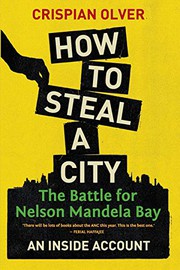
Crispian Olver · 2017

Municipal tender corruption reconstructed from the inside.
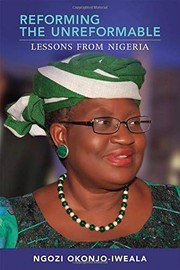
Ngozi Okonjo-Iweala · 2012

Nigeria's reforms: cutting $30 billion of debt, fighting corruption, restructuring.

Where it sits in the reference 3

Geographies
Geographies
Geographies

Topics

Politics and GovernmentEnvironment and EnergyOil, gas and coal