Updates

  1. Person pages list letters, writing, profiles and links as sortable tables with filters, and show each person's companies as links; Fund letters show each letter's description in its own column.
  2. Experts show a checked job title and a short description of each person; 30 more people have photographs.
  3. Every company, fund, university and publication the experts work for has a page listing the people there.
  4. Fund letters show each letter's thesis and filter by it; 225 person pages list the essays, columns and newsletter issues the person wrote.
  5. Person pages list every essay and newsletter issue a person wrote, and their own books as a table in List view.
  6. Recommends shows the five largest kinds of book and the rest under More; browse pictures load sooner.
  7. Podcasts and talks link the original episode, filter by Audio and video or Press, and list each publisher once.
  8. Pages are wider, Recommends has List and Grid, and a filter clicked again turns off.
  9. Book cards sit in a ruled grid with Open Library and Goodreads links and each book's one-line note.
  10. Funds is now Investors; each investor's styles are buttons that filter the table.
  11. Podcasts and talks on a person's page filter by year and publisher and show as a list or a grid of pictures.
  12. Quotes show only people's own words: 472 summaries written by list sites are gone.
  13. Country pages open from Browse again, and every link on the shelf lands on a page.
  14. Subject and person pages show their sections as tabs, and each book appears once on a person's page.
  15. Book cards show the quote, who said it and the source; grids show five cards to a row.
  16. On a phone, a menu holds the sections, search, Updates, Feedback and dark mode.
  17. Feedback takes a screenshot of the page with no browser prompt, opens a screenshot full size when you click it, and clears itself once sent.
  18. Book cards are centred, search names the topic each book sits in, and any text cut short shows whole on hover.
  19. Search groups its results by kind: people, companies, geographies, subjects, topics, books, funds, fund letters and papers.
  20. The Books table lists who recommended each book by name, and the browser tab names the section you are in.
  21. Feedback can take a screenshot of the page, or one you paste or choose, and opens in the corner beside Updates.
  22. Each rail button reopens its section where you left it, and Browse, Table and People show on every book and subject page.
  23. Filters grey out choices that hold nothing instead of hiding them, and Books › People filters by authors or recommenders.
  24. Feedback takes a subject line and up to three screenshots.
  25. Biographies are grouped by the person they are about: 41 new pages, from Abraham Lincoln to Lee Kuan Yew.
  26. Sport splits into 23 sports, and Religion into one topic per faith.
  27. Book lists show as cards: the cover, one recommendation quote and every recommender by name.
  28. Seventeen subjects that had two or three pages under different names now have one page each.
  29. Every page lists its Experts as authors and recommenders, with a link to them on the Experts tab.
  30. Economics, Financial history, Financial panics and Accounting are subjects of their own, with one page per financial crisis.
  31. Book, person and subject pages open inside the app, so the tabs stay in view.
  32. 996 more book covers, and photographs or logos for 227 more people and companies.
  33. Books › Browse shows every subject as cards, and the rail holds Fund letters, Papers, Experts, Books and Funds.
  34. Every topic over 150 books splits into narrower topics, each with a page of its own.

Send feedback

What is it?
Screenshots, up to 3 (optional)
or paste one with Ctrl+V

We use your email only to reply to you.

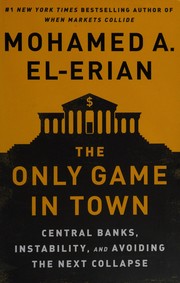
The Only Game in Town

The Only Game in Town

Mohamed El-Erian
2016
T4 308 pages · about 5h 8m to read Open Librarygoodreads

Central banks holding rates down because no other authority will act.

Summary

El-Erian, formerly chief executive of PIMCO, argues that central banks became the only functioning policymakers after 2008 and that this arrangement cannot last. Elected governments failed to act on fiscal policy, structural reform and debt restructuring, so central banks used monetary tools to substitute, first through interest rates and then through asset purchases and forward guidance.

His diagnosis is that these tools can buy time but cannot create growth. They work on financial conditions rather than on productivity, labour markets or the allocation of resources. Meanwhile they produce side effects: asset price inflation, distorted risk pricing, capital misallocation, and pressure on savers and pension funds. He argues that this generated what he calls artificial financial stability sitting on top of unresolved economic problems.

The forecast is structured around what he calls a T junction. The current path is unsustainable and ends within a few years in one of two directions: either governments act, producing higher inclusive growth and reduced financial risk, or the arrangement breaks, producing recession, renewed financial instability and political fragmentation. He assigns the two branches roughly equal probability. He also examines behavioural and organisational obstacles to seeing the transition coming, including cognitive blind spots and institutional inertia.

The timing was wrong. The arrangement he described persisted for years beyond his horizon, and the eventual break in 2020 to 2022 came from a pandemic and fiscal expansion rather than from the mechanisms he identified. The description of central bank overburdening and its side effects has aged better than the forecast.

Key takeaways 7

  1. Central banks became the only active policymakers because elected governments would not act on fiscal and structural policy.
  2. Monetary policy influences financial conditions but cannot raise productivity or fix labour market mismatch.
  3. Prolonged unconventional policy produces artificial financial stability that conceals unresolved real economy problems.
  4. Asset purchases distort risk pricing and push investors into positions they would not otherwise hold.
  5. The post-crisis arrangement is unstable and resolves either into higher inclusive growth or into recession and fragmentation.
  6. Liquidity in many markets has become an illusion, because the intermediaries that once absorbed selling no longer hold inventory.
  7. Institutions fail to prepare for regime change because their processes are built around extrapolating the current regime.

Who should read it

Allocators and operators who need a clear statement of what central bank policy can and cannot do, and how its side effects show up in asset markets.

Who recommended it 1

Mark Cubanreported

Similar books 6

Chosen by shared topics, the entries that hold them, and the people who recommended both.
Joseph J. Wang · 2021

A former Fed trader on repo, bills and reserve plumbing.

Anat Admati, Martin Hellwig · 2013

Why banks should fund themselves with far more equity, and why their objections fail.

Ben S. Bernanke · 2015

The Fed chair's account of the financial crisis and what the Fed did and why.
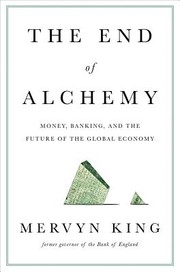
Mervyn King · 2016

Banks turn short-term deposits into long-term loans; why that keeps causing crises.

Bruce Greenwald, Joseph E. Stiglitz · 2003

Monetary policy works through credit and bank lending, not the quantity of money.

Where it sits in the reference 2

Secular themes
Financial history

Topics

Finance and MarketsEconomics