Updates

  1. Person pages list letters, writing, profiles and links as sortable tables with filters, and show each person's companies as links; Fund letters show each letter's description in its own column.
  2. Experts show a checked job title and a short description of each person; 30 more people have photographs.
  3. Every company, fund, university and publication the experts work for has a page listing the people there.
  4. Fund letters show each letter's thesis and filter by it; 225 person pages list the essays, columns and newsletter issues the person wrote.
  5. Person pages list every essay and newsletter issue a person wrote, and their own books as a table in List view.
  6. Recommends shows the five largest kinds of book and the rest under More; browse pictures load sooner.
  7. Podcasts and talks link the original episode, filter by Audio and video or Press, and list each publisher once.
  8. Pages are wider, Recommends has List and Grid, and a filter clicked again turns off.
  9. Book cards sit in a ruled grid with Open Library and Goodreads links and each book's one-line note.
  10. Funds is now Investors; each investor's styles are buttons that filter the table.
  11. Podcasts and talks on a person's page filter by year and publisher and show as a list or a grid of pictures.
  12. Quotes show only people's own words: 472 summaries written by list sites are gone.
  13. Country pages open from Browse again, and every link on the shelf lands on a page.
  14. Subject and person pages show their sections as tabs, and each book appears once on a person's page.
  15. Book cards show the quote, who said it and the source; grids show five cards to a row.
  16. On a phone, a menu holds the sections, search, Updates, Feedback and dark mode.
  17. Feedback takes a screenshot of the page with no browser prompt, opens a screenshot full size when you click it, and clears itself once sent.
  18. Book cards are centred, search names the topic each book sits in, and any text cut short shows whole on hover.
  19. Search groups its results by kind: people, companies, geographies, subjects, topics, books, funds, fund letters and papers.
  20. The Books table lists who recommended each book by name, and the browser tab names the section you are in.
  21. Feedback can take a screenshot of the page, or one you paste or choose, and opens in the corner beside Updates.
  22. Each rail button reopens its section where you left it, and Browse, Table and People show on every book and subject page.
  23. Filters grey out choices that hold nothing instead of hiding them, and Books › People filters by authors or recommenders.
  24. Feedback takes a subject line and up to three screenshots.
  25. Biographies are grouped by the person they are about: 41 new pages, from Abraham Lincoln to Lee Kuan Yew.
  26. Sport splits into 23 sports, and Religion into one topic per faith.
  27. Book lists show as cards: the cover, one recommendation quote and every recommender by name.
  28. Seventeen subjects that had two or three pages under different names now have one page each.
  29. Every page lists its Experts as authors and recommenders, with a link to them on the Experts tab.
  30. Economics, Financial history, Financial panics and Accounting are subjects of their own, with one page per financial crisis.
  31. Book, person and subject pages open inside the app, so the tabs stay in view.
  32. 996 more book covers, and photographs or logos for 227 more people and companies.
  33. Books › Browse shows every subject as cards, and the rail holds Fund letters, Papers, Experts, Books and Funds.
  34. Every topic over 150 books splits into narrower topics, each with a page of its own.

Send feedback

What is it?
Screenshots, up to 3 (optional)
or paste one with Ctrl+V

We use your email only to reply to you.

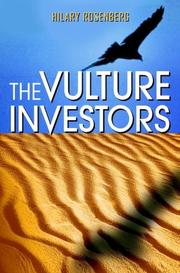
The Vulture Investors

The Vulture Investors

Hilary Rosenberg
1992
T2 404 pages · about 6h 44m to read Open Librarygoodreads

How the first distressed funds worked the 1980s bankruptcies.

Summary

Rosenberg, a financial journalist, wrote the first popular account of the distressed debt investors who bought the bonds of failing companies during and after the leveraged buyout period. Her subjects include Michael Price, Martin Whitman, Wilbur Ross, Leon Black and others who built businesses buying claims on bankrupt estates.

The book works through several bankruptcies in detail, including the Texaco and Pennzoil litigation, Revco, Public Service Company of New Hampshire, and the aftermath of the Drexel collapse. What she shows is the process: buying claims at large discounts from original holders who cannot or will not hold defaulted paper, organising creditor committees, negotiating the plan of reorganisation, and converting debt into the equity of the reorganised company. She is clear that the returns come from the combination of forced selling by institutional holders whose mandates prohibit defaulted securities, the analytical work of valuing a claim through an uncertain legal process, and the ability to influence the outcome through committee position.

The reference has not independently verified the specific transaction figures reported. The book is from 1992 and the market has changed substantially since: distressed investing became an institutional asset class, the participants are far larger, and the tactics have evolved to include loan-to-own strategies and liability management exercises the book does not cover. Its value is as a readable introduction to the mechanics and to the personalities who established the field.

Key takeaways 7

  1. Distressed debt returns come substantially from forced selling by institutional holders whose mandates prohibit holding defaulted securities.
  2. The investor's analytical task is valuing a claim through an uncertain legal process, which is a different skill from valuing a business.
  3. Position on the creditors' committee gives influence over the plan of reorganisation, which means the investor can affect the outcome rather than only predict it.
  4. Converting purchased debt into the equity of a reorganised company is how the largest returns in the field are realised.
  5. Bankruptcy outcomes are negotiated among creditor classes, so understanding the other holders' constraints matters as much as understanding the assets.
  6. Litigation outcomes can dominate asset values in a distressed situation, as the Texaco and Pennzoil case demonstrated.
  7. The field was built by a small number of individuals in the 1980s and has since become an institutional asset class with different economics.

Who should read it

Investors new to distressed debt who want an accessible account of the mechanics and the origins of the field, with the market structure read as historical.

Who recommended it 1 · 1 direct

Similar books 6

Chosen by shared topics, the entries that hold them, and the people who recommended both.
Martin J. Whitman, Fernando Diz · 2009

Subtitled Principles and Technique.

Recommended by: Mohnish Pabrai

Edward I. Altman · 1991

The distressed debt market after the buyout era, and how to analyse its securities.

Recommended by: Mohnish Pabrai
Edward I. Altman, Edith Hotchkiss · 1993

Predicting corporate failure with models like the Z-score, and how bankruptcy works.

Where it sits in the reference 1

Assets

Topics

InvestingFinance and Markets