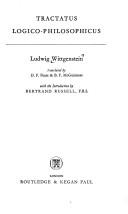
Tractatus Logico-Philosophicus
Language, logic and the limits of what can be said about the world.
The limits of language and what can be said precisely
Summary
Wittgenstein sets out, in numbered propositions, a theory of how language pictures the world and where its limits lie. The decimal numbers show each remark's logical weight: proposition 1, "The world is everything that is the case," is followed by 1.1, "The world is the totality of facts, not of things." The seven main propositions run from the world as the existence of atomic facts, through the logical picture of facts as thought and the significant proposition as thought, to the general form of a proposition as a truth-function of elementary propositions. In the preface he says the book shows that philosophical problems arise from misunderstanding the logic of language, and that what can be said at all can be said clearly.
A proposition is a picture or model of reality. All philosophy is a critique of language; it is not a theory but an activity whose result is to make thoughts clear (4.112). "The limits of my language mean the limits of my world" (5.6). Value and the sense of the world lie outside the world, and the inexpressible shows itself as the mystical. His own propositions are a ladder to be thrown away once climbed, and the book ends: "Whereof one cannot speak, thereof one must be silent." The Project Gutenberg text includes Bertrand Russell's introduction.
Key takeaways 5
- The world consists of facts, not things, and language pictures those facts.
- Philosophy is an activity of clarifying thoughts rather than a body of doctrine.
- Many philosophical problems come from misunderstanding the logic of language.
- The limits of a person's language are the limits of their world.
- What cannot be said clearly should not be said at all.
Who should read it
Readers who want the original statement of the limits of language and of what can be said precisely.
Who recommended it 1
Similar books 6
Chosen by shared topics, the entries that hold them, and the people who recommended both.
Thought experiments and other tools a philosopher uses to reason carefully.
Recommended by: Patrick Collison, Shane Parrish
What makes a truth objective: what stays the same across perspectives.
Recommended by: Nassim Nicholas Taleb
How people sort the world into categories, and where categories fail.
Recommended by: Nassim Nicholas Taleb
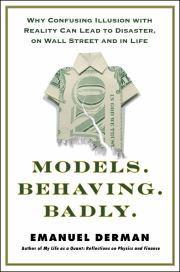
Why models are not theories, and the harm of mistaking them for reality.
Recommended by: Nassim Nicholas Taleb
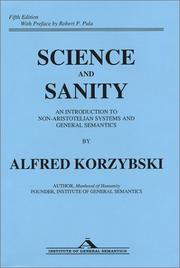
General semantics: why a map is not the territory and a word is not the thing.

Rare, unforeseen, high-impact events drive history, explained only after the fact.
“The Black Swan U The best-known bird around today is The Black Swan, the second book from Nassim Nicolas Taleb.” — Howard Marks
Source: The Complete Collection, page 530
Recommended by: David Perell, Howard Marks, Marc Andreessen and 20 others