VC: An American History
American venture capital traced back to whaling, and why it took the shape it has.
Academic history tracing venture back to whaling voyages.
Summary
Tom Nicholas teaches at Harvard Business School and wrote the first serious history of American venture capital, tracing the practice of financing high-risk ventures for extreme returns back well before the industry existed.
His opening comparison is nineteenth-century whaling, which he treats as the closest structural precursor. Whaling voyages were financed by agents who assembled capital from investors, selected captains, and produced return distributions in which most voyages lost money and a few returned enormous multiples. New Bedford agents developed the practices that recur: specialisation, selection of managers, syndication of risk and the acceptance of a skewed return distribution.
The modern history covers the wealthy families including the Rockefellers, Whitneys and Phippses who financed technology ventures before the war; the founding of American Research and Development in 1946 by Georges Doriot and its Digital Equipment investment, which returned a multiple that defined the industry's arithmetic; the Small Business Investment Company programme, which was a policy failure that nonetheless trained a generation of investors; the shift to the limited partnership structure; the 1978 clarification of pension fund investment rules that supplied the capital base; and the subsequent development through successive technology cycles. Nicholas is careful about the role of government, which appears throughout as a funder of research, a purchaser and a shaper of tax and pension rules. The book is scholarly and readable and is the standard history.
Key takeaways 7
- Nineteenth-century whaling produced the structural features of venture capital including syndication, manager selection and a skewed return distribution.
- Most venture investments lose money and a small number return the entire fund, which has been the arithmetic since before the industry existed.
- American Research and Development's Digital Equipment investment returned a multiple that established what the business could produce.
- The Small Business Investment Company programme failed as policy and trained a generation of investors who then built the private industry.
- The 1978 clarification of pension fund investment rules supplied the capital base on which the modern industry was built.
- Government appears throughout the history as a research funder, a purchaser and a shaper of tax and pension rules.
- The limited partnership structure with a fixed life became standard because it disciplines managers through forced distribution.
Who should read it
Venture investors and founders who want the institutional history of how the industry's structure, capital base and arithmetic developed.
Similar books 6
Chosen by shared topics, the entries that hold them, and the people who recommended both.
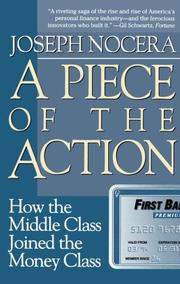
How credit cards, money market funds and discount brokers reached ordinary Americans.
Recommended by: Jim Collins, Mohnish Pabrai and 2 others
How Markowitz, Sharpe, Fama, Black and Scholes built the theory of modern finance.
“But it was in his Capital Ideas, published in 1992, that I first learned of Louis Bachelier’s 1900 dissertation, The Theory of Speculation.” — John C. Bogle
Source: Success In Investment Management: What Can We Learn From Indexing?, page 1
Recommended by: John C. Bogle, Michael Mauboussin
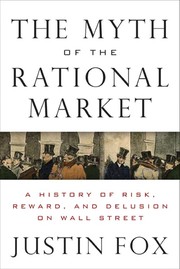
The rise and fall of the efficient market theory and the modern finance it built.
“Fox, Justin, The Myth of the Rational Market: A History of Risk, Reward, and Delusion on Wall Street (New York: HarperCollins, 2009)” — Michael Mauboussin
Source: Who Is On the Other Side? A Framework for Understanding Market (In)Efficiency
Recommended by: Michael Mauboussin, Mohnish Pabrai
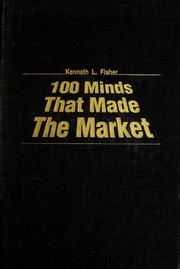
Short sketches of one hundred people who shaped American financial markets.
Recommended by: The Barefoot Investor
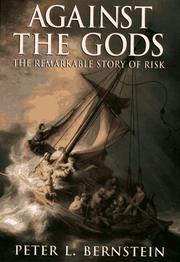
How people learned to measure risk, from early probability to portfolio theory.
“(Risk is the subject of Peter Bernstein’s wonderful new book, Against the Gods: The Remarkable Story of Risk.)” — Bill Miller
Source: 1996 Q3 Market Commentary
Recommended by: Bill Miller, Charles de Vaulx, Howard Marks and 9 others
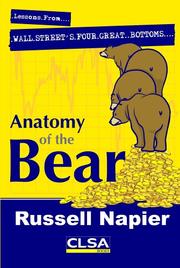
What markets looked like at the US stock bottoms of 1921, 1932, 1949 and 1982.
Where it sits in the reference 2
Topics 2
As an Amazon Associate I earn from qualifying purchases.