
Cornell University
universityPrivate
Private Ivy League university in Ithaca, New York, co-founded in 1865 by Ezra Cornell and Andrew Dickson White; 16,128 undergraduates and 10,665 postgraduates in fall 2024.
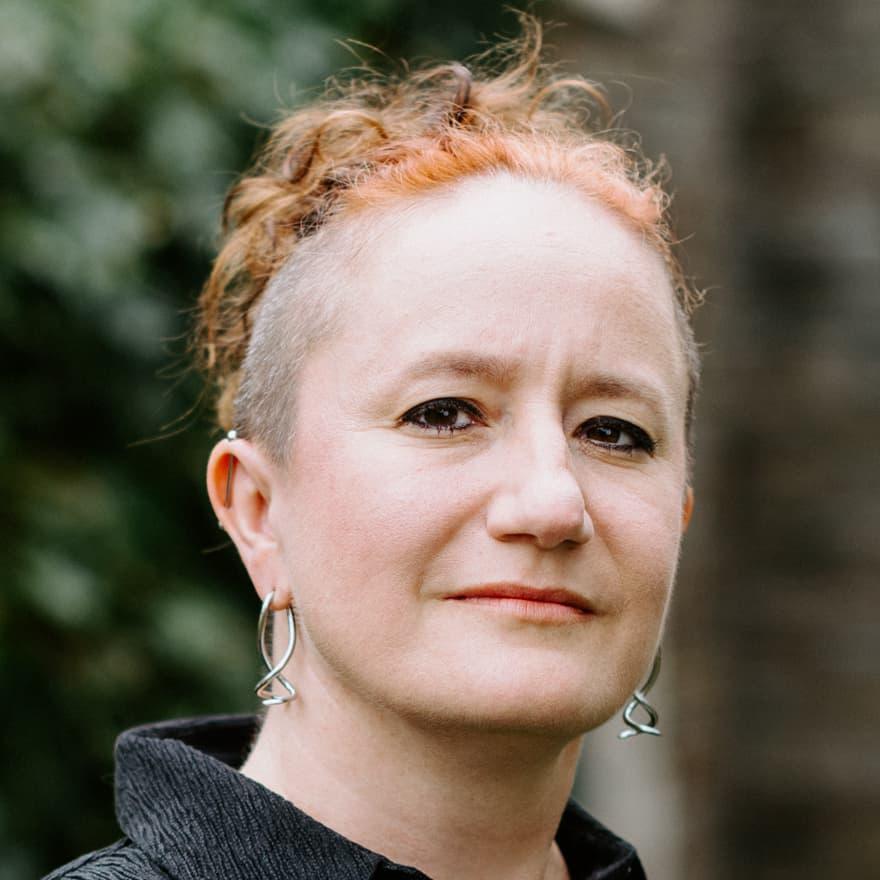
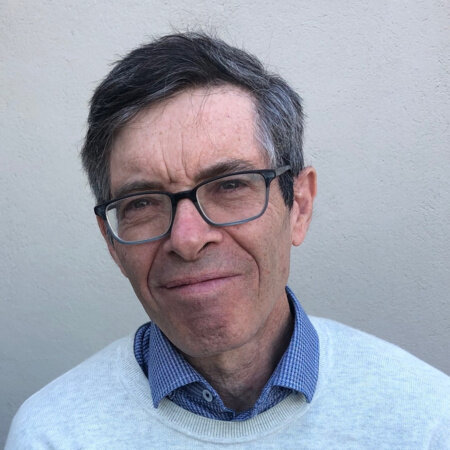 Roger Lowensteinnamed it in 2 interviews“Roger Lowenstein graduated from Cornell University and was a reporter for the Wall Street Journal for more than a decade, including two years writing it’s “Heard on the Street” column.” — CW 639 FBF – Roger Lowenstein- The End of Wall Street' The Wall Street Journal's 'Heard on the Street' Column (Creating Wealth Real Estate Investing with Jason Hartman, 2016)
 Scott Nolannamed it in 2 interviews“While studying at Cornell University, Scott landed an internship at Boeing.” — Ep 157: Scott Nolan on the AI Energy Crisis & America's Nuclear Renaissance (Joe Lonsdale: American Optimist, 2026)
 Andrew W. Lonamed it in 1 interview“He holds a Bachelor of Science in human ecology from Cornell University and a Master of Arts in teaching from Emory University.” — Ep. 877: Andrew Lo and Jon Gordon Interviews with Michael Covel on Trend Following Radio (Michael Covel's Trend Following, 2020)
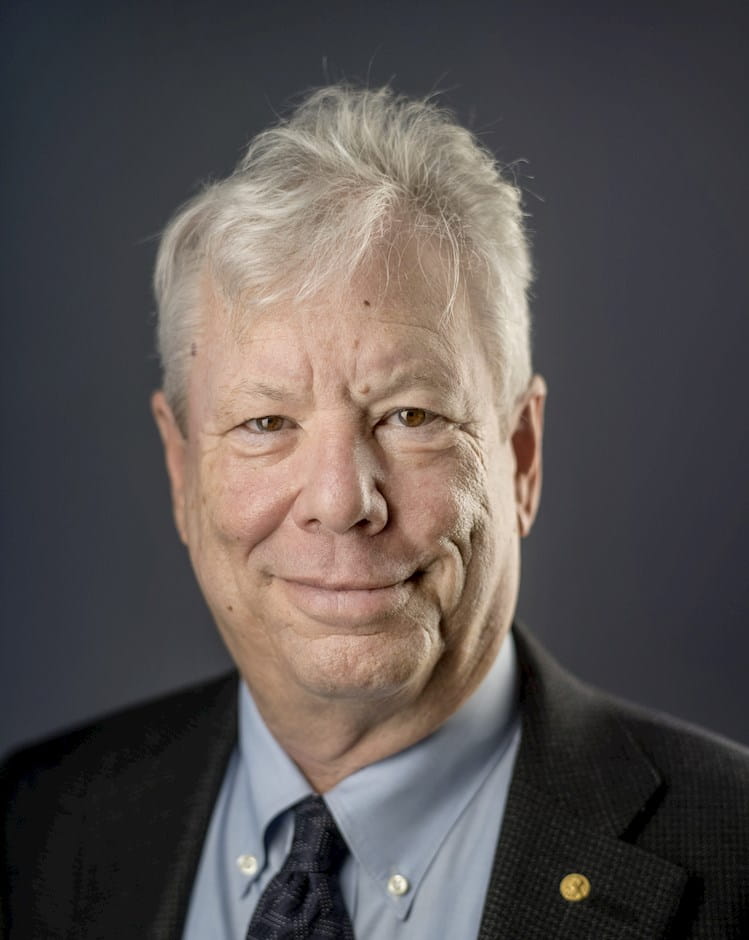 Richard H. Thalernamed it in 1 interview“Along the way they discuss the design of Sweden's social security system, organ donations and whether professors at Cornell University are more or less like you and me.” — Richard Thaler on Libertarian Paternalism (EconTalk, 2006)
 Josh Kopelmannamed it in 1 interview“Prior to his move into the business of technology, Howard served as a professor at the Wharton School and the Moore School, both at the University of Pennsylvania, as well as at Cornell University.” — #16 Howard Morgan - Founding of Renaissance Technologies (Speaking to Legends, 2022)
 Max Levchinnamed it in 1 interview“Washington Post technology editor Christina Passariello speaks with Affirm CEO Max Levchin and Cornell University professor Eswar Prasad on the future of money, the evolution of the financial industry and the implications for payments security.” — Max Levchin and Eswar Prasad on the digitization of currency and the future of money (Washington Post Live, 2021)
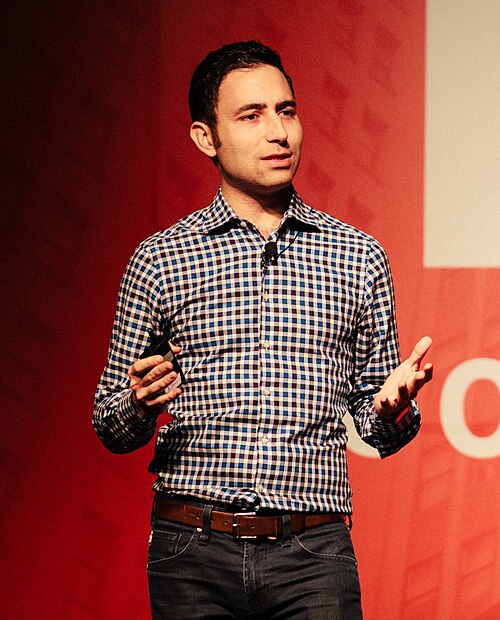 Scott Belskynamed it in 1 interview“Scott holds a bachelor's degree from Cornell University and an MBA from Harvard Business School.” — Use These Tactics To Harness Your Team’s Creativity - With Adobe’s Scott Belsky (The Learning Leader Show With Ryan Hawk, 2024)
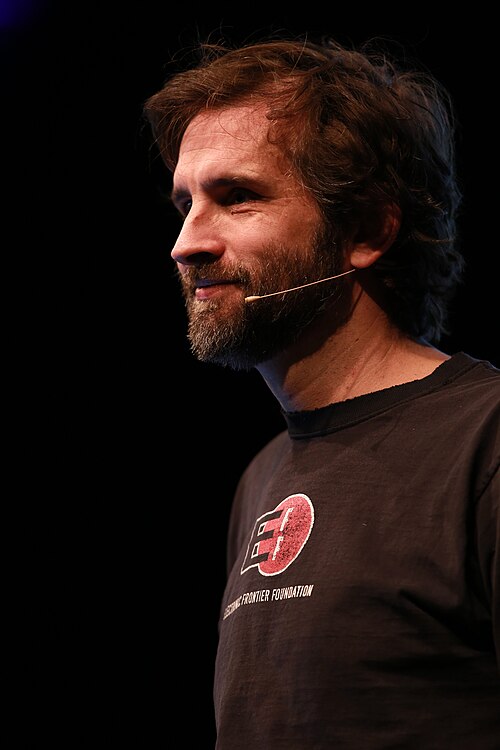 Zooko Wilcoxnamed it in 1 interview“Recently, at the Cornell University blockchain hackathon, Zcash team members participated in a successful effort to include an implementation of zero knowledge proofs known as ZKsnarks into an ethereum client running on a test net a monumental achievement in blockchain anonymity.” — The Ether Review #39 - Zooko Wilcox, Zcash and Cryptography in the 1990s (The Third Web, 2016)
| Author Danah Boyd: WCPT 820 Interview | Danah Boyd | Chew's Views with Richard Chew (Featured Interviews) | 2026-11-01 | 8 min | Richard Chew is joined by Danah Boyd, Geri Gay Professor of Communication at Cornell University and author of the new book “Data Are Made, Not Found.” She will be speaking in Chicago for University Press Week, November 9-13. The Boyd events will take place at UIC on November 9 and at Northwestern November 10. The discussion focused on Boyd’s book about the politics and civil servants behind the 2020 U.S. Census. Here are a few highlights from the conversation:- Boyd said the 2020 census produced high-quality data despite the pandemic, natural disasters, and political pressure, though earlier censuses may have been stronger.- The census anchors political representation and federal funding, making reliable data essential to democracy.- She described “Jenga politics”: weakening administrative capacity while placing greater pressure on civil servants.- Census workers built a backup technical system after concerns about an outsourced vendor; they ultimately used it. Catch "Chew's Views with Richard Chew” weekdays from 6:00 to 8:00 a.m. Central on WCPT (heartlandsignal.com/programs/chews-views). |
| US Census with danah boyd | Danah Boyd | How do you like it so far? | 2026-10-08 | 1:18 | Geri Gay Professor of Communication at Cornell University and founder of the Data & Society Research Institute, danah boyd, joins us to talk about data and the US census. danah covers census history and its importance in the datafication of the US populace for congressional representation, redistricting and directing trillions of dollars of federally funded programs. She gives us an incredible window into the 2020 and 2030 decennials through her ethnographic work with the Census Bureau, featured in her new book, Data Are Made, Not Found: A Story of Politics, Power, and the Civil Servants Who Saved the US Census. Along with Mizuko Ito and Henry Jenkins, boyd co-authored Participatory Culture in a Networked Era: A Conversation About Youth, Learning, Commerce, and Politics. She also wrote It’s Complicated: The Social Life of Networked Teens. In the wide-ranging conversation, danah speaks about the difficulties of acquiring data and what makes it legitimate. She delves into the many political tensions around the census and how a wide range of actors interact with those tasked with making the decennial census. We end by reflecting on how the census connects to motivations for political movements and change amongst the people it affects the most. Since the show was recorded, the Administration has proposed significant changes for the 2030 decennial census and there’s more information in the links below. |
| Ep 157: Scott Nolan on the AI Energy Crisis & America's Nuclear Renaissance | Scott Nolan | Joe Lonsdale: American Optimist | 2026-06-05 | In 2010, the U.S. and China were at parity in electricity generation. Today, China boasts triple our capacity. We’re at the vanguard of the AI revolution but falling dangerously behind in energy production. Scott Nolan has identified a key bottleneck in nuclear energy and is at the forefront of the effort to scale nuclear power and help America achieve energy abundance. While studying at Cornell University, Scott landed an internship at Boeing. He quickly jumped to SpaceX as an early employee and worked on the Falcon propulsion systems and Dragon capsule. He later became Partner at Founders Fund, where he focuses on energy, infrastructure, biotech, and other key sectors. In 2024, he founded General Matter to rebuild America’s nuclear enrichment capacity. We begin the episode with Scott’s entrepreneurial journey, the contrast between Boeing and SpaceX, and how to build a culture that prioritizes speed and performance in a highly regulated sector. Next, Scott explains the origins of General Matter and breaks down the science behind creating nuclear fuel. In the 1980s, the U.S. produced 80% of global enriched uranium; today that number is zero. Learn how post-Cold War disarmament destroyed our capacity to the point where we are now reliant on Russia, among others, for enrichment. Scott explains how China surged ahead in electricity generation, and what it will take to jumpstart America’s nuclear renaissance. | |
| #211 Scott Nolan - CEO of General Matter on Uranium Enrichment | Scott Nolan | The Shawn Ryan Show | 2025-06-23 | Scott Nolan is the CEO of General Matter, enriching uranium in America to reshore domestic nuclear fuel capacity and power the American energy production needed to lead in AI, manufacturing, and other critical industries. General Matter is backed by Founders Fund, the first institutional investor in SpaceX, Palantir, and Anduril.Scott is also a partner at Founders Fund, where for the past 13 years he led hardtech investments across energy, infrastructure, manufacturing, aerospace, and defense. Companies Scott has worked with include SpaceX, Neuralink, Crusoe Energy, Planet Labs, The Boring Company, Nubank, Impulse Space, and Radiant Nuclear. Previously, Scott was an early engineer at SpaceX, where he helped develop the Merlin engine systems and Dragon capsule. He earned his Master’s and Bachelor’s degrees in Mechanical and Aerospace Engineering from Cornell University, and his MBA from Stanford University. Shawn Ryan Show Sponsors: https://www.americanfinancing.net/srs nmls 182334, nmlsconsumeraccess.org https://www.tryarmra.com/srs https://www.betterhelp.com/srs This episode is sponsored by BetterHelp — give online therapy a try at betterhelp.com/srs and get on your way to being your best self. | |
| Use These Tactics To Harness Your Team’s Creativity - With Adobe’s Scott Belsky | Scott Belsky | The Learning Leader Show With Ryan Hawk | 2024-03-31 | 49 min | Full show notes at www.LearningLeader.com Buy our new book, The Score That Matters https://amzn.to/3ToYckL My guest: Scott Belsky co-founded Behance in 2006 and served as its CEO for six years. Behance was acquired by Adobe in 2012. Since then he has had a variety of roles with the company and is currently Adobe's Chief Strategy Officer, and EVP of Design & Emerging Products. He's also the author of two best-selling books, The Messy Middle and Making Ideas Happen . Scott holds a bachelor's degree from Cornell University and an MBA from Harvard Business School. Hiking > Beach - You're only able to recollect experiences with enough friction to add texture to time as it passes . time spent doing the unexpected and/or being challenged is time with texture. Ultimately, in our dying breath, the more experiences in our lives with texture, the more of our lives we will actually remember and the longer we will feel we have lived. What adds texture to time? A challenge . Feeling unrushed - Feeling unrushed (so simple, yet so hard) is indeed such a luxury; one I still fail to achieve. Persona-Led Growth - People are more likely to share what people say than what companies say. Modern "PR strategy" should amplify the voice of actual builders, embrace personality rather than dull it out, and aspire for more real-time updates vs. major moments. How to raise kids to become great adults? "model hard work" Say, "This is the hard work." Manufacture hardship. Regulate emotions. |
| #16 Howard Morgan - Founding of Renaissance Technologies | Josh Kopelman | Speaking to Legends | 2022-12-08 | Howard Morgan is currently the Chairman of B Capital. He co-founded First Round Capital with Josh Kopelman as the first professional Seed Stage Fund, where he remains Senior Advisor. Prior to First Round, Howard helped found Idealab with Bill Gross, and served as President of Renaissance Technologies, which he co-founded with Jim Simons. Prior to his move into the business of technology, Howard served as a professor at the Wharton School and the Moore School, both at the University of Pennsylvania, as well as at Cornell University. He is also an Executive Fellow at UC Berkeley. Howard’s research on user interface technology and the optimization of computer networks was critical to bringing the ARPAnet to Philadelphia in the 1970s. Through this early internet participation, he helped corporate and government agencies use technology to improve the efficiency of both large and small organizations. He also has deep experience with very large databases, and served as the first Editor of the ACM Transactions on Database Systems Journal. Throughout his career, Howard has sought out great people and nurtured them so that they could realize their dreams. His mentees have included both PhD students researching a key topic, and early stage entrepreneurs building companies and taking them from seed stage through initial public offerings. | |
| Max Levchin and Eswar Prasad on the digitization of currency and the future of money | Max Levchin | Washington Post Live | 2021-11-18 | 50 min | Washington Post technology editor Christina Passariello speaks with Affirm CEO Max Levchin and Cornell University professor Eswar Prasad on the future of money, the evolution of the financial industry and the implications for payments security. |
| Ep. 877: Andrew Lo and Jon Gordon Interviews with Michael Covel on Trend Following Radio | Andrew W. Lo | Michael Covel's Trend Following | 2020-06-19 | 1:31 | My guests today are Andrew Lo and Jon Gordon. Andrew is a Charles E. and Susan T. Harris Professor at the MIT Sloan School of Management and director of the MIT Laboratory for Financial Engineering. He is the author of Hedge Funds and the coauthor of A Non-Random Walk Down Wall Street and The Econometrics of Financial Markets (all Princeton). Jon is an American author and speaker on the topics of leadership, culture, sales, and teamwork. He has worked with numerous athletic organizations, academic institutions, and corporations. He holds a Bachelor of Science in human ecology from Cornell University and a Master of Arts in teaching from Emory University. The topic is Jon's book The Energy Bus: 10 Rules to Fuel Your Life, Work, and Team with Positive Energy. In this episode of Trend Following Radio we discuss: Market Data Human Behaviors Financial Market Market Crash Adaptive Market Hedge Funds Strategies Market Dynamics Jump in! --- I'm MICHAEL COVEL, the host of TREND FOLLOWING RADIO, and I'm proud to have delivered 10+ million podcast listens since 2012. Investments, economics, psychology, politics, decision-making, human behavior, entrepreneurship and trend following are all passionately explored and debated on my show. To start? I'd like to give you a great piece of advice you can use in your life and trading journey… cut your losses! |
| The Ether Review #39 - Zooko Wilcox, Zcash and Cryptography in the 1990s | Zooko Wilcox | The Third Web | 2016-08-29 | 43 min | In Brief Zooko Wilcox has more than 20 years of experience in open, decentralized systems, cryptography and information security, and startups. He is recognized for his work on DigiCash, Mojo Nation, ZRTP, “Zooko's Triangle”, Tahoe-LAFS, BLAKE2, and SPHINCS. He is also the Founder and CEO of Least Authority. He sometimes blogs about health science. . In recent years, progress in the area of zero knowledge proofs has made it possible to construct a blockchain whose miners can verify transactions, or state changes, without seeing the information contained in those transactions. Many of the individuals developing these tools have joined Zooko to form the Zcash company. Zcash aims to be a truly anonymous cryptocurrency, but more than just a currency, it is the first step toward managing privacy on public blockchains. Recently, at the Cornell University blockchain hackathon, Zcash team members participated in a successful effort to include an implementation of zero knowledge proofs known as ZKsnarks into an ethereum client running on a test net a monumental achievement in blockchain anonymity. In addition to this, the Zcash team are using the BTCRelay codebase to construct ZRelay, a bridge between the Zcash, Ethereum and Bitcoin blockchains. The final third of this episode is a casual discussion of the culture of the field of cryptography roughly between 1990 and 2000. |
| CW 639 FBF – Roger Lowenstein- The End of Wall Street' The Wall Street Journal's 'Heard on the Street' Column | Roger Lowenstein | Creating Wealth Real Estate Investing with Jason Hartman | 2016-02-27 | 48 min | Join Jason Hartman as he interviews author and financial journalist Roger Lowenstein regarding the history of Wall Street’s demise. Roger talks about the increases in choice, risk, hedging, more volatility, and how free markets are open to speculation, greed, fear and manipulation. There are more markets today susceptible to booms and busts. In the old days, local bankers determined loan eligibility. Today, bankers internationally, who don’t know anything about their clientele, determine eligibility, often to the detriment of the borrowers. Roger and Jason debate whether Wall Street needs more regulation or deregulation, and discuss the consequences of government interference. They also talk about many of the Wall Street mistakes and the corporations that were rescued by the bailouts and the unprecedented number of failed mortgages. They end their discussion with observations of the Occupy Wall Street movement. Roger Lowenstein graduated from Cornell University and was a reporter for the Wall Street Journal for more than a decade, including two years writing it’s “Heard on the Street” column. He has published five books, including The End of Wall Street, When Genius Fails, and Buffet: The Making of an American Capitalist. He is also the director of Sequoia Fund. Roger is the son of Helen and Louis Lowenstein. His father was an attorney and Columbia University law professor who wrote books and articles critical of the American financial industry. |
| AMA 44 – "The End of Wall Street" with Roger Lowenstein | Roger Lowenstein | American Monetary Association | 2013-04-12 | 25 min | Join Jason Hartman as he interviews author and financial journalist Roger Lowenstein regarding the history of Wall Street’s demise. Roger talks about the increases in choice, risk, hedging, more volatility, and how free markets are open to speculation, greed, fear and manipulation. There are more markets today susceptible to booms and busts. In the old days, local bankers determined loan eligibility. Today, bankers internationally, who don’t know anything about their clientele, determine eligibility, often to the detriment of the borrowers. For more details, listen at: www.JasonHartman.com . Roger and Jason debate whether Wall Street needs more regulation or deregulation, and discuss the consequences of government interference. They also talk about many of the Wall Street mistakes and the corporations that were rescued by the bailouts and the unprecedented number of failed mortgages. They end their discussion with observations of the Occupy Wall Street movement. Roger Lowenstein graduated from Cornell University and was a reporter for the Wall Street Journal for more than a decade, including two years writing it’s “Heard on the Street” column. He has published five books, including The End of Wall Street, When Genius Fails, and Buffet: The Making of an American Capitalist. He is also the director of Sequoia Fund. Roger is the son of Helen and Louis Lowenstein. |
| Richard Thaler on Libertarian Paternalism | Richard H. Thaler | EconTalk | 2006-11-06 | 1:03 | Richard Thaler of the U. of Chicago Graduate School of Business defends the idea of libertarian paternalism--how government might use the insights of behavioral economics to help citizens make better choices. Host Russ Roberts accepts the premise that individuals make imperfect choices but challenges Thaler on the likelihood that government, in practice, will improve matters. Along the way they discuss the design of Sweden's social security system, organ donations and whether professors at Cornell University are more or less like you and me. |
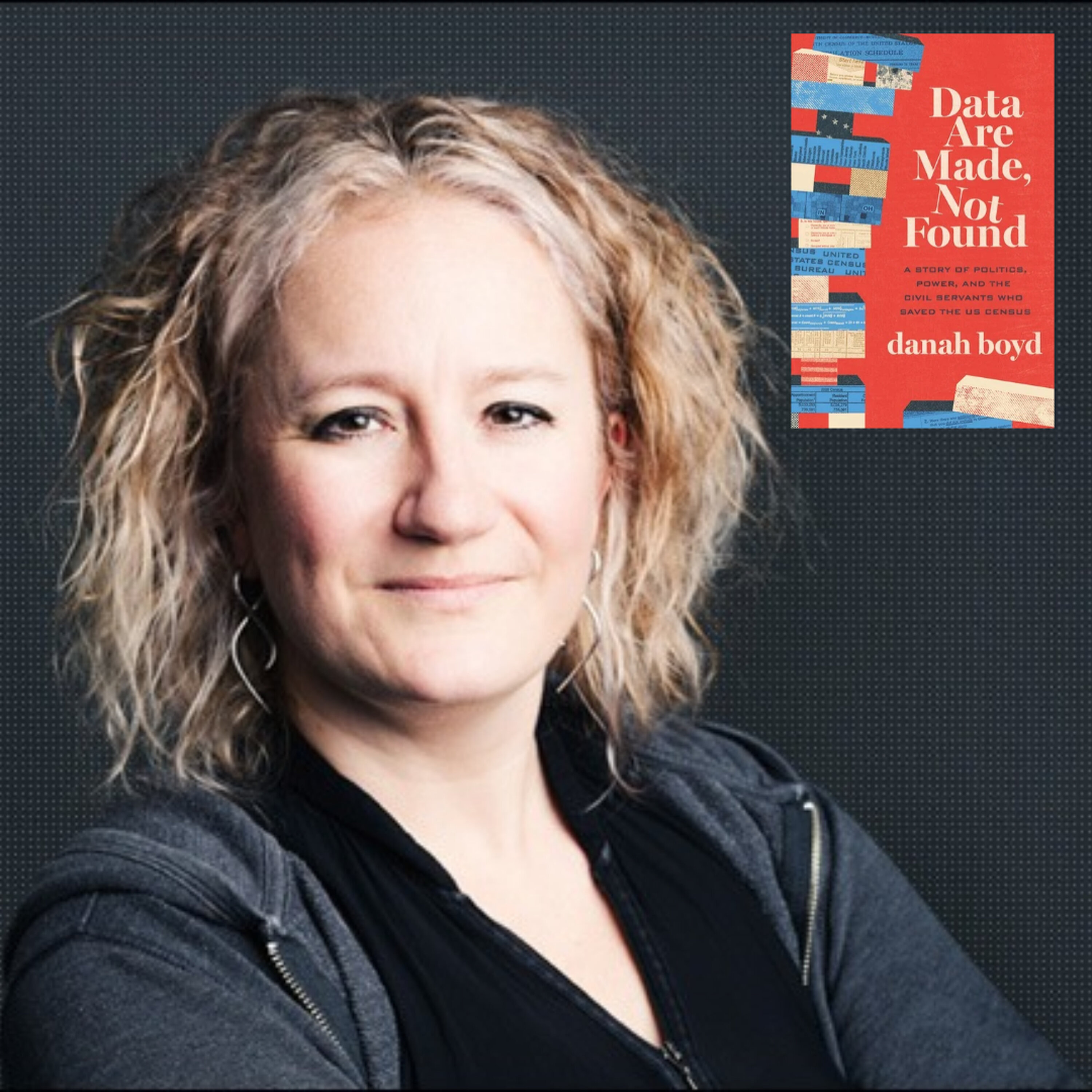 CAuthor Danah Boyd: WCPT 820 InterviewChew's Views with Richard Chew (Featured Interviews) · 2026-11-01
 HUS Census with danah boydHow do you like it so far? · 2026-10-08
 JEp 157: Scott Nolan on the AI Energy Crisis & America's Nuclear RenaissanceJoe Lonsdale: American Optimist · 2026-06-05
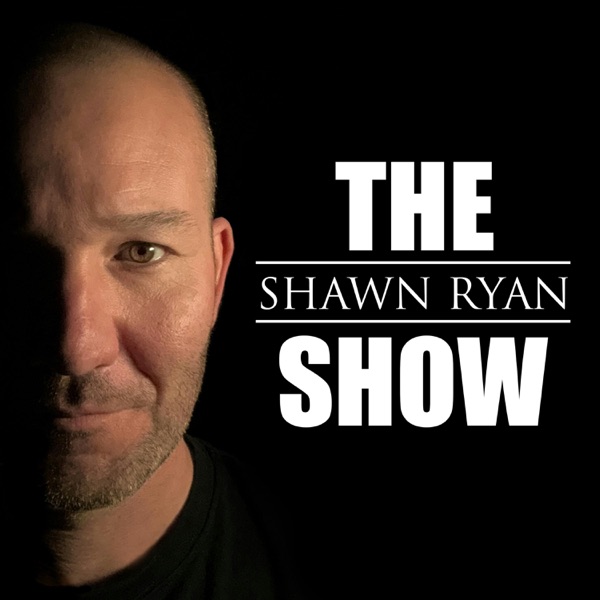 T#211 Scott Nolan - CEO of General Matter on Uranium EnrichmentThe Shawn Ryan Show · 2025-06-23
 TUse These Tactics To Harness Your Team’s Creativity - With Adobe’s Scott BelskyThe Learning Leader Show With Ryan Hawk · 2024-03-31
 S#16 Howard Morgan - Founding of Renaissance TechnologiesSpeaking to Legends · 2022-12-08
 WMax Levchin and Eswar Prasad on the digitization of currency and the future of moneyWashington Post Live · 2021-11-18
 MEp. 877: Andrew Lo and Jon Gordon Interviews with Michael Covel on Trend Following RadioMichael Covel's Trend Following · 2020-06-19
 TThe Ether Review #39 - Zooko Wilcox, Zcash and Cryptography in the 1990sThe Third Web · 2016-08-29
 CCW 639 FBF – Roger Lowenstein- The End of Wall Street' The Wall Street Journal's 'Heard on the Street' ColumnCreating Wealth Real Estate Investing with Jason Hartman · 2016-02-27
 AAMA 44 – "The End of Wall Street" with Roger LowensteinAmerican Monetary Association · 2013-04-12
 ERichard Thaler on Libertarian PaternalismEconTalk · 2006-11-06
| Cornell University | Video series | Cornell University, video series; 1 episode in the reference. | 1 |