 T
Podcast · 39 episodes in the reference, 2015 to 2026
The Learning Leader Show With Ryan Hawk
Published by Ryan Hawk
Host
RHRyan Hawk
Episodes
| 713: Ken Chenault - Leadership Lessons from 17 Years as American Express CEO: How to Earn the Top Job, Hire Great Leaders, Build Culture, Challenge the Status Quo, and Lead with Character | Ken Chenault | 2 November 2026 | The Learning Leader Show with Ryan Hawk www.LearningLeader.com New Book - The Price of Becoming www.LearningLeader.com/Becoming Join 10's of thousands of Learning Leaders all over the world and sign up for " Mindful Monday ." Connect on Social: Twitter/X - @RyanHawk12 Instagram - @RyanHawk12 LinkedIn This is brought to you by Insight Global . If you need to hire one person, hire a team of people, or transform your business through Talent or Technical Services, Insight Global's team of 30,000 people around the world has the hustle and grit to deliver. My Guest: Ken Chenault was chairman and CEO of American Express for 17 years, and Warren Buffett called him "the gold standard for corporate leadership." Today he's chairman of General Catalyst. His new memoir is Equal to the Task . Key Learnings "The only thing that you can control is your performance, so focus on your performance." His father's answer whenever Ken complained about a barrier. Ken says what makes it empowering rather than harsh is that it's both accountability and control at the same time. "Ken, never forget that you are equal to the task." First day of kindergarten, Ken froze, started crying, and ran out of the room to hide under a bench. His father found him, pulled him out, sat him on his lap, put a hand on his shoulder, and said it. At five, Ken had no idea what the words meant. They became a measuring stick anyway. What his father actually meant took decades to understand. | |
| 711: Seth Godin - Creating Tension, Solving Problems, the Savannah Bananas, Leading Without Authority, Using AI, Hidden Entanglements, and Getting Unstuck (The Knot) | Seth Godin | 18 October 2026 | 47 min | The Learning Leader Show with Ryan Hawk www.LearningLeader.com Connect on socials: Twitter/X - https://x.com/RyanHawk12 Instagram - @RyanHawk12 LinkedIn - @RyanHawk My new book, The Price of Becoming , is a USA Today, LA Times, Success Magazine, and Publishers Weekly Best-Seller! I think you'll find it useful. This is brought to you by Insight Global . If you need to hire one person, hire a team of people, or transform your business through Talent or Technical Services, Insight Global's team of 30,000 people around the world has the hustle and grit to deliver. My Guest: Seth Godin is the author of more than 20 bestselling books, including Purple Cow , The Dip, and This Is Marketing. He has written a blog post every day for more than two decades, and it remains one of the most widely read blogs in the world. Before the books, Seth founded Yoyodyne, one of the first internet marketing companies, and sold it to Yahoo in 1998. He later created the altMBA. His new book is The Knot: Problems Can Be Solved . Key Learnings Being early is a courtesy, not a personality trait. "I don't understand why someone would willfully waste somebody else's time." The knot is the point. You can't have a pretzel without the knot, and if you try to undo it you end up with crumbs. Real life isn't like that. Our knots can actually be untied. Teach so that people teach themselves. |
 Stanford's Expert on Why Most Relationship Advice Makes Things Worse | Nir Eyal | Nir Eyal | 12 April 2026 | 58 min | Order my new book, The Price of Becoming ... www.LearningLeader.com/Becoming This is brought to you by Insight Global . If you need to hire one person, hire a team of people, or transform your business through Talent or Technical Services, Insight Global's team of 30,000 people around the world has the hustle and grit to deliver. My Guest: Nir Eyal is a Stanford lecturer, behavioral designer, and bestselling author who has spent his career at the intersection of psychology, technology, and human behavior. He's one of the most rigorous thinkers alive on why people do what they do, and what it actually takes to change. Notes Julie introduced Nir to the Turnaround technique. Nir and Julie met the first week of college in 1997 and have been married since 2001. A big part of the genesis of Beyond Belief came from Julie introducing Nir to this technique called The Turnaround , which comes out of the work from Byron Katie, that she used with her mother to repair the relationship she had with her mom. A limiting belief is a belief that saps motivation and increases suffering. It does that by creating short-term relief from discomfort. "I hate public speaking, I'm no good at public speaking, so I'm going to avoid public speaking." You reduce your motivation to go on stage, providing yourself temporary relief, but long-term suffering. The Turnaround helps you collect a portfolio of perspectives. The problem is that our minds hate changing beliefs. |
 Founder Mode & Front Line Obsession - Ryan Petersen (CEO of Flexport) | Ryan Petersen | 20 July 2025 | 58 min | Go to www.LearningLeader.com for full show notes The Learning Leader Show with Ryan Hawk This is brought to you by Insight Global . If you need to hire 1 person, hire a team of people, or transform your business through Talent or Technical Services, Insight Global's team of 30,000 people around the world have the hustle and grit to deliver. www.InsightGlobal.com/LearningLeader Ryan Petersen is the founder and CEO of Flexport, a technology-driven global logistics company. He's a leading voice in supply chain innovation and has been at the forefront of solving major trade and shipping challenges worldwide. Notes: "Arrogance is its own form of stupidity." The Tweetstorm That Saved Christmas: Ryan shares the now-legendary story of how he rented a boat, brought tacos, and took another high-powered CEO with him to tour the Port of Long Beach during the supply chain crisis. His viral Twitter thread sparked immediate action, California Governor Gavin Newsom called within hours, and the policy changed shortly after. A masterclass in "doing the thing." Frontline Obsession & Gemba Walks: Why Ryan frequently travels the world (visiting 19 countries last year) to meet employees and customers. He explains the power of Gemba walks, being physically present on the frontlines, and how it shapes his leadership. How He Runs Flexport: Ryan's leadership playbook includes: Managing through writing. Every one of his 26 teams writes a six-page memo monthly, followed by deep conversations. |
 Choices That Define a Life with General Stanley McChrystal I The Learning Leader Show | Stanley McChrystal | 4 May 2025 | 1:03 | The Learning Leader Show with Ryan Hawk Go to www.LearningLeader.com for full show notes This is brought to you by Insight Global . If you need to hire 1 person, hire a team of people, or transform your business through Talent or Technical Services, Insight Global's team of 30,000 people around the world have the hustle and grit to deliver. Go to www.InsightGlobal.com/LearningLeader Stanley McChrystal is a retired four-star general. Stan is the former commander of the nation's premier military counter-terrorism force, Joint Special Operations Command (also known as JSOC). His command included more than 150,000 troops from 45 allied countries. Since he retired from the Army, Stan has written multiple best-selling books including, Team of Teams , and most recently, On Character . The most crucial discipline is to think for yourself. To a sad degree, we're lazy. People comment on things they haven't watched or read, but have seen comments by others who align with their political party. They aren't thinking for themselves (this is why it's almost impossible to align completely with one political party for me). If you find yourself saying "I just do" or "that's what I heard," that's not thinking. Being Obsessed – "I am convinced that few truly great achievements are reached by individuals with an impressive work-life balance, and the price of greatness, in a word, is great. In the end, I'm an advocate for obsession." |
| 619: Mike Maples Jr. - Practicing Reckless Optimism, Betting On Founders, Bill Gates Hiring Mike Sr at Microsoft, Being Overprepared, & What It Means To Do YOUR Best | Mike Maples, Jr. | 27 January 2025 | 1:08 | Go to www.LearningLeader.com for full show notes. The Learning Leader Show With Ryan Hawk This is brought to you by Insight Global . If you need to hire 1 person, hire a team of people, or transform your business through Talent or Technical Services, Insight Global's team of 30,000 people around the world have the hustle and grit to deliver. My Guest: Mike Maples Jr is a co-founding Partner at Floodgate. He has been on the Forbes Midas List eight times in the last decade and was recently profiled by Harvard Business School for his lifetime contributions to entrepreneurship. Some of his early investments include: Twitter, DemandForce, Twitch, and Applied Intuition. Mike is also the bestselling author of Pattern Breakers: Why Some Start-Ups Change the Future. Notes Chance favors the prepared mind. We are all visited by luck, but most of us don't answer the door. We need to become a professional noticer. That is Mike's favorite verb. Noticing. Most people don't have prepared minds. Be intentional about noticing the world around you and being prepared for when luck visits you. Mike's dad died 7 days before we recorded. "He was a mentor, a friend, and one of the greatest inspirations of my life." His advice: Do your best. There's only one of you. Decide what to do with your gift of time, be intentional. Have gratitude for your time. Make the most of it. Don't waste it trying to be someone else. Focus - Fishing competition when Mike was 5 or 6. |
| 601: Matt Mullenweg (CEO of Automattic) - Defining Your Creed, Hiring Talented Leaders, & Leading in a Remote World | Matt Mullenweg | 22 September 2024 | 50 min | The Learning Leader Show With Ryan Hawk Full show notes at www.LearningLeader.com Text Hawk to 66866 to become part of The Learning Leader Community This is Episode #601 with the CEO of Automattic, Matt Mullenweg Notes: What is your creed? I will never stop learning. I won't just work on things that are assigned to me. I know there's no such thing as a status quo. I will build our business sustainably through passionate and loyal customers. I will never pass up an opportunity to help out a colleague, and I'll remember the days before I knew everything. I am more motivated by impact than money, and I know that Open Source is one of the most powerful ideas of our generation. I will communicate as much as possible because it's the oxygen of a distributed company. I am in a marathon, not a sprint, and no matter how far away the goal is, the only way to get there is by putting one foot in front of another every day. Given time, there is no problem that's insurmountable. "People need something to believe in." -- That's what draws talent to the company. What do you look for when hiring a leader? " The four qualities that you can't train..." Work ethic Taste Integrity Curiosity Coaching -- Expose your leaders to coaches. |
 Winning & Losing Millions, Creating Lasting Memories, and Writing Captivating Stories w/ Nat Eliason | Nat Eliason | 7 July 2024 | 59 min | Read our book, The Score That Matters https://amzn.to/3XxHi7p Full show notes at www.LearningLeader.com This episode is supported by Insight Global . Insight Global is a staffing company dedicated to empowering people. Please CLICK HERE for premier staffing and talent. Notes: Nat Eliason studied philosophy at Carnegie Mellon University. Since he started publishing his writing in 2013, his work has been read by millions of people and spun out multiple businesses ranging from a marketing agency to a cafe. He's the author of Crytpo Confidential: Winning and Losing Millions in the New Frontier of Finance . How to make our days more memorable? Throw parties with 3-4 different phases. When taking your loved one out on a date, have 3 different parts. Implement homework for life. Write down the stories of each day. This helps you remember them more. Do Hard Things – Our self-image is composed of historical evidence of our abilities. The more hard things you push yourself to do, the more competent you will see yourself to be. "Build up your identity of being a capable person." "Money corrupts quickly." It's never the right time. Any time you catch yourself saying "Oh it'll be a better time later," you're probably just scared. Or unclear on what to do. There is never a right time for the big things in life. Moonwalking with Einstein -- Memory competitions. Die with Zero -- Create memory dividends (Bill Perkins). Be in the moment. Homework for Life (Matthew Dicks). |
| 583: Jason Fried - Growing Without Goals, Earning An Investment From Jeff Bezos, Making Tough Decisions, Keys To A Great Partnership, Hosting Leadership Retreats, and Creating A Writing Practice | Jason Fried | 19 May 2024 | 1:13 | Our new book, The Score That Matters , is a USA Today National Best-Seller. Buy it here: https://amzn.to/3Qw9Mu0 Full show notes at www.LearningLeader.com Making decisions – Decisions aren't hard — it's the moments after that are. Whenever I make decisions, I don't think about now, I think about eventually. How will this feel then, maybe a year from now. When it's real, not raw. When the complications around the concern have cleared, and distance has done its job. Goal setting - 37 Signals does not set long-term goals. Jason (as the CEO) helps set the direction and they work in six-week sprints. Think, "What am I optimizing for?" 37 Signals does not have a board of directors or advisors. Is it more helpful to have a chip on your shoulder to prove someone wrong or to be motivated to prove your supporters right? Both can be useful. Keys to a great partnership? Jason works with his co-founder, David Heinemeier Hansson (a previous guest on The Learning Leader Show). Mutual admiration Have complementary skills (Jason is design, DHH is engineering) A company is essentially two things: a group of people and a collection of decisions. How those people make these decisions is the art of running a business. Maxims: Decide what you're going to do this week, not this year. Whenever you can, swap "Let's think about it" for "Let's decide on it." Momentum fuels motivation. Just ship it. You'll figure out what needs to be fixed as you go. Mark Zuckerberg is coming into his own... |
 Use These Tactics To Harness Your Team’s Creativity - With Adobe’s Scott Belsky | Scott Belsky | 31 March 2024 | 49 min | Full show notes at www.LearningLeader.com Buy our new book, The Score That Matters https://amzn.to/3ToYckL My guest: Scott Belsky co-founded Behance in 2006 and served as its CEO for six years. Behance was acquired by Adobe in 2012. Since then he has had a variety of roles with the company and is currently Adobe's Chief Strategy Officer, and EVP of Design & Emerging Products. He's also the author of two best-selling books, The Messy Middle and Making Ideas Happen . Scott holds a bachelor's degree from Cornell University and an MBA from Harvard Business School. Hiking > Beach - You're only able to recollect experiences with enough friction to add texture to time as it passes . time spent doing the unexpected and/or being challenged is time with texture. Ultimately, in our dying breath, the more experiences in our lives with texture, the more of our lives we will actually remember and the longer we will feel we have lived. What adds texture to time? A challenge . Feeling unrushed - Feeling unrushed (so simple, yet so hard) is indeed such a luxury; one I still fail to achieve. Persona-Led Growth - People are more likely to share what people say than what companies say. Modern "PR strategy" should amplify the voice of actual builders, embrace personality rather than dull it out, and aspire for more real-time updates vs. major moments. How to raise kids to become great adults? "model hard work" Say, "This is the hard work." Manufacture hardship. Regulate emotions. |
 Noah Kagan - How To Launch a Business In 48 Hours | Noah Kagan | 29 January 2024 | 1:03 | Order our new book, The Score That Matters https://amzn.to/47K2g4f Full show notes at www.LearningLeader.com "Rejection is a test if you really want something. The upside of asking is unlimited." "People are afraid of asking. The people who make it happen are willing to ask, be rejected, and keep going." One of the biggest lessons learned from working with Mark Zuckerberg? Pick one goal. Then focus relentlessly on reaching it. His was 1 billion users on Facebook. This is how Noah has grown App Sumo to $80m in revenue. Focus on one big goal and the system implemented to make it happen. Noah's parental influence: Fearlessness - Ask for everything. Set rejection goals. You learn that selling copiers door to door. His mom is very disciplined. Always working out in the gym. She follows through. She's persistent. She grinds. His mom also hated her job. "I don't want to live a 'what-if' life" "Are we getting what we get or are we getting what we want?" The law of 100 -- Do the thing 100 times before you quit. Get going, get started. It's about now, not how. Create an exciting vision: "What are we looking forward to?" Million Dollar Weekend: Start it Build it Grow it Noah's philosophy on interviewing: 1) Talk with people you're genuinely interested in 2) Tell them how they've positively impacted your life. People love genuine compliments. And they loved to hear that they've helped others. 3) Tell them what's in it for them. |
| 486: Brent Beshore - Growth Without Goals, Continuous Improvement, & The Art Of Sales | Brent Beshore | 21 August 2022 | 1:02 | Text Hawk to 66866 to become part of "Mindful Monday." You, along with 10,000+ learners will receive a carefully curated email from me each Monday morning to help you start your week off right. Full show notes at www.LearningLeader.com Twitter/IG: @RyanHawk12 https://twitter.com/RyanHawk12 Brent Beshore is the Founder and CEO of Permanent Equity, a Midwestern-based private equity firm. They take a long-term approach to private equity, investing "permanent equity" in small to midsize privately held companies throughout North America. He's also the best-selling author of The Messy Marketplace. Notes: Growth without goals – Listed as one of Brent's foundations. "We believe the best path to sturdy growth is not a plan, but a posture." It's a belief in continuous improvement, optimism shining through some thick scars, and a healthy dose of humility. Growth comes from what you know you don't know. (which feels terrible). The harm comes from what you think you know or what you don't know you don't know. (which feels great or oblivious) Progress isn't made by sweeping proclamation or grand strategy. It's built by unglamorous daily activities that are often overlooked and under-appreciated. In March 2016, Brent wrote a medium post about how to sell… "Every sale has five basic obstacles: no need, no money, no hurry, no desire, no trust." — Zig Ziglar You have 30 minutes one-on-one with someone you know nothing about other than they are wildly successful personally and professionally. |
 David Rubenstein - Interviewing Billionaires, Using Humor To Connect, & The Future Of America | David M. Rubenstein | 3 July 2022 | 1:00 | Text Hawk to 66866 to become part of "Mindful Monday." You, along with 10's of thousand of other learning leaders, will receive a carefully curated email from me each Monday morning to help you start your week of right... Full show notes at www.LearningLeader.com Twitter/IG: @RyanHawk12 https://twitter.com/RyanHawk12 Guest: David M. Rubenstein is Co-Founder and Co-Chairman of The Carlyle Group, one of the world's largest and most successful private investment firms. Established in 1987, Carlyle now manages $325 billion from 26 offices around the world. David is the host of The David Rubenstein Show: Peer-to-Peer Conversations on Bloomberg TV and PBS and Bloomberg Wealth with David Rubenstein on Bloomberg TV; and the author of The American Story: Conversations with Master Historians, a book published by Simon & Schuster in 2019, How to Lead: Wisdom from the World's Greatest CEOs, Founders, and Game Changers, a book published in 2020, and The American Experiment: Dialogues on a Dream, a book published in 2021. Notes: How David defines success - "Other people tell you that what you've done is useful. They admire you. And you help people." David's goals: Don't do anything to get in public trouble Give away the bulk of his money 4 Key Decisions David made that helped him: Going to law school Working in the Carter White House Starting the Carlyle Group Becoming a philanthropist Why The Carlyle Group? "I fell in love with building something from scratch." |
 Jane McGonigal - How To See The Future | Jane McGonigal | 21 February 2022 | 1:01 | Text HAWK to 66866 for "Mindful Monday" Full show notes at www.LearningLeader.com Twitter/IG: @RyanHawk12 https://twitter.com/RyanHawk12 Jane McGonigal, PhD is a world-renowned designer of alternate reality games — or, games that are designed to improve real lives and solve real problems. She believes game designers are on a humanitarian mission — and her #1 goal in life is to see a game developer win a Nobel Peace Prize. She is a two-time New York Times bestselling author: Reality is Broken: Why Games Make Us Better and How They Can Change the World and SuperBetter: The Power of Living Gamefully. Her TED talks on how games can make a better world and the game that can give you 10 extra years of life, are among the all-time most popular TED talks, and have more than 15 million views. Jane dedicates this book to her sister Kelly ... "who lives six minutes in the future." They are twins. "It's so helpful having her. If she can achieve something (TED Talks, Books), I could do it too." Being able to predict the future is not enough. You have to be bale to pre-feel it. Write down your long term plans. "Talk about a world you want to wake up in." "Any useful idea about the future should sound rediculous initially." "The best way to predict the future is to invent it." How to think like a futurist? In the corporate world... Carve out a role for yourself to fight short-terminism. Fight short term thinking. Play the long game. Create future planning habits in your organization. |
 Julia Galef - How To See Things As They Are (Not As You Wish Them To Be) | The Learning Leader Show | Julia Galef | 13 June 2021 | 58 min | Text LEARNERS to 44222 for more... Full show notes at www.LearningLeader.com Twitter/IG: @RyanHawk12 https://twitter.com/RyanHawk12 Julia Galef is co-founder of the Center for Applied Rationality. She is the author of The Scout Mindset: Why Some People See Things Clearly and Others Don't. Notes: What is the scout mindset? "The motivation to see things as they are, not as you wish them to be." The Scout Mindset allows you to recognize when you were wrong, to seek out your blind spots, to test your assumptions and change course. It's what prompts you to honestly ask yourself questions like "Was I at fault in that argument?" or "Is this risk really worth it?" As the physicist Richard Feynman said: "The first rule is that you must not fool yourself – and you are the easiest person to fool." The three prongs: Realize that trust isn't in conflict with your other goals Learn tools that make it easier to see clearly Appreciate the emotional rewards of scout mindset She closes her TED talk with this quote from Antoine de Saint-Exupery: "If you want to build a ship, don't drum up the men to gather wood, divide the work, and give orders. Instead, teach them to yearn for the vast and endless sea." "The biggest bottleneck is not knowledge. It's motivation. You need to cultivate the motivation to see things clearly." |
 Ryan Petersen - How To Build A High Velocity Team | The Learning Leader Show With Ryan Hawk | Ryan Petersen | 21 March 2021 | 1:11 | Text LEARNERS to 44222 for more... Full show notes at www.LearningLeader.com Twitter/IG: @RyanHawk12 https://twitter.com/RyanHawk12 Ryan Petersen is the CEO and Founder of Flexport. Prior to starting Flexport to fix the user experience in global trade, Ryan was co-founder and CEO of ImportGenius.com, a data-as-a-service business for global shipping. Flexport hit a $3.2 Billion valuation after $1 billion investment led by SoftBank. Notes: Excellence = Curiosity - "It's a more fun way to live." Learners Appreciative Have fun "It doesn't have to be boring." The importance of writing as a leader: "I write a lot of essays. Some are published. Some aren't." Communication: "It's a huge part of the job of a leader." For investor updates... "It's good practice." Try to use humor, learn something new, don't be boring, get people "pumped up" Raising money from investors: "It's like your love life. You have to earn it. There are no shortcuts. You need to have a business that doesn't need them." "We built a track record over the 15 years prior to raising money." Masayoshi Son is the CEO of Softbank. He is a Japanese billionaire technology entrepreneur, investor, and philanthropist. Ryan met with him and earned a $1 Billion investment... Making Flexport worth $3.2 Billion. Flexport became the fastest growing company in Silicon Valley. Ryan wrote an essay about raising a lot of money so that they could ride out a "100 year storm." How was he able to raise so much? "Don't do an auction. |
 David Rubenstein - Wisdom From The World's Greatest Leaders | The Learning Leader Show w/ Ryan Hawk | David M. Rubenstein | 11 January 2021 | Text LEARNERS to 44222 for more... For full show notes go to www.LearningLeader.com Twitter/IG: @RyanHawk12 David M. Rubenstein is a Co-Founder and Co-Executive Chairman of The Carlyle Group, one of the world's largest and most successful private investment firms. Mr. Rubenstein co-founded the firm in 1987. Since then, Carlyle has grown into a firm managing $217 billion from 32 offices around the world. Notes: David is most interested in continuing to learn... He reads six newspapers per day and 100 books per year. Your commencement is the beginning, not the end. "Keep your brain active, it's a muscle. It will atrophy without use." David would give all of his money away to be one year younger... Keys to happiness: Thomas Jefferson said we all have the right to be in pursuit of happiness "It's the most elusive thing in life." Happiness is all about building meaningful relationships The 1962 Cuban Missile Crisis -- "JFK showed tremendous leadership to avert disaster. He strategically ignored Khrushchev's second letter and responded to the first one when making a deal to avoid nuclear war. David was in 9th grade at the time and that moment of leadership impacted him in a big way. He worked in the White House for Jimmy Carter. "When I worked in the White House, everyone thought I was the smartest person in the world. When we lost and I didn't have a job anymore, nobody called, and nobody offered me a job." Why leave his job as part of a big law firm? | |
| 398: Jim Collins - The Art Of Getting People To Want To Do What Must Be Done (Part 2) | Jim Collins | 23 December 2020 | 54 min | Text LEARNERS to 44222 for more details... Full show notes at www.LearningLeader.com Jim Collins books include Good to Great , the #1 bestseller, which examines why some companies make the leap and others don't; the enduring classic Built to Last , which discovers why some companies remain visionary for generations; How the Mighty Fall , which delves into how once-great companies can self-destruct; and Great by Choice , which uncovers the leadership behaviors for thriving in chaos and uncertainty. Jim has also published two monographs that extend the ideas in his primary books: Good to Great and the Social Sectors and Turning the Flywheel . His most recent publication is BE 2.0 ( Beyond Entrepreneurship 2.0 ), an ambitious upgrade of his very first book; it returns Jim to his original focus on small, entrepreneurial companies and honors his coauthor and mentor Bill Lazier. Notes: What Exactly is Leadership?" "True leadership only exists if people follow when they would otherwise have the freedom to not follow." Many business leaders think they are leading when in fact they're simply exercising power, and they might discover to their horror that no one would follow them if they had no power. General Colin Powell said, "In my 35 years of service, I don't ever recall telling anyone, 'That's an order." " Leadership is the art of getting people to want to do what must be done." When Steve Jobs returned to Apple, one of the first people he called was Jim Collins. |
 Jim Collins - Build Your Personal Flywheel | The Learning Leader Show With Ryan Hawk | Jim Collins | 21 December 2020 | 48 min | Text LEARNERS to 44222 Full show notes at www.LearningLeader.com Jim Collins is a student and teacher of what makes great companies tick, and a Socratic advisor to leaders in the business and social sectors. He has written a series of books that have sold more than 10 million copies worldwide. They include Good to Great , the #1 bestseller, which examines why some companies make the leap and others don't; the enduring classic Built to Last , which discovers why some companies remain visionary for generations; How the Mighty Fall , which delves into how once-great companies can self-destruct; and Great by Choice , which uncovers the leadership behaviors for thriving in chaos and uncertainty. Notes: Shortly before Jim's 25th birthday, during his second year at the Stanford Graduate School of Business, he got hit with a lightning bolt of WHO luck. The type of luck that comes as a chance meeting with a person who changes your life. That person was Bill Lazier... Bill Lazier was the closest thing to a father Jim ever had. Jim's dad died when he was 23. Creating a Generosity Flywheel -- "One day, two large wooden crates appeared on your front porch, the address labels indicating they'd be shipped by Bill. He sent you a few dozen bottles of spectacularly good wine. You called and asked him what prompted him to send to you and he said, "Dorothy and I had an inventory problem in our wine cellar, and we needed to make room for some new bottles. |
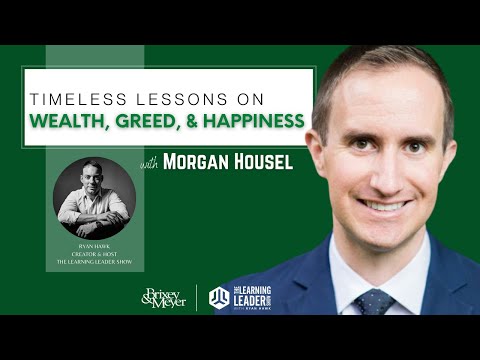 Morgan Housel - Timeless Lessons On Wealth, Greed, & Happiness | The Learning Leader Show: Ryan Hawk | Morgan Housel | 6 September 2020 | 1:02 | Text LEARNERS to 44222 for more details Full show notes at www.LearningLeader.com The Learning Leader Show With Ryan Hawk #382: Morgan Housel - Timeless Lessons On Wealth, Greed, & Happiness Notes: "Writing helps crystallize vague thoughts in your mind." It helps clarify your thoughts. Writing is an art. When you publish your own work, you own the success or failure. Public speaking is a great tool to learn how to communicate succinctly. It's a skill worth building. The Psychology of Money is a study in understanding why people do what they do... "Use money to control your time. That's the highest dividend money can do for you." Why work with Collaboration Fund: You need more than just a check: values, philosophies, get your thoughts out into the world. Stories are more powerful than statistics. And most statistics are incomplete props to justify a story. Stories are easier to remember, easier to relate to, and emotionally persuasive. "Stop telling kids they can be whatever they want to be. You can be whatever you're good at, as long as they're hiring. And even then it helps to know someone." -- Chris Rock Excellence = Patience - Stick with it. Continue to go during down periods. That's how compounding works. Success Laws -- "Strong beliefs, weakly held." Storytelling: "The prize goes to the person who can explain something well... Stories move the needle. You convince someone something is true through stories." How to become a better storyteller? READ a lot. And practice. |
| 378: Brad Feld: 378: Brad Feld - How To Collect Amazing People, Question Your Biases, & Build Community | Brad Feld | 9 August 2020 | 50 min | Text LEARNERS to 44222 IG/Twitter: @RyanHawk12 Full show notes at www.LearningLeader.com #378: Brad Feld Notes: Excellence: Honesty - Clear view of what's going on with self and others Transparency/Authenticity is overused Confirmed process of learning - Hypothesis, clarity of though around experimentation Advice to a new manager: Ask a lot of questions REALLY LISTEN - Engage in conversations... Don't just try to get the right answer We have endless biases "People defend their biases instead of questioning their biases." --> Have a curious mind. Curiosity: His parents gave him positive feedback for being inquisitive... An exploration of new ideas. Brad loves to read and takes a digital sabbath every Saturday. Approach new ideas with a Buddhist philosophy --> Let go of assumptions. Approach each topic with a beginner's mind. A founder who is an explorer -- "Don't get stuck as an investor by constantly asking questions. You need to want to deeply understand someone. It goes both ways. Literal answers aren't enough." The role of the founder is "to collect people." → Mentor side, peer side, employee side, customer side. Engage with people. Create a 'bi-directional' connection. This has shifted over time for Brad. Think #GiveFirst Life partner - Amy... They are equals. It's important to acknowledge that. They almost split up after 10 years because Brad's words were not matching his actions. "YOUR WORDS MUST MATCH YOUR ACTIONS.' Prioritize what's important and then follow through. |
 David Perell - The Best Networking Tool In The World | The Learning Leader Show With Ryan Hawk | David Perell | 26 July 2020 | The Learning Leader Show With Ryan Hawk Text LEARNERS to 44222 @RyanHawk12 Full notes at www.LearningLeader.com Episode #376: David Perell - Why You Should Write Notes: The importance of writing -- Why everyone should write … "Having a website with articles you've published is like having a personal agent who finds career opportunities for you 24/7." "Writing crystallizes ideas in ways thinking on its own will never accomplish." — Morgan Housel "The person who writes sets the strategy. If you want to lead, write." "Writing is a 'proof of work' mechanism" It shows the world that you've thought deeply about a topic Networking - The old way vs the new way Old -- Go to conferences, happy hours, networking events New -- Publish your work online. You attract the type of people you want... Bill James analytical approach. His book only sold 550 copies, but one of them was to Billy Beane (General Manager of the Oakland A's). And the "Moneyball" revolution was created... The Venn Diagram of Specificity Learn how to create this for your business How to built a career? Do things that are unique, in demand, but the world doesn't have yet Your first draft is what is top of mind -- "Rewriting is rethinking." It's the process to make our ideas better. Writing and re-writing will make you a more thoughtful person and will create clarity. Writing is an element of teaching. | |
 Ryan Hawk Interviews General Stanley McChrystal - Leadership In Uncertain Times | Stanley McChrystal | 22 March 2020 | 1:13 | The Learning Leader Show With Ryan Hawk Text LEARNERS to 44222 For full notes go to www.LearningLeader.com Episode #357: General Stanley McChrystal - Leadership In Uncertain Times "As we lead through this time of crisis, leaders are more important than ever: 1) Communicate relentlessly 2) Match your internal operating pace with that of your external environment 3) Continue to reiterate what 'winning' looks like to your organization." Foreword from his book Team of Teams, legendary author Walter Isaacson wrote: "Whether in business or in war, the ability to react quickly and adapt is critical, and it's becoming even more so as technology and disruptive forces increase the pace of change. That requires new ways to communicate and work together. In today's world, creativity is a collaborative endeavor. Innovation is a team effort." Stockdale Paradox - (named for Admiral James Stockdale - the highest ranking POW of the Vietnam War who described how leaders survive terrible ordeals) "You must never confuse faith that you will prevail in the end — which you can never afford to lose — with the discipline to confront the most brutal facts of your current reality, whatever they might be." From page 104 in my book, Welcome To Management -- General McChrystal extended a gracious invitation for me to tour the hallowed grounds at the Battle of Gettysburg alongside the students he teaches in his leadership class at Yale. |
 Ramit Sethi - How To Live Your Rich Life | Ramit Sethi | 8 March 2020 | 1:00 | The Learning Leader Show With Ryan Hawk Text LEARNERS to 44222 Full show notes can be found at www.LearningLeader.com The Learning Leader Academy: http://bit.ly/thelearningleaderacademy Episode #355: Ramit Sethi - How To Live A Rich Life Notes: Ramit's book buying rule - If you are even thinking about buying the book, don't deliberate, just buy it . You could invest $17 and it could change your life. Even one idea makes it worth it. Excellence - "Consistently do the work." Put it on the calendar Seek out people who are successful and then ask them for advice In motion - Refuse to be stuck or paralyzed -- Take action "Show me your spending and your calendar and I'll show you your priorities." What are the 3-4 most important things in your life? Does your spending and your calendar reflect that? Ramit starting learning how money worked while he was in college at Stanford... "The basic, boring truth. Consistency..." Starting your blog can be your experimental laboratory What is the future of online courses ? Online learning will continue to grow -- "Great leaders are always learning." You should join The Learning Leader Academy The trajectory of hiring as you're growing a business: Part time assistant --> Researcher --> Full time What do you look for when choosing who to add to your team? Excellent at the task of doing the work Curious - They ask great questions Likable - They are someone you want to spend time with Start your business on the side: It's practical... |
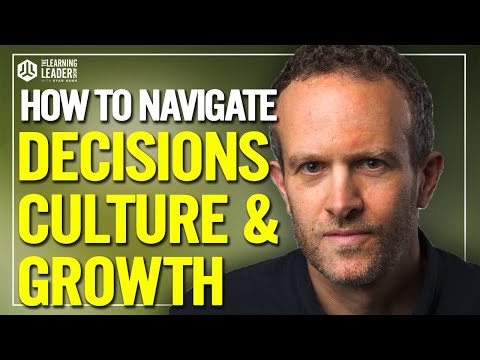 Redefining Goal Setting and Building Company Culture with Jason Fried | Jason Fried | 11 November 2019 | 1:09 | The Learning Leader Show With Ryan Hawk Episode #338: Jason Fried Full show notes can be found at www.LearningLeader.com Text LEARNERS to 44222 to learn more Jason Fried is the founder & CEO at Basecamp. He's the co-author of Getting Real, Remote, REWOR K, and It Doesn't Have To Be Crazy At Work . Basecamp is a privately-held Chicago-based company committed to building the best web-based tools possible with the least number of features necessary. Their blog, Signal vs. Noise, is read by over 100,000 people every day. Jason believes there's real value and beauty in the basics. Elegance, respect for people's desire to simply get stuff done, and honest ease of use are the hallmarks of Basecamp products. Notes: Commonalities of leaders who sustain excellence: Willingness/ability to know what's the work worth doing The skill to discern what's important How to develop that skill? Must become a good auditor of your time. Practice. Look back on what you've done. Analyze what you do? Discern what's worth it. Remote work: Basecamp has 56 employees in 30 cities around the world... Why remote? "You don't want the best people, you want the right people." The odds of all the right people living near your headquarters is small. The business started in Chicago with three people. They hired DHH to be their first programmer. He lived in Denmark. Then they hired someone in Utah. "It just worked. We didn't worry about where, just wanted to find the right people." |
| 322: Julie Zhuo - What To Do When Everyone Looks To You | Julie Zhuo | 4 August 2019 | 47 min | The Learning Leader Show With Ryan Hawk #322 with Julie Zhuo Julie Zhuo is the VP of Product Design for Facebook. She was the first-ever intern for the company. She leads the team responsible for the Facebook App. Julie is known as one of Silicon Valley's top product design executives, she leads the teams behind some of the most popular web and mobile services used by billions of people around the world. Julie writes about technology, great user experiences, and leadership on her popular blog "The Year of the Looking Glass" as well as publications like the New York Times and Fast Company. She is the best-selling author of, The Making Of A Manager. |
| Allen Gannett - How To Create "Aha" Moments And Spark Creativity | Allen Gannett | 29 July 2018 | 54 min | The Learning Leader Show With Ryan Hawk Episode #268: Allen Gannett - How To Create "Aha" Moments And Spark Creativity Allen is the founder and CEO of TrackMaven, a marketing analytics platform that enables creativity. Marketers use TrackMaven to measure and improve performance across every channel Some clients are: The NBA, Microsoft, Saks Fifth Avenue, and many more modern marketers. His book, The Creative Curve, was published in June 2018 from Currency, an imprint of Penguin Random House. It is all about how anyone can learn to have moments of creative genius. We are hosting a workshop on developing YOUR personal excellence as a leader. For details and availability, go to RyanHawk.me "Learn how to learn. View the world as being a less fixed place. Anyone is capable of making it happen." Show Notes: Sustaining excellence: Surround self with others who are great at what they do. A very social phenomenon Collaborate with those who support their weaknesses Be aligned with an executive sponsor Live at the creative center -- Move to corporate headquarters if you work for a big company Need to build relationships outside of 9:00-5:00 The importance of building generational friends (friends from all age groups) What makes a hit? -- "Familiar but also novel." "As humans we're fearful of unfamiliar. It's the brains' elegant way of risk and reward." A balance of the novel and the new The truth about Mozart He didn't create his first music until he was 17 He had a helicopter Dad. |
| Tom Peters - In Search Of Excellence | Tom Peters | 8 April 2018 | 57 min | The Learning Leader Show With Ryan Hawk Episode #252: Tom Peters - In Search Of Excellence Tom Peters is co-author of In Search of Excellence —the book that changed the way the world does business, and often tagged as the best business book ever. Sixteen books and almost thirty years later, he's still at the forefront of the "management guru industry" he single-handedly invented. What's new? A lot. As CNN said, "While most business gurus milk the same mantra for all its worth, the one-man brand called Tom Peters is still reinventing himself." Tom's bedrock belief: "Execution is strategy—it's all about the people and the doing, not the talking and the theory." (Keep up with Tom at tompeters.com, ranked #9 among "The Top 150 Management and Leadership Blogs.") His most recent effort, released in April, 2018 is titled, The Excellence Dividend. "Excellence is the next 5 minutes... Or not." Show Notes: Commonalities of those who sustain excellence: They are "thoroughly decent human beings" They help other people grow They really care about the people they work with and help them get better everyday Quotes from Tom Peters: "Arguably the eight most important words a leader can utter: "THANK YOU." "I'M SORRY." "WHAT DO YOU THINK?" "Priority #1, #2, #3: Culture. Culture. Culture. "It IS the game," Lou Gerstner on IBM turnaround. "My 20-year-old "agile": WTTMSASTMSUTFW/Whoever Tries The Most Stuff And Screws The Most Stuff Up The Fastest Wins. |
 Robert Greene - The Laws Of Power, Mastery, & Human Nature | The Learning Leader Show With Ryan Hawk | Robert Greene | 27 August 2017 | 1:13 | The Learning Leader Show Episode 220: Robert Greene - The Laws Of Power & Mastery Robert Greene is an American author and speaker known for his books on strategy, power and seduction. He has written five international bestsellers: The 48 Laws of Power , The Art of Seduction , The 33 Strategies of War , The 50th Law and Mastery . In addition to having a strong following within the business world and a deep following in Washington, DC, Greene's books are hailed by everyone from war historians to the biggest musicians in the industry (including Jay-Z and 50 Cent). "Do Not Speak Unless You Can Improve Upon The Silence." Show Notes: Sustained Excellence: Self Mastery Self Control -- "We are emotional animals, governed by emotions. It can get you in trouble." Self Discipline Flexibility -- Ability to adapt Why Napoleon was successful? He had a front line obsession Writing a book with 50 Cent "Never let your guard down" Law 4 - Always say less than necessary. "Do not speak unless you can improve upon the silence." Learn the power of being quiet If you're upset about an email, do not respond emotionally. Wait 24 hours and then respond with a level head Law 9 - Win Through Your Actions, Never Through Argument. "Demonstrate, do not explicate." Commit to action. Words are devalued "Show them. Don't talk." Law 10 - Infection: Avoid The Unhappy and Unlucky You are the average of the 5 people you spend the most time with "We absorb the energy of other people." |
| Chris Fussell -- How To Build A Team of Teams (One Mission) | Chris Fussell | 23 July 2017 | 47 min | Episode 215: Chris Fussell -- How To Build A Team of Teams (One Mission) Chris Fussell is a Partner at the McChrystal Group Leadership Institute. He is the author of One Mission: How Leaders Build a Team of Teams , and a co-author of the New York Times bestseller Team of Teams , the first book in the series. He was commissioned as a Naval Officer in 1997 and spent the next 15 years on U.S. Navy SEAL Teams around the globe. He then served as Aide-de-Camp to Lieutenant General Stanley McChrystal during McChrystal's final year commanding a Joint Special Operations Task Force fighting Al Qaeda around the globe. Since leaving active duty in 2012, Fussell has also served as a Senior Fellow for National Security at New America, sits on the Board of Directors for the Navy SEAL Foundation, is a life member of the Council on Foreign Relations, and teaches at Yale University's Jackson Institute. Episode 215: Chris Fussell -- How To Build A Team of Teams (One Mission) Subscribe on iTunes or Stitcher Radio The Learning Leader Show "Remember, your position has little formal authority but massive reach. For many of the organizations we interact with, their entire opinion of our organization will be shaped off the tone of your emails, the courtesy you give their staff, and the respect you show for their Mission." |
| Noah Kagan - How To Start A Business | Noah Kagan | 18 June 2017 | 1:21 | Episode 210: Noah Kagan - How To Start A Business Noah Kagan was the #30 employee at Facebook (started there in 2005), and the #4 employee at Mint.com. He came up with the idea of real-time updates and executed with one engineer (Mark Slee) at Facebook. He is now the Chief Sumo at Sumo.com (A domain in which he paid $1.5m to own. We discussed why on this episode). This episode is different than most in that it was more conversational, and less interview. There was real-time coaching, and off the cuff conversation about how I should progress The Learning Leader. If you are uncomfortable with creative use of the English Language (re: use of curse words), then skip this episode. If not, I think you'll really like it. "You shouldn't get a job... You should get a career." Show Notes: Sustained Excellence = Getting feedback from professionals Noah hired pros from NPR to review his interview transcripts. "Most of the time we have too much. Need to edit it down." How to create a narrative -- The NPA producer changed his life Employees -- "They are not my people. They are people I work with. I don't like the word employee." How do you hold others accountable? -- Autonomy, coaching, help when needed. Hire correctly. "What I'm great at is starting..." How the quest to India changed Noah's life "You'll almost always push hard on the last lap." The impact Mark Zuckerberg had on him when he worked for him at Facebook "When I was at Facebook, there was a singular focus: Growth." |
| David Heinemeier Hansson - Falling In Love With Your Work & The Future Of Work: ReWork | David Heinemeier Hansson | 21 May 2017 | 51 min | Go To www.LearningLeader.com For more information on DHH and this episode Common themes of leaders who sustain excellence: "For me it's falling in love with the work itself..." Being excited to do the actual work everyday... The actual day to day work "I don't have a need to think "What's Next?" -- "I'm thrilled to do the thing I've fallen in love with." How did he become DHH? What percentage of your job do you love and what percent do you dislike? DHH works to minimize the parts he doesn't like Managing others is low on his list of what he loves. "The thought that you can't be innovative if you aren't in the same room is bullshit." -- You can do that remotely, in fact better in most cases. DHH shares why the open office concept is horrible for creative people who like to "get shit done." Remote work gives peace, tranquility, quality Commuting to work can be a wasteful, drain on your life The future of work -- More remote work, more contractors, less full time employees "The office is something you choose to have, you don't need to have it." "The Day I Became A Millionaire" What DHH learned that day... What changed? What didn't "The things that brought happiness were the things I was already doing. I love writing, programming, reading." Will a certain amount of money ever be enough? Ray Kroc said "No." "The human condition does not end because you get rich." You'll still have problems. Best advice to give to people early in their careers? "Be careful what you wish for. |
| Peter Mallouk - Top Financial Advisor In America: Tony Robbins Business Partner | Peter Mallouk | 23 April 2017 | 37 min | Episode 201: Peter Mallouk - #1 Financial Advisor In America: Tony Robbins Business Partner Subscribe on iTunes or Stitcher Radio The Learning Leader Show "I was not the greatest student, but I loved learning." - Peter Mallouk on why he earned 4 undergrad degrees, an MBA, a JD, and a CFP In This Episode, You Will Learn: Common themes of leaders who sustain excellence: Realize there is a recipe: Like baking a cake Bring incremental value Energy Discipline to do it over and over and over Why start his business? Was uncomfortable just doing Estate planning and working with unethical people Key to success Great early hires helped propel Creative Planning Time management tips Focuses on doing what he enjoys most - Spending time with clients and employees, not pointless meetings "My #1 job is to be the best option for our clients as an advisor. I spend 99% of my time with clients and employees." "I loathe meetings and seminars" Key to all of the awards? "Money follows value" -- In 2008/2009, people started looking for another financial advisor "We are very good at taking someone good and help make them great" Interview process: They receive over 100 job applications per week Resume screen all Pick the 5 best and do a phone screen Bring the best of those 100 (1 person typically) for an in person interview Meet with 6 different people Within the first 30 days, it still feels like an interview "We throw the ball and they better catch it, it's hard." |
| Robert Cialdini - The Godfather of Influence | Robert B. Cialdini | 12 October 2016 | 40 min | Episode 167: Robert Cialdini - The Godfather of Influence Harvard Business Review lists Dr. Cialdini's research in "Breakthrough Ideas for Today's Business Agenda." Influence has been listed on the "New York Times Business Best Seller List." Fortune Magazine lists Influence in their "75 Smartest Business Books." CEO Read lists Influence in their "100 Best Business Books of All Time." Dr. Robert Cialdini has spent his entire career researching the science of influence earning him an international reputation as an expert in the fields of persuasion, compliance, and negotiation. His books including, Influence: Science & Practice , are the result of decades of peer-reviewed research on why people comply with requests. Influence has sold over 3 million copies, is a New York Times Bestseller and has been published in over 30 languages. His new book, Pre-Suasion: A Revolutionary Way to Influence and Persuade, published by Simon & Schuster, quickly became a Wall Street Journal and a New York Times Bestseller. Because of the world-wide recognition of Dr. Cialdini's cutting edge scientific research and his ethical business and policy applications, he is frequently regarded as the "Godfather of influence." Episode 167: Robert Cialdini - The Godfather of Influence Subscribe on iTunes or Stitcher Radio The Learning Leader Show "Give people a reputation to live up to." |
| Chase Jarvis – 28 Ways To Be More Creative | Chase Jarvis | 3 March 2016 | 1:03 | Episode 103: Chase Jarvis – 28 Ways To Be More Creative Chase Jarvis is one of my favorite leaders in the world. I love his attitude and his approach to his life and business. Sometimes you have a conversation where it just clicks and this is one of those. Between being a world class photographer and running perhaps the greatest learning platform in the world (Creative Live), Chase is successful in multiple life categories. I absolutely loved this conversation. Chase Jarvis is an award winning photographer, director, and media maven. He co-founded CreativeLive in 2010 to share free creative education with aspiring artists and entrepreneurs worldwide. In addition to his work creating campaigns for Nike, Apple, RedBull, Starbucks and other Fortune 100 companies Chase is widely recognized for creating Best Camera - the world's first photo app to share images to social networks - which kicked off the mobile photography/sharing craze. Episode 103: Chase Jarvis – 28 Ways To Be More Creative Subscribe on iTunes or Stitcher Radio The Learning Leader Show “Creativity is a habit. It’s a way of thinking. It’s not a skill.” In This Episode, You Will Learn: Having great stamina is the key to sustaining excellence over an extended period of time. “We’re all a bunch of hyphens. We do multiple things in life.” The future of work is people being freelancers with five different jobs Creative Live helps people live their dreams. It’s the world’s largest online live stream company. |
| Brad Stone – How To Think Like Jeff Bezos, Mark Zuckerberg, & Steve Jobs | Brad Stone | 28 December 2015 | 41 min | Episode 084: Brad Stone – How To Think Like Jeff Bezos, Mark Zuckerberg, & Steve Jobs Brad Stone leads a very interesting life. He has been in the room with some of the greatest visionaires of our time including: Steve Jobs, Jeff Bezos, Marissa Mayer, and Mark Zuckerberg. We are extremely fortunate to have Molly share her message with us, the loyal listeners of The Learning Leader Show. Brad Stone is the author of The Everything Store: Jeff Bezos and the Age of Amazon, a New York Times and Wall Street Journal bestseller and winner of the 2013 Goldman Sachs/Financial Times Business Book of the Year Award. Brad is a senior writer for Bloomberg Businessweek. Over the last few years, he’s authored over a dozen cover stories on companies such as Apple, Google, Amazon, Yahoo, Twitter, Facebook and the Chinese search firm Baidu. Episode 084: Brad Stone – How To Think Like Jeff Bezos, Mark Zuckerberg, & Steve Jobs Subscribe on iTunes or Stitcher Radio The Learning Leader Show “Silicon Valley is a learning organism.” Some Questions I Ask: What are some common characteristics of people who have sustained excellence? Why does Jeff Bezos not allow PowerPoint presentations? How did you respond to the harsh criticism from Mackenzie Bezos? (Jeff’s wife) What is it about Jeff Bezos that sets him apart from others? What is your process for writing a book? What’s it like being in the room with Mark Zuckerberg? Does he appear to be at another level intelligence-wise? |
| Tucker Max – Attracting Women & How To Write Your Book | Tucker Max | 10 December 2015 | 54 min | Episode 079: Tucker Max – Attracting Women & How To Write Your Book Tucker Max is probably the most blunt human being I’ve ever spoken to. He will literally tell you exactly what he thinks at all times. I can appreciate his fearlessness when it comes to being transparent and open. This conversation/interview was one of the most challenging ones I’ve done throughout the entire podcast. With that said, I really enjoyed having the opportunity to speak with Tucker. I’ve read his books and think he’s incredibly talented. It’s been very interesting to see the growth in him as a person over the last 10 years. Tucker has written three #1 New York Times Best Sellers, which have sold over 3 million copies worldwide. He is credited with being the originator of the literary genre, "fratire," and is only the third writer (after Malcolm Gladwell and Michael Lewis) to ever have three books on the New York Times Nonfiction Best Seller List at one time. He received his BA from the University of Chicago in 1998, and his JD from Duke Law School in 2001. He currently is the CEO of “Book In a Box,” A company that helps you “Get your book out of your head.” They help people get their books written without having to type a word or deal with a publisher. Tucker lives in Austin, Texas, with his wife Veronica and son Bishop. |
| Chris Fussell – Gun Fights To Board Rooms: The Similarities In War And Business | Chris Fussell | 13 August 2015 | 53 min | Episode 045: Chris Fussell – Gun Fights To Board Rooms: The Similarities In War And Business Chris Fussell is an incredible learning leader. Truly on another level when it comes to work ethic, grit, and intelligence. I was absolutely honored to have this conversation with him… And even more proud to now call him a friend. Chris Fussell is the Chief Business Development Officer at McChrystal Group, leading the sales, marketing, and client relations teams. He and his team are responsible for identifying and growing McChrystal Group’s network and client base, and for positioning CrossLead as a 21st century leadership model and globally-recognized brand. Chris is an author of the firm’s forthcoming management book, Team of Teams: New Rules of Engagement in a Complex World. Chris was commissioned as a Naval Officer in 1997, and spent the next 15 years on US Navy SEAL Teams, leading SEAL elements in combat zones around the globe. From war-torn Kosovo, to counter-terrorism operations in Iraq and Afghanistan, to highly specialized efforts in the troubled areas of the Arabian Peninsula and North Africa, he experienced the modern evolution of the US military’s Special Operations community, first on SEAL Teams Two and Eight, then in the Naval Special Warfare Development Group. |
| Nate Holzapfel – One Of The Best Shark Tank Pitches Of All Time | Teaming With Daymond John | Daymond John | 23 July 2015 | 45 min | Episode 039: Nate Holzapfel – One Of The Best Shark Tank Pitches Of All Time | Teaming With Daymond John I love discussing how we can all better serve our customer base. The best way to create and grow a thriving business is to create customer loyalty. Nate Holzapfel is an expert at accomplishing this task. He goes into detail on this topic in this episode. Similarly to innovators such as Bill Gates, Mark Zuckerberg and even Elizabeth Holmes, Nate dropped out of college to pursue a career in sales. Having sold everything from cars, to insurance in Mexico, to even houses over the phone, Nate Holzapfel became an expert in sales & marketing. In June 2012, he launched Mission Belt Company. The accessory industry has always held a huge portion of the fashion industry, however, no one company had focused solely on belts. In spring of 2013, Nate appeared on ABC’s Shark Tank, pitching the Mission Belt to seek a capital investment. He struck a deal with fashion mogul and branding expert, Daymond John. Nate pitched to the Sharks that the “old way of selling is dead.” His ideology and method proved not only correct, but to be a huge success. Episode 039: Nate Holzapfel – One Of The Best Shark Tank Pitches Of All Time | Teaming With Daymond John Subscribe on iTunes or Stitcher Radio . “I love you, I love you man!” Mark Cuban to Nate Holzapfel The Learning Leader Show Some Questions I Ask: What is your definition of success? How did you get to this point with Mission Belts? |
T713: Ken Chenault - Leadership Lessons from 17 Years as American Express CEO: How to Earn the Top Job, Hire Great Leaders, Build Culture, Challenge the Status Quo, and Lead with CharacterKen Chenault · 2 November 2026T711: Seth Godin - Creating Tension, Solving Problems, the Savannah Bananas, Leading Without Authority, Using AI, Hidden Entanglements, and Getting Unstuck (The Knot)Seth Godin · 18 October 2026TStanford's Expert on Why Most Relationship Advice Makes Things Worse | Nir EyalNir Eyal · 12 April 2026TFounder Mode & Front Line Obsession - Ryan Petersen (CEO of Flexport)Ryan Petersen · 20 July 2025TChoices That Define a Life with General Stanley McChrystal I The Learning Leader ShowStanley McChrystal · 4 May 2025T619: Mike Maples Jr. - Practicing Reckless Optimism, Betting On Founders, Bill Gates Hiring Mike Sr at Microsoft, Being Overprepared, & What It Means To Do YOUR BestMike Maples, Jr. · 27 January 2025T601: Matt Mullenweg (CEO of Automattic) - Defining Your Creed, Hiring Talented Leaders, & Leading in a Remote WorldMatt Mullenweg · 22 September 2024TWinning & Losing Millions, Creating Lasting Memories, and Writing Captivating Stories w/ Nat EliasonNat Eliason · 7 July 2024T583: Jason Fried - Growing Without Goals, Earning An Investment From Jeff Bezos, Making Tough Decisions, Keys To A Great Partnership, Hosting Leadership Retreats, and Creating A Writing PracticeJason Fried · 19 May 2024TUse These Tactics To Harness Your Team’s Creativity - With Adobe’s Scott BelskyScott Belsky · 31 March 2024TNoah Kagan - How To Launch a Business In 48 HoursNoah Kagan · 29 January 2024T486: Brent Beshore - Growth Without Goals, Continuous Improvement, & The Art Of SalesBrent Beshore · 21 August 2022TDavid Rubenstein - Interviewing Billionaires, Using Humor To Connect, & The Future Of AmericaDavid M. Rubenstein · 3 July 2022TJane McGonigal - How To See The FutureJane McGonigal · 21 February 2022TJulia Galef - How To See Things As They Are (Not As You Wish Them To Be) | The Learning Leader ShowJulia Galef · 13 June 2021TRyan Petersen - How To Build A High Velocity Team | The Learning Leader Show With Ryan HawkRyan Petersen · 21 March 2021TDavid Rubenstein - Wisdom From The World's Greatest Leaders | The Learning Leader Show w/ Ryan HawkDavid M. Rubenstein · 11 January 2021T398: Jim Collins - The Art Of Getting People To Want To Do What Must Be Done (Part 2)Jim Collins · 23 December 2020TJim Collins - Build Your Personal Flywheel | The Learning Leader Show With Ryan HawkJim Collins · 21 December 2020TMorgan Housel - Timeless Lessons On Wealth, Greed, & Happiness | The Learning Leader Show: Ryan HawkMorgan Housel · 6 September 2020T378: Brad Feld: 378: Brad Feld - How To Collect Amazing People, Question Your Biases, & Build CommunityBrad Feld · 9 August 2020TDavid Perell - The Best Networking Tool In The World | The Learning Leader Show With Ryan HawkDavid Perell · 26 July 2020TRyan Hawk Interviews General Stanley McChrystal - Leadership In Uncertain TimesStanley McChrystal · 22 March 2020TRamit Sethi - How To Live Your Rich LifeRamit Sethi · 8 March 2020TRedefining Goal Setting and Building Company Culture with Jason FriedJason Fried · 11 November 2019T322: Julie Zhuo - What To Do When Everyone Looks To YouJulie Zhuo · 4 August 2019TAllen Gannett - How To Create "Aha" Moments And Spark CreativityAllen Gannett · 29 July 2018TTom Peters - In Search Of ExcellenceTom Peters · 8 April 2018TRobert Greene - The Laws Of Power, Mastery, & Human Nature | The Learning Leader Show With Ryan HawkRobert Greene · 27 August 2017TChris Fussell -- How To Build A Team of Teams (One Mission)Chris Fussell · 23 July 2017TNoah Kagan - How To Start A BusinessNoah Kagan · 18 June 2017TDavid Heinemeier Hansson - Falling In Love With Your Work & The Future Of Work: ReWorkDavid Heinemeier Hansson · 21 May 2017TPeter Mallouk - Top Financial Advisor In America: Tony Robbins Business PartnerPeter Mallouk · 23 April 2017TRobert Cialdini - The Godfather of InfluenceRobert B. Cialdini · 12 October 2016TChase Jarvis – 28 Ways To Be More CreativeChase Jarvis · 3 March 2016TBrad Stone – How To Think Like Jeff Bezos, Mark Zuckerberg, & Steve JobsBrad Stone · 28 December 2015TTucker Max – Attracting Women & How To Write Your BookTucker Max · 10 December 2015TChris Fussell – Gun Fights To Board Rooms: The Similarities In War And BusinessChris Fussell · 13 August 2015TNate Holzapfel – One Of The Best Shark Tank Pitches Of All Time | Teaming With Daymond JohnDaymond John · 23 July 2015
T711: Seth Godin - Creating Tension, Solving Problems, the Savannah Bananas, Leading Without Authority, Using AI, Hidden Entanglements, and Getting Unstuck (The Knot)Seth Godin · 18 October 2026TStanford's Expert on Why Most Relationship Advice Makes Things Worse | Nir EyalNir Eyal · 12 April 2026TFounder Mode & Front Line Obsession - Ryan Petersen (CEO of Flexport)Ryan Petersen · 20 July 2025TChoices That Define a Life with General Stanley McChrystal I The Learning Leader ShowStanley McChrystal · 4 May 2025T619: Mike Maples Jr. - Practicing Reckless Optimism, Betting On Founders, Bill Gates Hiring Mike Sr at Microsoft, Being Overprepared, & What It Means To Do YOUR BestMike Maples, Jr. · 27 January 2025T601: Matt Mullenweg (CEO of Automattic) - Defining Your Creed, Hiring Talented Leaders, & Leading in a Remote WorldMatt Mullenweg · 22 September 2024TWinning & Losing Millions, Creating Lasting Memories, and Writing Captivating Stories w/ Nat EliasonNat Eliason · 7 July 2024T583: Jason Fried - Growing Without Goals, Earning An Investment From Jeff Bezos, Making Tough Decisions, Keys To A Great Partnership, Hosting Leadership Retreats, and Creating A Writing PracticeJason Fried · 19 May 2024TUse These Tactics To Harness Your Team’s Creativity - With Adobe’s Scott BelskyScott Belsky · 31 March 2024TNoah Kagan - How To Launch a Business In 48 HoursNoah Kagan · 29 January 2024T486: Brent Beshore - Growth Without Goals, Continuous Improvement, & The Art Of SalesBrent Beshore · 21 August 2022TDavid Rubenstein - Interviewing Billionaires, Using Humor To Connect, & The Future Of AmericaDavid M. Rubenstein · 3 July 2022TJane McGonigal - How To See The FutureJane McGonigal · 21 February 2022TJulia Galef - How To See Things As They Are (Not As You Wish Them To Be) | The Learning Leader ShowJulia Galef · 13 June 2021TRyan Petersen - How To Build A High Velocity Team | The Learning Leader Show With Ryan HawkRyan Petersen · 21 March 2021TDavid Rubenstein - Wisdom From The World's Greatest Leaders | The Learning Leader Show w/ Ryan HawkDavid M. Rubenstein · 11 January 2021T398: Jim Collins - The Art Of Getting People To Want To Do What Must Be Done (Part 2)Jim Collins · 23 December 2020TJim Collins - Build Your Personal Flywheel | The Learning Leader Show With Ryan HawkJim Collins · 21 December 2020TMorgan Housel - Timeless Lessons On Wealth, Greed, & Happiness | The Learning Leader Show: Ryan HawkMorgan Housel · 6 September 2020T378: Brad Feld: 378: Brad Feld - How To Collect Amazing People, Question Your Biases, & Build CommunityBrad Feld · 9 August 2020TDavid Perell - The Best Networking Tool In The World | The Learning Leader Show With Ryan HawkDavid Perell · 26 July 2020TRyan Hawk Interviews General Stanley McChrystal - Leadership In Uncertain TimesStanley McChrystal · 22 March 2020TRamit Sethi - How To Live Your Rich LifeRamit Sethi · 8 March 2020TRedefining Goal Setting and Building Company Culture with Jason FriedJason Fried · 11 November 2019T322: Julie Zhuo - What To Do When Everyone Looks To YouJulie Zhuo · 4 August 2019TAllen Gannett - How To Create "Aha" Moments And Spark CreativityAllen Gannett · 29 July 2018TTom Peters - In Search Of ExcellenceTom Peters · 8 April 2018TRobert Greene - The Laws Of Power, Mastery, & Human Nature | The Learning Leader Show With Ryan HawkRobert Greene · 27 August 2017TChris Fussell -- How To Build A Team of Teams (One Mission)Chris Fussell · 23 July 2017TNoah Kagan - How To Start A BusinessNoah Kagan · 18 June 2017TDavid Heinemeier Hansson - Falling In Love With Your Work & The Future Of Work: ReWorkDavid Heinemeier Hansson · 21 May 2017TPeter Mallouk - Top Financial Advisor In America: Tony Robbins Business PartnerPeter Mallouk · 23 April 2017TRobert Cialdini - The Godfather of InfluenceRobert B. Cialdini · 12 October 2016TChase Jarvis – 28 Ways To Be More CreativeChase Jarvis · 3 March 2016TBrad Stone – How To Think Like Jeff Bezos, Mark Zuckerberg, & Steve JobsBrad Stone · 28 December 2015TTucker Max – Attracting Women & How To Write Your BookTucker Max · 10 December 2015TChris Fussell – Gun Fights To Board Rooms: The Similarities In War And BusinessChris Fussell · 13 August 2015TNate Holzapfel – One Of The Best Shark Tank Pitches Of All Time | Teaming With Daymond JohnDaymond John · 23 July 2015