24 Days
The two Wall Street Journal reporters who broke the story.
Summary
Smith and Emshwiller, the Wall Street Journal reporters whose articles in October and November 2001 precipitated Enron's collapse, wrote a first-person account of the investigation.
The narrative starts with a tip about Enron's related-party partnerships and follows the reporting: obtaining the limited partnership documents, establishing that the chief financial officer Andrew Fastow was running entities on the other side of transactions with his employer, publishing the questions, and watching the company's response escalate from dismissal to the disclosure of a reduction in shareholders' equity that had not previously been explained. The twenty-four days of the title run from their first article to the company's collapse.
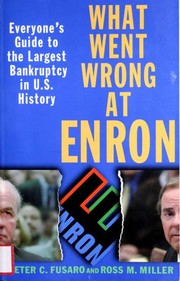
The substance concerns the mechanism. Enron used special purpose entities to move assets and debt off its balance sheet and to book gains on transactions with entities it effectively controlled. The accounting treatment required outside equity of at least three per cent in each entity, and the reporters established that this equity was often supplied by parties connected to Enron or backed by Enron's own stock, which meant the entities were not independent and the treatment was not valid. When the share price fell, the guarantees came back onto the company.
The book also documents the responses they received: from Enron's executives, from analysts who continued to recommend the stock, and from the accounting firm.
It is a reporters' account rather than a full corporate history, and it is limited to the period of their investigation. Bethany McLean and Peter Elkind's The Smartest Guys in the Room is the more complete book. Its distinctive value is showing how far a company can go while its disclosures are technically available, and how much effort was required to establish what the filings actually said.
Key takeaways 7
- Enron's chief financial officer ran partnerships that transacted with the company he worked for, which was disclosed in filings almost no one read.
- Off-balance-sheet treatment required genuinely independent outside equity, and Enron's entities did not have it.
- Guarantees backed by Enron's own shares came back onto the company when the share price fell, which is what triggered the collapse.
- The reduction in shareholders' equity disclosed in late 2001 had no explanation the company was willing to give.
- Analysts continued recommending the stock while unable to explain how the company made money.
- The information required to identify the problem was in public filings, and extracting it took experienced reporters weeks of work.
- A company can sustain a false position for years while technically disclosing the facts, if the disclosure is sufficiently complex.
Who should read it
Investors and analysts who want to see how much work was required to extract the truth from filings that technically disclosed it.
Where it sits in the reference 2
Similar books 6
Chosen by shared topics, the entries that hold them, and the people who recommended both.