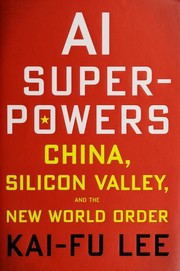
AI Superpowers
The Chinese platform ecosystem Alibaba competes inside.
Summary
Lee ran Google China, founded Sinovation Ventures, and worked in speech recognition research earlier in his career, which gives him standing in both the American and Chinese technology sectors. He argues that the era of fundamental research breakthroughs in machine learning has given way to an era of implementation, and that this shift favours China.
His argument rests on four advantages he attributes to China: abundant data generated by a population that conducts more of its life through mobile applications, an entrepreneurial culture he describes as gladiatorial and willing to copy aggressively, a large pool of trained engineers who do not need to be researchers, and government policy that funds and clears obstacles.
He describes the Chinese internet sector's development, arguing that the copying phase produced companies with operational capability that then innovated in ways Western companies did not, particularly in the integration of online and offline services, mobile payments and local delivery. The second half addresses employment. Lee gives a framework classifying jobs by whether they are optimisation-based or compassion-based and by whether they require social interaction, and predicts substantial displacement in routine cognitive and physical work. His proposed response, developed after his own cancer diagnosis, emphasises care work and human connection rather than a basic income.
The book was published in 2018 and predates the generative model era entirely, which undercuts its central claim that fundamental research was finished. Chinese regulatory intervention against its technology sector after 2020 also cuts against the government advantage argument. Lee has commercial interests in the sector he assesses. The description of how Chinese consumer internet companies actually operate remains the most valuable part.
Key takeaways 8
- Machine learning has shifted from a research-driven phase to an implementation-driven phase, which changes which capabilities matter most.
- Data quantity generated by everyday activity provides an advantage that research talent alone cannot overcome.
- Chinese consumer internet companies integrated online services with physical delivery and payment in ways Western companies did not attempt.
- A copying phase produced operational capability that later supported genuine innovation, which Western observers misread as permanent imitation.
- Government policy that funds infrastructure and removes regulatory obstacles materially accelerates deployment.
- Displacement will concentrate in routine cognitive and physical work, and the framework for predicting it depends on whether a job requires compassion and social interaction.
- Lee proposes care work and human connection rather than a basic income as the response to displacement, arguing that meaning rather than income is the harder problem.
- The book predates generative models entirely, which contradicts its claim that fundamental research breakthroughs had ended.
Who should read it
Investors and founders assessing the Chinese technology sector and the implementation dynamics of machine learning, read with awareness of what happened after 2018.
Where it sits in the reference 3
Who recommended it 5 · 1 direct
Similar books 6
Chosen by shared topics, the entries that hold them, and the people who recommended both.