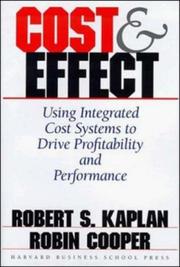
Cost & Effect
Activity-based costing worked through in practice.
Summary
Kaplan and Cooper, who developed activity-based costing, wrote this to set out how cost and performance measurement systems should be designed and what each is for.
Their central diagnostic is the four-stage model. Stage one systems are broken and produce numbers no one trusts. Stage two systems are built for external financial reporting, allocate overhead using volume-based measures such as direct labour hours, and produce product costs that are systematically wrong: they overcost high-volume simple products and undercost low-volume complex ones, because overhead is driven by transactions and complexity rather than by volume. Stage three systems add separate managerial systems, including activity-based costing for product and customer profitability and operational feedback systems for process improvement, alongside the financial reporting system. Stage four integrates these.
Activity-based costing is their principal contribution. Rather than allocating overhead by volume, it identifies the activities the organisation performs, measures the cost of each, and assigns costs to products and customers according to their actual consumption of those activities. The results frequently overturn management's understanding of which products and customers are profitable, and Kaplan and Cooper document cases where a minority of products and customers generated all the profit while others destroyed it.
The customer profitability analysis is the most practically valuable part. Customers consuming small orders, frequent deliveries, engineering changes, returns and support consume activities that pricing does not reflect.
They also cover activity-based budgeting, capacity measurement and the distinction between the cost of resources supplied and resources used, which is where the savings from an activity-based analysis actually come from.
The method is expensive to implement and maintain, which is the standard criticism and which Kaplan later addressed with time-driven activity-based costing. Adoption has been mixed. The diagnostic that volume-based overhead allocation systematically misprices products has not been disputed.
Key takeaways 7
- Volume-based overhead allocation overcosts high-volume simple products and undercosts low-volume complex ones.
- Overhead is driven by transactions and complexity rather than by production volume, so allocating it by volume is systematically wrong.
- Assigning costs according to actual consumption of activities frequently overturns management's understanding of which products are profitable.
- Customer profitability analysis reveals that some customers consume more in service activities than they generate in margin.
- Systems built for external financial reporting cannot also serve operational decision-making, so separate systems are required.
- Savings from an activity-based analysis are realised only when the resources freed are actually removed or redeployed.
- The distinction between resources supplied and resources used identifies unused capacity that cost accounting conceals.
Who should read it
Operators and finance leaders who need to know which products and customers actually make money, and why conventional costing does not tell them.
Where it sits in the reference 2
Similar books 6
Chosen by shared topics, the entries that hold them, and the people who recommended both.