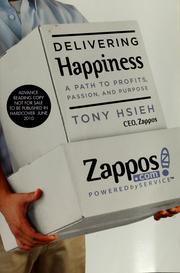
Delivering Happiness
Zappos: service as the customer-acquisition budget.
Summary
Hsieh covers his path from childhood businesses through LinkExchange, which he sold to Microsoft for 265 million dollars at twenty-four, to Zappos, which Amazon acquired for around 1.2 billion dollars in 2009. The book's argument is that culture is the operating system of a company and that everything else follows from it.
The LinkExchange section is the more instructive part. Hsieh describes selling a company he no longer wanted to work at because the culture had deteriorated as it hired for skills rather than fit, and he treats that as the formative lesson.
The Zappos material covers the decision to bring warehousing and customer service in-house after concluding that outsourcing them meant outsourcing the brand; the free shipping and free returns policy accepted as a cost of removing purchase friction; the refusal to measure call handling time, so that representatives could stay on calls as long as needed; the offer to pay new employees to quit after training, which filtered for commitment; and the ten core values developed collectively and used in hiring, firing and promotion.
His framework for happiness draws on positive psychology, identifying perceived control, perceived progress, connectedness and being part of something larger as the components. The book mixes memoir, business history and self-help unevenly. The evidence is anecdotal. Hsieh's later experiments including holacracy, which produced substantial attrition, are not in the book, and his personal decline and death in 2020 sit uncomfortably against the happiness argument. The core practices around hiring for culture and treating customer service as a marketing expense transfer well.
Key takeaways 8
- Culture determines everything else in a company, and hiring for skills over cultural fit degrades it faster than any other decision.
- Hsieh sold LinkExchange because the culture had deteriorated to the point where he no longer wanted to work there.
- Outsourcing warehousing and customer service means outsourcing the brand, which is why Zappos brought both in-house at significant cost.
- Customer service should be treated as a marketing expense, which changes the calculation on free shipping, free returns and call duration.
- Measuring call handling time makes representatives end calls, which is why Zappos deliberately did not measure it.
- Offering new employees a payment to quit after training filters for people who want the job rather than the salary.
- Core values are worthless unless they are used in hiring, firing and promotion decisions, and Zappos removed high performers who violated them.
- Employee happiness depends on perceived control, perceived progress, connectedness and being part of something larger than oneself.
Who should read it
Founders building service-intensive consumer businesses who want a case for treating culture and customer service as strategy rather than as cost.
Where it sits in the reference 2
Who recommended it 5 · 1 direct
Similar books 6
Chosen by shared topics, the entries that hold them, and the people who recommended both.