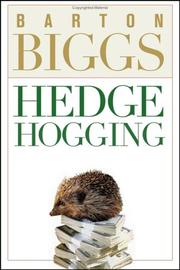
Hedgehogging
Open Library unreachable during build; every openlibrary.org query failed with connection errors
Summary
Biggs spent decades at Morgan Stanley as its global strategist before starting a hedge fund in his seventies, and he wrote this as a collection of essays and stories about the people and the psychology of professional investing.
The material is anecdotal by design. Biggs writes about raising capital for a new fund and the humiliations involved, about the investors he met and the ones who redeemed at the worst moments, about managers who were brilliant and unstable, about the pressure of a drawdown, and about the social world of hedge funds. He also includes chapters on investment history, on Keynes as an investor and on the behaviour of markets in extreme conditions, particularly his account of markets during the Second World War, which he developed further in Wealth, War and Wisdom.
The substantive positions that recur are about temperament and about the difficulty of the business. He argues that investment skill and personal stability are often inversely related, that a manager's worst decisions come during drawdowns when clients are leaving, that the capital-raising process selects for salesmanship rather than for investment ability, and that almost no one sustains outperformance for long because the pressures compound. He is sceptical of forecasting including his own, and he documents his own errors.
The book has no framework and makes no systematic argument, which limits it as a source of method. It is dated in its market references and the hedge fund industry has changed substantially since 2006, becoming more institutional and more concentrated. Its durable use is as an honest account of what the job actually feels like, which few practitioners write down.
Key takeaways 7
- Investment performance and personal stability are frequently inversely related among successful managers.
- A manager's worst decisions are made during drawdowns, when client redemptions remove the ability to hold positions.
- Capital raising selects for salesmanship rather than for investment ability, so fund size is not evidence of skill.
- Almost no manager sustains outperformance over a full career, because the psychological and business pressures compound.
- Forecasting is unreliable and Biggs treats his own forecasts as evidence of that rather than as an exception.
- Equity markets during the Second World War turned at the points where military outcomes became clear to informed observers, before the news was public.
- Being right early is indistinguishable from being wrong for as long as clients are able to withdraw.
Who should read it
Professional investors and allocators who want an honest account of the psychology and business pressures of running money, rather than a method.
About Barton Biggs
Chief global strategist, Morgan Stanley 1973-2003; co-founder, Traxis Partners (1932-2012)
Thirty years of Morgan Stanley global strategy plus Hedgehogging, still the most candid insider account of how hedge fund managers actually behave.
Where it sits in the reference 3
Similar books 6
Chosen by shared topics, the entries that hold them, and the people who recommended both.