Inside Vanguard
Summary
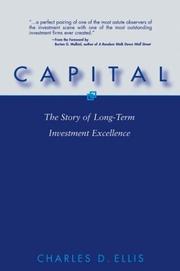
Ellis, who founded Greenwich Associates and served on Vanguard's board, wrote an institutional history of the firm covering its founding through the period after Jack Bogle's death in 2019.
The structural argument concerns ownership. Vanguard is owned by its funds, which are owned by their shareholders, so there is no external owner extracting profit. Ellis argues that this arrangement, established when Bogle separated the management company from Wellington in 1974, is what made continuously falling expense ratios possible: any surplus is returned as lower costs rather than distributed to owners, so the firm's growth mechanically reduces what investors pay. He treats the mutual structure as the decisive fact and the index fund as its consequence rather than the reverse.
The history covers the launch of the first retail index fund in 1976, which raised a small fraction of its target; the addition of a bond and money market business; the exchange-traded fund business established under the Vanguard patent structure; the advice business; the international expansion; and the growth to assets in the trillions.
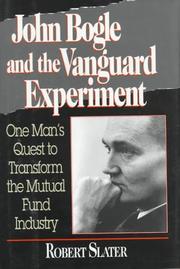
Ellis also covers the succession problems and Bogle's difficult relationship with the firm after his removal as chief executive, though he handles this carefully given his board position.
The book is written by a former director and is admiring throughout. It does not engage seriously with the criticisms of index fund concentration, including the common ownership arguments about competitive effects, the questions about index providers' influence, the corporate governance implications of three firms holding large stakes in most public companies, or Vanguard's own voting record. Balchunas's The Bogle Effect, also in this reference, covers similar ground with more distance.
Key takeaways 7
- Vanguard is owned by its own funds, so there is no external owner to whom profits can be distributed.
- The mutual ownership structure rather than indexing itself is what makes continuously falling fees possible.
- Growth in assets mechanically reduces expense ratios under this structure, which creates a self-reinforcing cost advantage.
- The first retail index fund raised far less than its target in 1976 and was widely dismissed by the industry.
- Vanguard's exchange-traded funds were structured as share classes of existing funds, which no competitor could replicate.
- Bogle was removed as chief executive under the firm's own age rule and had a difficult relationship with it afterward.
- A cost advantage that compounds through scale is more durable than any advantage based on investment performance.
Who should read it
Investors and asset management operators who want to understand the ownership structure that produced the industry's cost competition.
About Charles D. Ellis
Founder of Greenwich Associates; chair of the Yale endowment investment committee; author of 'The Loser's Game'
His 1975 essay 'The Loser's Game' is the primary source that reframed active management as a negative-sum contest, and the argument is still cited verbatim.
Where it sits in the reference 3
Similar books 6
Chosen by shared topics, the entries that hold them, and the people who recommended both.