Trillions: How a Band of Wall Street Renegades Invented the Index Fund and Changed Finance Forever
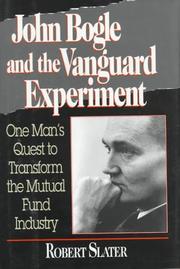
History of indexing; Bogle and Vanguard are its central thread.
Summary
Wigglesworth traces passive investing from the academic work that made it thinkable to the point where index funds and exchange-traded funds hold a substantial share of the world's equity. The chain runs through Bachelier and Samuelson on random walks, Markowitz on portfolio construction, Sharpe on the capital asset pricing model, Fama on efficient markets, and Wells Fargo's early institutional index accounts, before reaching Bogle's launch of the first retail index fund at Vanguard in 1976 and the creation of the first ETFs at the American Stock Exchange and State Street.
The book is reported history rather than argument. Wigglesworth interviewed most of the surviving participants and gives credit more accurately than the popular account does, showing that Bogle was a late convert and a marketer of an idea others had built, that John McQuown and Rex Sinquefield ran index money before Vanguard existed, and that Nathan Most designed the ETF wrapper for reasons that had little to do with retail investors.
The last section turns to consequences, and this is where it will interest investors most. Wigglesworth takes seriously the arguments that concentrated index ownership creates governance problems, that the big three managers now hold decisive voting power across the entire market, that common ownership may soften competition between rivals, and that ETF liquidity in credit markets is a promise that has never been tested in a real dislocation. He presents these as open questions rather than settling them, and he does not attempt a quantitative answer to the question of how much active management the market needs to stay efficient.
Key takeaways 7
- Index funds were built by institutional investors and academics in the late 1960s and early 1970s, and Bogle's contribution was distribution to retail rather than invention.
- The efficient market hypothesis was the intellectual permission for indexing, but the practical driver was the accumulating evidence that active managers underperformed after fees.
- The exchange-traded fund structure was designed to solve an exchange's business problem, and its creation-redemption mechanism is what makes it work.
- Three asset managers now control voting power across almost every large public company, which concentrates corporate governance influence in firms that compete on fees.
- Common ownership of competing firms by the same index managers raises a competition question that existing antitrust law does not address.
- Fixed income exchange-traded funds promise daily liquidity in assets that do not trade daily, and that mismatch has not been tested by a severe credit event.
- Fee competition in passive products has driven costs toward zero, which forces asset managers to make money from securities lending, data and adjacent services instead.
Who should read it
Investors and allocators who want the actual history of passive investing and a fair statement of the governance and liquidity questions it now raises.
Where it sits in the reference 6
Similar books 6
Chosen by shared topics, the entries that hold them, and the people who recommended both.