Markets Never Forget (But People Do)
Summary
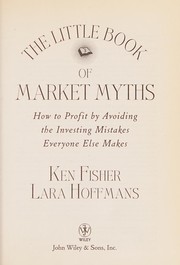
Fisher, who runs a large investment advisory firm, and Hoffmans argue that investors repeatedly believe current conditions are unprecedented when the historical record shows similar episodes with known outcomes.
The method is to take a widely held belief and test it against long-run data. Fisher examines claims including that recoveries after severe recessions must be slow, that high unemployment prevents equity market recovery, that a market cannot rise while debt is high, that particular decades were lost, that volatility indicates danger, and that political events determine market direction. In each case he presents the historical series and shows that the relationship either does not exist or runs the opposite way. His recurring findings include that equity markets turn well before economic data improves, that unemployment is a lagging indicator with no predictive value for markets, that bull markets typically begin during periods of maximum pessimism, and that the sharpest recoveries follow the deepest declines.
He also addresses the behavioural side, arguing that investors reconstruct memory to fit the present, so each episode feels new, and that professional commentary reinforces this because novelty attracts attention.
The book was written in 2011 to argue against the belief that the post-crisis recovery must be permanently subdued, and that call was broadly correct.
The limitations are real. Fisher's data selection supports his conclusions and he does not present cases that would complicate them. His firm's business depends on clients remaining invested, which aligns with the book's message. The analysis is nearly all American, so the counterexamples of Japan after 1989 and of markets that did not recover receive little attention. The book is repetitive and the tone is combative.
Key takeaways 7
- Equity markets turn upward well before economic data improves, so waiting for confirmation guarantees missing the recovery.
- Unemployment is a lagging indicator and has no predictive value for market direction.
- The sharpest market recoveries follow the deepest declines, so severity of the fall does not predict a slow recovery.
- Investors reconstruct their memory of past episodes to fit current conditions, which is why each one feels unprecedented.
- Periods described as lost decades typically contained large bull and bear moves that a buy and hold measure conceals.
- Political events that dominate commentary have weak and inconsistent relationships with market returns.
- Widely held beliefs about markets are already reflected in prices, so acting on them cannot produce excess return.
Who should read it
Investors prone to acting on the belief that current conditions are unprecedented, who should note the author's business interest in keeping clients invested.
About Ken Fisher
Founder and Executive Chairman, Fisher Investments; Forbes "Portfolio Strategy" columnist 1984-2016
A long, public money-management record plus Super Stocks, which introduced the price-to-sales ratio and outlived its news cycle.
Where it sits in the reference 3
Similar books 6
Chosen by shared topics, the entries that hold them, and the people who recommended both.