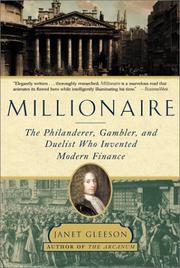
Millionaire
John Law, the Mississippi bubble and the invention of paper money in France.
Summary
Janet Gleeson wrote this popular biography of John Law, the Scottish gambler, duellist and monetary theorist who took control of French state finance and created the Mississippi System that collapsed in 1720. It is narrative history for general readers.
The story covers Law's early life in Edinburgh, his killing of Edward Wilson in a London duel and escape from prison, his years on the continent as a gambler and student of banking, his failed proposals to the Scottish parliament, and his eventual success in Regency France. Gleeson then covers the System itself: the Banque Generale founded in 1716 and converted to the Banque Royale, the Mississippi Company's acquisition of French trading monopolies and tax farms, the conversion of government debt into company shares, the speculative rise in the share price during 1719, and the collapse through 1720.
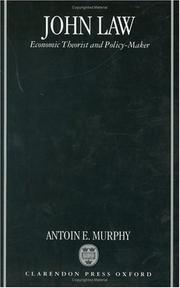
Gleeson is a narrative writer rather than an economist, and the book concentrates on personalities and on the spectacle of the Rue Quincampoix rather than on the monetary mechanics. Readers wanting Law's economic thought should read Antoin Murphy's biography, which treats him as a serious theorist. Gleeson's contribution is accessibility and the social detail of the speculation, including how ordinary Parisians participated and what happened to them.
Key takeaways 7
- Law's System converted French government debt into shares of a company holding trading monopolies and tax farms.
- The Banque Royale issued notes that were used to support the Mississippi Company's share price, linking the currency to the equity market.
- Speculation reached ordinary Parisians and produced fortunes and ruin outside the existing financial classes.
- Law held effective control of French state finance as controller general, which gave one man both the note issue and the equity promotion.
- The collapse discredited banks and paper money in France for generations and shaped the country's later financial development.
- Law died poor in Venice, having lost the fortune the System had made him, because he held his wealth in its own shares.
- Gleeson argues that Law's gambling background gave him both the probabilistic insight and the risk appetite that produced the scheme.
Who should read it
General readers who want a narrative account of the first great paper-money and equity bubble before turning to the economic treatments.
Where it sits in the reference 2
Similar books 6
Chosen by shared topics, the entries that hold them, and the people who recommended both.