The Warburgs: The Twentieth-Century Odyssey of a Remarkable Jewish Family
Summary
Chernow wrote a family history spanning roughly two centuries, from the Warburgs' origins as money changers in Hamburg through the twentieth century. It rests on family papers, bank archives and extensive interviews with surviving family members.
Three strands carry the book. The Hamburg house, M M Warburg, under Max Warburg financed German trade and rearmament before the First World War, advised the Weimar governments, and was eventually expropriated by the Nazis, with Max negotiating with the regime to get Jews and capital out of Germany until he left in 1938. The American branch, through Paul Warburg, shaped the creation of the Federal Reserve System, drawing on German central banking practice, and through Felix Warburg at Kuhn Loeb funded Jewish relief work on a large scale. The postwar strand follows Siegmund Warburg, who left Germany in 1934, built S G Warburg in London, and forced open British merchant banking with the hostile takeover of British Aluminium in 1959 and with the invention of the eurobond market in 1963.
Chernow's argument concerns the position of assimilated German Jewish financial families: their success depended on serving states that eventually turned on them, and their internal debates about assimilation, Zionism and German patriotism are documented in detail.
The book is long and the cast is large, which makes it demanding. Chernow is a narrative historian rather than an analyst, so readers looking for financial analysis of the businesses will find less than they want. The treatment of Max Warburg's dealings with the Nazi regime has been debated by historians who read his position more critically than Chernow does.
Key takeaways 7
- Paul Warburg imported German central banking design into the creation of the Federal Reserve System.
- M M Warburg's business depended on serving the German state, which left the family without protection when that state turned against Jews.
- Siegmund Warburg built a merchant bank in London by hiring outsiders and by attacking the cartel conventions of the City.
- The 1959 British Aluminium takeover established that hostile bids were possible in Britain and broke the City's informal restraints.
- Siegmund Warburg created the eurobond market in 1963 by structuring an issue to escape national tax and regulatory jurisdiction.
- Assimilated German Jewish banking families held a position that was commercially central and politically defenceless.
- Family banking dynasties fragment when the number of heirs grows faster than the capital, regardless of the business's performance.
Who should read it
Readers who want the family and institutional history behind the Federal Reserve, postwar London merchant banking and the eurobond market.
About Ron Chernow
American biographer and financial historian who writes archival lives of Rockefeller, the Morgans, the Warburgs and Alexander Hamilton.
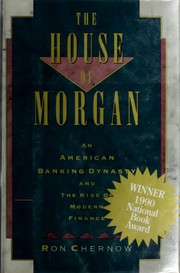
Titan and The House of Morgan reconstruct from company and family archives how Standard Oil consolidated an industry and how a private bank organised American capital before securities regulation existed. Both carry the detail on trust structures, rebates, syndicates and succession that later histories of American business cite.
Where it sits in the reference 2
Who recommended it 1 · 1 direct
Similar books 6
Chosen by shared topics, the entries that hold them, and the people who recommended both.