Murdoch's Pirates
The pay-TV smartcard hacking operation; the strangest corner of the empire.
Summary
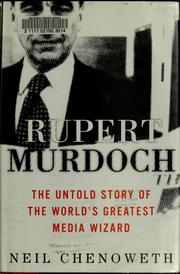
Neil Chenoweth, an Australian investigative journalist who has written several books on Rupert Murdoch, reports on News Datacom Systems, later NDS, the News Corporation subsidiary that made conditional access smartcards for pay television. The allegation the book pursues is that NDS employed hackers who cracked competitors' smartcard systems and that codes making piracy possible reached the internet.
Chenoweth follows the operation from Israel, where NDS's technical work was based and where it recruited from military intelligence backgrounds, through the specific episodes in which rival systems from Canal Plus and others were compromised. He reports on the litigation that followed, including the Canal Plus and EchoStar cases in the United States, and on the Australian dimension involving Austar and Optus. The commercial argument he makes is that pirated cards on a competitor's platform destroy that competitor's subscriber revenue and drive operators toward the secure alternative.
NDS and News Corporation denied the allegations, and the litigation outcomes were mixed: EchoStar's central claims failed at trial while a smaller counterclaim succeeded, and the Canal Plus case settled as part of a wider transaction. Chenoweth's account is detailed and sourced from documents and from participants, but it presents a contested case, and readers should weigh that the central allegations were not established in court. The book is also difficult to follow, with a very large cast and technical material about smartcard security.
Key takeaways 6
- NDS employed engineers whose work included reverse-engineering competitors' conditional access systems.
- Piracy of a pay television operator's smartcards destroys subscriber revenue and pushes the operator toward a more secure supplier.
- Chenoweth alleges that codes enabling piracy of rival systems reached public distribution through channels connected to NDS.
- The security of a pay television platform is a commercial asset whose failure transfers customers to competitors rather than merely costing money.
- News Corporation's structure placed technical operations in Israel with limited visibility from the corporate centre.
- Litigation against NDS produced mixed outcomes and did not establish the central allegations, which readers should weigh against the reporting.
Who should read it
Readers interested in pay television economics and in the security of conditional access systems, treating the central allegations as contested.
Where it sits in the reference 2
Similar books 6
Chosen by shared topics, the entries that hold them, and the people who recommended both.