Only Yesterday
Summary
Allen, an editor at Harper's, wrote this social history of the 1920s in 1931, months after the decade ended, covering American life from the Armistice through the crash and its immediate aftermath.
The book is a cultural history rather than an economic one. It covers the Red Scare, prohibition and the criminal economy it created, the automobile's transformation of daily life, the changes in women's dress, work and social position, the Scopes trial, the growth of advertising and consumer credit, the tabloid press, radio, the Florida land boom, the bull market, and the crash.
The economic material that interests investors is embedded in the social account. Allen documents the installment credit expansion that funded consumer durables, the Florida land speculation and its collapse in 1926, the growth of margin lending and of investment trusts, the public participation in the stock market, and the specific character of the boom's final phase.
His account of the crash and of the period immediately after is contemporaneous, written before anyone knew the Depression would last a decade, which makes it a primary document about what participants understood at the time.
The book is popular history and Allen was a journalist rather than a historian. Later scholarship has revised many of his characterisations, particularly on the extent of social change and on the representativeness of the phenomena he describes, which were concentrated in urban middle-class life. It remains readable and is the standard popular account of the decade.
Key takeaways 7
- Installment credit expansion funded the consumer durables boom of the 1920s and represented a new form of household leverage.
- The Florida land boom collapsed in 1926, three years before the stock market, and the speculation moved from real estate into equities.
- Margin lending and layered investment trusts allowed public participation in the market at leverage most participants did not understand.
- Public participation in the stock market reached a scale that had no precedent, and the final phase drew in people with no knowledge of the securities they held.
- The book was written months after the crash and before anyone knew the Depression would last a decade, which makes it a record of contemporaneous understanding.
- Prohibition created a large criminal economy and normalised law-breaking across social classes that had not previously participated in it.
- The social changes Allen describes were concentrated in urban middle-class life and were less general than the account suggests.
Who should read it
Readers who want the contemporaneous social history of the 1920s and a primary record of what participants understood immediately after the crash.
About Frederick Lewis Allen
American editor of Harper's Magazine who wrote popular histories of the 1920s boom, the crash and J. P. Morgan.
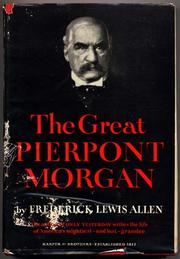
Only Yesterday appeared within two years of the 1929 crash and records the Florida land boom, the margin mania and the mood of the decade as contemporaries experienced them, before hindsight tidied the story. The Big Change and The Great Pierpont Morgan carry that reporting into how American wealth and finance reorganised across the first half of the century.
Where it sits in the reference 2
Who recommended it 1
Similar books 6
Chosen by shared topics, the entries that hold them, and the people who recommended both.