Perpetuating the Family Business
Fifty lessons from long-lived family firms.
Summary
John Ward wrote this later book as a set of lessons drawn from his decades of consulting to and researching family-controlled companies, organised around what distinguishes the firms that survive across generations from those that do not.
His framework separates the business system from the family system and from the ownership system, and he argues that each needs its own governance. A family council handles family matters, a board with independent directors handles business oversight, and shareholder agreements handle ownership questions including transfer, valuation and exit. He argues that families that survive treat these as separate and formalise each, while families that fail conduct all three conversations at the same table.
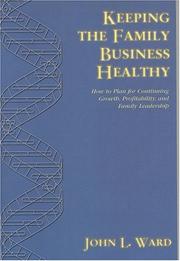
The lessons include the necessity of a shared family purpose beyond wealth, the value of educating the next generation about ownership as a responsibility rather than an entitlement, the case for outside experience before joining the firm, the need for explicit policies on employment and compensation of family members, and the importance of allowing shareholders who want to exit to do so at a fair price. Ward argues that the goal is a family that chooses to remain owners rather than one that cannot escape. The book restates and extends the argument of Keeping the Family Business Healthy and is practical rather than analytical.
Key takeaways 7
- Family, business and ownership are three separate systems, and each requires its own governance forum.
- Families that survive across generations formalise their arrangements early, while those that fail rely on informal understanding.
- Next-generation family members should gain outside experience before joining the firm, both for their competence and for their standing.
- A liquidity mechanism allowing shareholders to exit at a fair price prevents the resentment that destroys family ownership.
- Ownership must be taught as a responsibility with obligations rather than received as an entitlement.
- Ward argues that the goal is a family that chooses to remain owners rather than one trapped in the position.
- Independent directors supply the outside judgement that family members cannot give each other.
Who should read it
Family business owners and their advisers who want practical governance structures for separating family, business and ownership decisions.
Where it sits in the reference 2
Similar books 6
Chosen by shared topics, the entries that hold them, and the people who recommended both.