Sixty to Zero
Fortune correspondent's inside look at the collapse.
Summary
Alex Taylor covered the automotive industry for Fortune for decades and wrote this account of General Motors' decline and 2009 bankruptcy from the perspective of a journalist who observed it throughout.
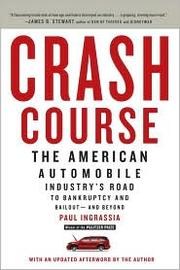
His explanation covers the same ground as Ingrassia's Crash Course with a different emphasis. Taylor concentrates on management and on the specific decisions: the brand proliferation that left divisions competing for the same customers, the finance-driven culture that treated cars as units, the failure of the Roger Smith reorganisations and the enormous spending on automation and on Saturn that produced nothing proportionate, the succession of chief executives who protected the existing structure, and the persistent inability to make product decisions that customers would respond to.
He also covers the labour agreements, the dealer network that could not be reduced because of state franchise laws, the legacy healthcare and pension obligations, and the market share decline that continued for three decades without ever producing a response proportionate to it.
Taylor's judgement is that the company's problem was a culture in which senior executives were promoted for loyalty and process rather than for results, and in which the seriousness of the decline was never accepted internally.
The reference has not verified the specific claims in this account. The book is journalism by a long observer rather than an investigation, and it covers ground that Ingrassia, Lutz and others cover with more original reporting. Its value is the compression of a three-decade decline into a single readable account.
Key takeaways 7
- General Motors lost market share continuously for three decades without ever producing a response proportionate to the decline.
- Brand proliferation left divisions competing for the same customers while each carried full development and distribution cost.
- The Roger Smith reorganisations and the automation and Saturn spending consumed enormous capital without producing proportionate results.
- State franchise laws prevented reducing the dealer network, which locked in a distribution cost structure the company could not change outside bankruptcy.
- Executives were promoted for loyalty and process adherence rather than for results, which reproduced the culture that caused the decline.
- The seriousness of the decline was never accepted internally, which is why each response was sized to a smaller problem than the actual one.
- The reference has not verified the specific claims in this account.
Who should read it
Readers wanting a compressed single-volume account of General Motors' decline, with Ingrassia and Lutz offering more original reporting.
Where it sits in the reference 2
Who recommended it 1 · 1 direct
Similar books 6
Chosen by shared topics, the entries that hold them, and the people who recommended both.