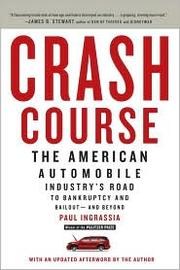
Crash Course: The American Automobile Industry's Road from Glory to Disaster
Pulitzer-winning reporter on the bankruptcy and bailout.
Summary
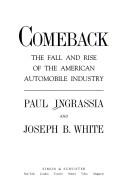
Ingrassia covered Detroit for the Wall Street Journal for decades and won a Pulitzer for his reporting on General Motors. This book traces the American automobile industry from its postwar dominance to the 2009 bankruptcies of GM and Chrysler.
His explanation puts equal weight on management and labour. On the company side he documents the finance-driven culture at GM, the brand proliferation that left divisions competing with each other, the failure to respond to Japanese quality, and a succession of chief executives who protected the existing structure. On the union side he covers the contract terms that accumulated over decades: the jobs bank that paid laid-off workers, the work rules that limited what a worker could be assigned, the retiree healthcare obligations that were promised without funding, and the pattern bargaining that spread each concession across all three companies. He argues that management and the United Auto Workers reached a series of agreements that were rational for both parties in the moment and that collectively made the industry uncompetitive.
The last section covers the 2008 and 2009 crisis in detail, including the congressional hearings, the Presidential Task Force on the Auto Industry, and the structured bankruptcies that wiped out shareholders, imposed losses on bondholders and preserved a modified union position.
The reporting is even-handed and the labour cost analysis is careful about the difference between hourly wages and total legacy cost per vehicle. Ingrassia is less strong on the product and engineering side than Lutz is, and the book was written immediately after the bankruptcies so it does not assess how the restructured companies performed.
Key takeaways 7
- General Motors and the United Auto Workers reached agreements over decades that were rational for both parties at the time and that collectively made the companies uncompetitive.
- Legacy retiree healthcare and pension obligations, not hourly wages, produced the labour cost gap against foreign transplant plants.
- Brand proliferation left General Motors divisions competing against each other for the same customers while each carried full development and distribution cost.
- Pattern bargaining spread every concession granted by one manufacturer to all three, which removed any competitive benefit from resisting.
- The jobs bank, which paid laid-off workers nearly full wages, removed the cost saving from reducing production and therefore removed the incentive to match output to demand.
- Detroit management responded to Japanese competition by disputing the quality data for years rather than by investigating the production system that produced it.
- The structured bankruptcies of 2009 achieved in weeks the contract and dealer network changes that decades of negotiation had failed to achieve.
Who should read it
Operators and investors interested in how incremental labour and management decisions accumulate into structural uncompetitiveness over decades.
Where it sits in the reference 3
Who recommended it 1 · 1 direct
Similar books 6
Chosen by shared topics, the entries that hold them, and the people who recommended both.